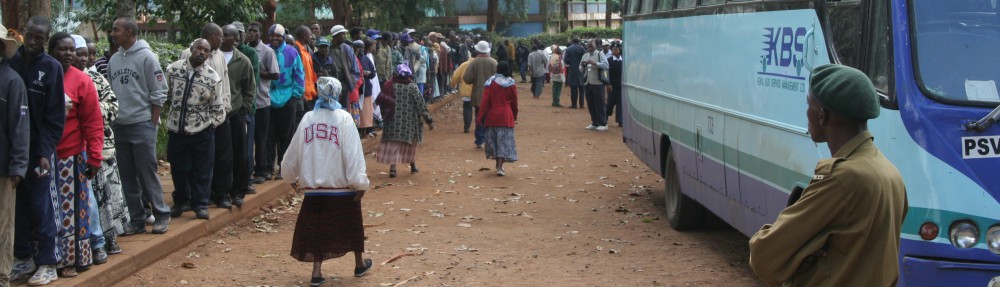
Raila leaves the race . . .

Raila Odinga Kenya president campaign

[Update: since I have not been actively writing here for several months, I may have been a bit hasty in offering here an assessment of Raila’s immediate legacy in current Kenyan politics upon hearing the news of his unfortunate passing from heart failure in India. Those who grew up with Raila’s role in opposing dictatorship through brutal detention and have stayed continuously emotionally engaged with Kenya over the years—especially Kenyans, who do not have the option of pulling back as I have as an American —will feel the weight of a mighty tree falling and the sudden change of light, landscape and horizon. In other words, this post may have been a bit “too soon” as well as superficial. I will endeavor to do more justice to Raila’s impact ahead after the initial memorials.]

[See also the eulogy and remembrance in The Kenya Times from former US Ambassador Michael Ranneberger who served through the 2006-07 campaign and election and PEV, the peace deal and the constitutional referendum under Government of National Unity during Kibaki’s second term. And Jeffrey Gettleman remembering Raila campaigning in 2007 to be denied by the blatant rigging.

Raila’s primary definitive legacy is Kenya’s 2010 Constitution, negotiated as a result of his 2007 campaign which I believe clearly garnered the most votes and led him to the temporary but critical post of Prime Minister for Kibaki’s second term from 2008-2013 as part of the February 28 peace deal between Raila and Kibaki.

The peace deal did not result in the fully formed power sharing contemplated but it was enough to get to a reform Constitution through the elite establishment gauntlet so long as the sole executive power of the presidency was retained (in other words, the Prime Minister position would go away). Devolution, the Supreme Court and many rights that we can hope will eventually come to fruition for Kenyans did result and have created real change.

For my explanation of Raila’s 2007 election, aside from many blog posts categorized and tagged accordingly, see my piece in The Elephant: “The Debacle of 2007: How Kenyan Politics Was Frozen and an Election Stolen With US Connivance.”

Raila’s other legacy is the enduring ODM party itself. The party unfortunately has been in jeopardy in recent years as being without a clear identity with Raila’s handshakes with first Uhuru Kenyatta, then William Ruto. Collaboration with Kenyatta had a clear rationale in achieving Kenyatta’s support for Raila and running mate Martha Karua, intending to stop a Ruto succession. The recent support for Ruto, however, heading into a 2027 re-election campaign, has been hard to square with the notions of the Orange Democratic Movement advertised over the years.

It has been awhile now since Raila was carrying the torch as a reformist leader himself and I will hope that this legacy can now come to greater fruition with younger generations, through a re-tooled ODM and new avenues to compete with ossified elite capture.

See from Africa Report, “Raila Odinga: the man who lost every election but won Kenya’s democracy.”


Condolences to the famiky and their many friends and supporters.

The long view – 15 years ago I was preparing to move my family to Kenya for six months public service leave to work for IRI

In May 2007 I was getting ready to move and reading up on Kenyan politics and history, and talking to people associated currently or previously with the International Republican Institute who knew something about the practical aspects of living and working in Nairobi, which was not as common a thing for Americans then as now.

At my job as Senior Counsel with the big defense contractor Northrop Grumman I was working to close a “Gulf Opportunity Zone” bond issue for “facilities modernization” at The State (of Mississippi) Shipyard at Pascagoula which was under long term lease to the company with rent tied to bond debt.  We were recovering and improving in the wake of Hurricane Katrina in 2005.  I was also Program Counsel for the Amphibious Assault Carrier program, in which we had a series of contracts for a low “ten figure” sum to build a Navy ship that carried a Marine Expeditionary Unit to wherever they might need to go, with a few helicopters, airplanes and landing vehicles, a hospital and such.

The idea of doing non-profit foreign assistance work was influenced by several things, most especially living through the Hurricane Katrina disaster.  A few weeks before the hurricane hit the Mississippi Gulf Coast I had served as an Election Observer for IRI in Kyrgyzstan, and as the youngest and most expendable delegate I had had a grand adventure in Batken in the Ferghana Valley and found the experience of supporting a peaceful election in a troubled region as a counterpoint to the wars in Afghanistan and Iraq to be inspiring.  Spending some time in an area that was poor and economically regressing also gave me a different perspective on the context of the devastation we soon faced back home from Hurricane Katrina, where in spite of the initial failures we received billions of dollars in assistance.  Even though it was all grossly inefficient, Washington turned on the spigot.  More importantly people from around the country and even around the world came to help “on the ground”, sacrificially, and many of my friends, in particular in my church congregation, did wonders helping those in need while most of my impact involved my work at the shipyard.  All told, I was primed to “do something” intended to be helpful and in particular in the “less rich” world.

It was in this context that I asked for “public service leave” to take the position of Resident Director for East Africa for IRI.  I asked for 18-24 months of unpaid leave, with the expectation that I would have to hope that a spot was available somewhere within the company’s law department after concluding at IRI. I got 6 months of job-protected leave instead, extended at IRI’s request that fall to a full year.

If I had had the background and experience, I might have sought to work in some other area like agriculture.  I had a background in practical party politics which had led to the opportunities to volunteer with IRI.  There was another context for working in democracy assistance specifically though, which was the Iraq war.  I was one of those that had not really been persuaded by the case to invade–it seemed like a “hail mary” so to speak that only made sense in the face of the kind of clear imminent threat that did not seem to be demonstrated.  Likewise, the general “Bush Doctrine” did not seem to me to be consistent with the weight of decisions of war and peace that were required by my Christian values.  By 2005 most Republicans from Washington could admit when they let their hair down overseas that we had made a mistake even if it would be another eleven years before they felt willing to say so publicly in response to Donald Trump’s campaign in the Republican primaries.

At some level, I thought we made the mistake on Iraq because too many of the people who really knew better in Washington in 2002 and 2003–the kind of people who had the experience and regional knowledge that I knew outside of Washington–“went along to go along” rather than exercise their best judgment.

So given my reasons for being in Kenya in the first place, and my own experience watching policy trainwrecks in Washington from the field, I was never going to be the guy to delegate my own responsibilities to do my own job to others, such as the Ambassador, who were not in my chain of command and had different roles to play and different perspectives about the Kenyan election. Nor was I going to willingly personally implicate myself in communicating things that I did not consider to be true when my job as Chief of Party for democracy assistance programs did not countenance “looking and pointing the other way” for extraneous reasons when confronted with election fraud.

I have found some agreement from a range of people in Washington with my observation that “the soft underbelly of American national security is careerism”.  Since I wasn’t in Kenya for IRI because “it was the best job I could get in the Republican Party” or because I wanted to switch careers to try to climb the ladder in U.S. foreign policy in Washington, I did not have the same temptations that others might have had to let myself get steamrolled by the Ambassador or others who did not want to recognize inconvenient facts about the Kenyan election that I had a responsibility to deal with.  Likewise, being an experienced middle aged lawyer used to dealing with government contracts made a great deal of difference, as did being the father of young children whom wanted to be able to explain myself to in years to come.

P.S. In case you have come to this piece fresh without being a previous reader here, the best “witness summary” of my experience and subsequent research is my longread in The Elephant from 2017:  “The Debacle of 2007“, in addition to my Pages with my “War for History” series and my “FOIA Series–Investigating Kenya’s Election“.

Kenya 2007 PEV Make Peace Stop ViolenceA Chaotic Kenya Vote and a Secret US Exit Poll in New York Times


Did the competing election crisis triggered by Benazir Bhutto’s assassination on the morning of Kenya’s 2007 vote contribute to initial missteps in US response to fraud?

I decided to write this post to follow up an exchange on this topic on Twitter triggered by the 14th anniversary of the assassination of Benazir Bhutto as she campaigned as opposition leader in Pakistan.  I struck a nerve with some Kenyans. The point is not to create excuses but rather as I have always done, to try to understand why things happened as they did so that mistakes become learning tools.

The question is one that was always in the back of my mind but no one has ever raised it with me, nor have I heard it discussed.  I have known over the years, and it should have been obvious to any acute outside observer, that there were differences of opinion within the State Department as to the proper policy response to Kenya’s 2007 election and it seems that different officials at different levels and times took different approaches.

Kenya election State Department declassified cable Condeleeza Rice Javier Solana power sharing Mwai Kibaki Rail

Kenya election State Department declassified cable Condeleeza Rice Javier Solana power sharing Mwai Kibaki Rail

Kenya election State Department declassified cable Condeleeza Rice Javier Solana power sharing Mwai Kibaki Rail

Remember the chronology:

December 18 – Published interview with Ranneberger says he anticipates “free and fair” election (in spite of knowing that US-funded Results Transmission computers had been shelved by Electoral Commission of Kenya and describing in a December 24 cable “credible reports” of efforts to orchestrate rigging in Odinga’s Langata Constituency which would eliminate him as a presidential candidate, having told me on December 15 that “people were saying” that Raila could be defeated in Langata.).

December 27 – Kenya votes; the International Republican Institute front office team in Kenya for the Election Observation Mission were due to fly on from Kenya to Pakistan to observe the election planned for January 8; we learn the news of the Benazir Bhutto assassination on the way to “open” the polls in Nairobi.

December 28 – Ranneberger cable says election went well, although fraud could arise in tally.  He had opined in the December 24 cable that “the outside chance that widespread fraud would force us to call into question the result would be enormously damaging” to U.S. interests, although both the leading candidates were “friendly to the US”.

December 28 – 30 – Fraud arises in tally at ECK headquarters, witnessed by Ranneberger along with EU Chief Observer.

December 30 – ECK resumes suspended count and holds restricted announcement of Kibaki win, followed quickly by twilight swearing in at State House; Ranneberger publicly encourages Kenyans to accept ECK results; live broadcasting suspended, congratulations to Kibaki also issued by spokesman for Main State Department/US while UK and EU question results.

December 31 – (Monday morning) State Department spokesman in Washington withdraws congratulations.

January 2 – Ranneberger’s cable to Washington documents that Ambassador witnessed fraud in the tally: “much can happen between the casting of votes and the final tabulation of ballots and it did” (and that between the December 28 and January 2 cables, Ranneberger held daily conversations with Assistant Secretary Frazer and December 29 and 31 conference calls with the National Security Council and Frazer).

January 3 – Secretary of State Rice, along with Ranneberger, is publicly calling for negotiated power sharing between Kibaki and Odinga. EU joins, following UK, having previously called for remedial action for election fraud (see declassified Rice cable above).

[“Peace deal” is eventually signed on February 28, 2008 which results in limited power sharing with Odinga as Prime Minister and ODM getting some cabinet portfolios and support by Kibaki and Odinga for new constitution that establishes county governments and devolves some powers, while eliminating Prime Minister position; impunity for election fraud and post election violence enshrined on de facto basis. Exit poll funded by USAID as “vote verification” tool showing Odinga win is released by UCSD in July and by IRI in August.]

Given the context of potential turmoil in nuclear armed Pakistan, bordering the escalating war in Afghanistan, during the Iraq “surge”, it could be imagined that those with responsibility for the whole of CENTCOM’s Area of Operations which included Kenya at the time, or even the entire globe in the case of the State Department, might have been initially more reliant on the Ambassador and the Africa Bureau and a little slower to realize that the election had in fact fallen to fraud such that we were “forced to question” the ECK’s “results” [which never were even published].

As preparations for Kenya’s elections lag once again, cut the fog of time and remember what happened in 2007

Polling Station Olympic School Kibera

Flashback to the night of Kibaki’s twilight swearing in . . .

“Kenya could be facing its greatest crisis”, The Telegraph

Analysis

Five years ago yesterday, close to a million people watched as Mwai Kibaki was inaugurated as President of Kenya in Nairobi’s Uhuru Park.

Daniel Arap Moi, the authoritarian strongman who had ruled for a quarter of a century, was gone, his hand-picked successor roundly defeated.

A nation rejoiced. Already one of Africa’s most stable countries, Kenya could also now claim to be among its most democratic.

Last night, Mr Kibaki was hurriedly sworn in before a few hundred loyalists at a tawdry ceremony held in the gardens of the official presidential residence.

The contrast could not have been more stark.

As he lumbered towards the podium, Kenya’s cities and towns were erupting in chaos and ethnically motivated bloodshed, a predictable response after the most dubious election since the one-party era ended in 1992.

It is no exaggeration to say that Kenya is potentially facing its most serious crisis since gaining independence from Britain in 1963.

The prospect for serious violence between the country’s two most traditionally antagonistic tribes, Mr Kibaki’s Kikuyu and the Luo, led by his challenger Raila Odinga, is worryingly high.

Luos, marginalised since independence, have reason to feel aggrieved. Thanks to an alliance that Mr Odinga built with other tribes, they felt that this was their best and possibly last chance of taking power.

The farcical nature of the vote will only heighten their disappointment. The electoral commission initially claimed that roughly a quarter of returning officers disappeared for 36 hours without announcing results and had switched off their mobile phones.

When results did finally emerge, Mr Odinga saw a one million vote lead overturned.

Opinion polls showed that the contest was always going to be close, but if the official results are correct, Kenyans voted in an inexplicably bizarre manner.

After turfing out 20 of Mr Kibaki’s cabinet ministers and reducing his party to a rump in the simultaneous parliamentary poll, they apparently voted in an entirely different manner in the presidential race.

Apart from an unusually high turn-out in some of Mr Kibaki’s strongholds (sometimes more than 100 per cent ), the president then appeared to have won many more votes in some constituencies than first reported.

If it all seems depressingly familiar, it need not have been.

Mr Kibaki had lost a lot of the enormous goodwill that he enjoyed following the 2002 election after a cabal of Kikuyu cronies was accused of corruption. He also reneged on a promise to introduce a new constitution that would have returned many of his overarching powers to parliament.

On the other hand, he allowed a free press to thrive and respected the results of a 2005 referendum that went against him. Many expected he would do the same if he lost last Thursday’s election.

Instead of setting an example to the rest of the continent, Mr Kibaki’s opponents say that he has joined the unholy pantheon of African presidents who have refused to surrender power.

If he has chosen instead to squander his country’s stability and its fragile ethnic harmony it is a tragedy not just for Kenya but for all of Africa.

To be clear, State Department records show Department did flatly misrepresent the Kenya Exit Poll in 2008 to avoid pressure to release it

From a 2017 release in response to my 2009 Freedom of Information Act request on the Exit Poll showing an Opposition win in Kenya’s 2007 Presidential election:

R 170924Z APR 07
FM AMEMBASSY NAIROBI
TO SECSTATE WASHDC 9024

FOR AF/E AND INR/AA

SUBJECT: ACHIEVING USG GOALS IN KENYA’S ELECTION

12. (U) Ongoing Assistance: USAID/Kenya has ongoing support
in the areas of electoral administration, public opinion
polling and political party strengthening. Program
activities include the following:

. . .

– Public Opinion Polling: The International Republican
Institute began implementing a public opinion program in
2005. The program seeks to achieve two results: increasing
the availability of objective and reliable polling data; and
providing an independent source of verification of electoral
outcomes via exit polls. These results make an important
contribution to elections and political processes. First,
genuine free and fair elections require that citizens make
informed choices. The polling data adds to the objective data
available to citizens on key electoral issues. Second, the
exit polls provide an independent assessment of the accuracy
of the official electoral results, thereby supporting the
assessment of the credibility of Kenyan electoral processes.
This program also enhances democratic political parties by
enhancing the likelihood that candidates base their platforms
on the key issues and concerns of their constituents,
evidenced in the polling data, rather than the traditional
focus on ethnicity and personalized political wrangling.

Read the whole April 2007 Ranneberger cable at the State Department FOIA site.

Yet, after the election, the State Department developed “talking points to deal with press questions if they came” that told a contradictory story, that the exit poll was a “training exercise” rather than an “independent verification of outcomes” and “assessment of credibility of the Kenyan electoral process”:

IRI Exit poll Q&A

Q — Why isn’t the Embassy pressuring to release its exit poll conducted in conjunction with the December general elections?


A — As explained on their website, IRI did not conduct the Opinion poll themselves and have real concerns over its validity. Moreover, the poll was conducted as a capacity building or training exercise. We should not Pressure’ firms to bring a product to market that they don’t believe in, whether it is a defective automobile, or a defective opinion poll.


Q — Strategic Public Relations ind Research Limited (SPRR), the firm IRI contracted to Conduct the poll, stands by their results and refutes IRI’s statement.
They said they were “shocked and disappointed” at IRI’s decision. What is your reaction to that?


A This is a highly technical dispute between private parties over raw data that no one
else has even seen. We understand that IRI is examining the disputed data to see if any of it is usable, which sound’s reasonable under the circumstances.


Q — In his recent testimony before Congress and in an editorial that he co-wrote, Maina Kiai, Chairperson of the Kenya National Commission on Human Rights,
urged Congress to pressure IRI to release the exit poll. In the op-ed, he said it was important to release the exit poll because there are “Suspicions that the institute has
suppressed its results not because they were flawed but because they showed that Mr. Odinga won.” These suspicions, he said, have fueled mistrust. What is your
position?


A Again, we should not pressure IRI to release information gathered in a training 
exercise, especially when they lack confidence in its validity.

Additional “AF (Africa Bureau) Press Guidance” with the same misrepresentations were issued on July 9, 2008 after the Exit Poll was finally released in Washington by the University of California, San Diego researchers and it was covered in the McClatchy newspapers.

For further discussion, see “Should there by an international Code of Conduct for Exit Polls and Parallel Vote Tabulations?“:

. . . .

The US Government ultimately had rights to our data as a matter of government contracts law and USAID had arguably and ambiguously constrained our ability to release the Exit Poll results to the public in the Amendment to the Cooperative Agreement funding the Exit Poll by providing for “consultation” with the Embassy on “diplomatic or other” considerations. The Cooperative Agreement for the Program was neither classified nor available publicly until I had it released under the Freedom of Information Act years later. The Exit Poll from the 2005 Referendum had been released.


Fortunately we have not seen another disaster quite like Kenya 2007-08, but the questions about transparency and release and reporting of information from election verification and anti-fraud tools are still there. For instance in the most recent elections in the DRC and Malawi, as well as the controversy in Kenya in 2013. This could be addressed by pre-established standards or codes if donors, host governments and democracy assistance organizations or implementers are willing to give up some of their case-by-case flexibility and frankly some of the power of controlling information.


Should there be an international Code of Conduct for Exit Polls and Parallel Vote Tabulations?

[As the year winds down and things crank up in Kenya’s 2022 presidential campaign and BBI referendum I am going through some of my old unpublished drafts – this is an idea that could matter that the parties involved do not have an incentive to bring forward.]

To me, the answer to the headline question is clearly “yes”.

Very specifically to my experience as in Kenya in 2007 as International Republican Institute Resident East Africa Director, I was able to explain to the USAID Kenya Mission that we at IRI were bound as a party to a published International Code of Conduct in conducting an International Election Observation that required us to maintain independence from the Ambassador.

(Readers may recall that then-Ambassador Ranneberger had pushed for a USAID-funded IRI Election Observation Mission for Kenya’s 2007 election which USAID had decided not to conduct in their ordinary planning process for the election and that IRI did not seek to undertake.)

We on the IRI staff were able to push back on Ambassador Ranneberger’s desire to select Election Observation Mission delegates, although we ended up informally going along with Ranneberger’s choice of Connie Newman and Chester Crocker as lead delegates (Crocker was not available to travel on the dates required).

The rest of the delegates were our choices rather than the Ambassador’s and we resisted Ranneberger’s expressed desire to remove his predecessor Amb. Mark Bellamy from the Observation until Ranneberger “laid down a marker” as he put it.

Likewise, we invited against Ranneberger’s wishes Bellamy’s predecessor as Ambassador to Kenya, Johnnie Carson, who was then the Africa lead at the Office of the Director of National Intelligence and later Assistant Secretary of State under Obama (Carson was not cleared to participate–I was privately relieved for two reasons: it got me off the hook on a potential conflict with Ranneberger and while Carson seemed like a real asset for the Observation I thought the optics of having a high ranking Executive Branch employee and particularly one directly in an Intelligence Community job would not be great from an independence standpoint. In hindsight it might have done some real good to have him there.).

Unfortunately, on the now perhaps infamous Exit Poll, I was more or less naked in dealing with USAID and the Ambassador. The polling program was under a separate Cooperative Agreement between the CEPPS (IRI, NDI and IFES) and USAID which had started with the Exit Poll for the 2005 Constitutional Referendum. (The defeat of the proposed “Wako Draft” Constitution gave rise to the Orange Democratic Party which led Kenya’s opposition in the 2007, 2013 and 2017 elections, culminating in the March 2018 “handshake” and the present “Building Bridges Initiative” referendum campaign).

The 2005-07 polling program was scheduled to end with a public opinion survey in September 2007, well ahead of the general election, the date of which was not set until weeks later. USAID amended the Agreement to add the general election Exit Poll at the end. It was only after I initially reported a few days before the election that we were going to have to cancel the Exit Poll due to the objection of Electoral Commission of Kenya Chairman Samuel Kivuitu that I was told by USAID that the Exit Poll as a higher priority for the Ambassador than the Election Observation itself. Kivuitu’s acquiescence was achieved.

On the late afternoon of Election Day as I was dragging my feet on releasing preliminary numbers before the polls closed I was told that “the whole reason” for doing the Exit Poll was for “early intelligence” for the Ambassador and USAID went to our subcontracted polling firm to get the figures. [Remember that I covered all this in complaints to the Inspectors General at USAID and State.]

IRI had no established backstop to protect itself from interference on the Exit Poll because unlike on the Election Observation Mission there was no published Code or Agreement that I could use to push back to preserve our independence.

We had agreed internally at IRI that we should not report any Exit Poll numbers externally including to USAID or the Embassy until the polls closed, and it was quite clear that we had no contractual obligation to make a report during the vote. But given that USAID was willing to go underneath us to the pollster it was out of our hands literally and there were no clear standards beyond that.

The US Government ultimately had rights to our data as a matter of government contracts law and USAID had arguably and ambiguously constrained our ability to release the Exit Poll results to the public in the Amendment to the Cooperative Agreement funding the Exit Poll by providing for “consultation” with the Embassy on “diplomatic or other” considerations. The Cooperative Agreement for the Program was neither classified nor available publicly until I had it released under the Freedom of Information Act years later. The Exit Poll from the 2005 Referendum had been released.

Fortunately we have not seen another disaster quite like Kenya 2007-08, but the questions about transparency and release and reporting of information from election verification and anti-fraud tools are still there. For instance in the most recent elections in the DRC and Malawi, as well as the controversy in Kenya in 2013. This could be addressed by pre-established standards or codes if donors, host governments and democracy assistance organizations or implementers are willing to give up some of their case-by-case flexibility and frankly some of the power of controlling information.

Kenya USAID IRI poll release press conference

American national security officials decided the time was ripe to talk to “UK Declassified” about CIA/GSU counterterrorism operations in Kenya (updated 9-6)

On the record Americans in Washington and a key American who is not identified by name or specific agency tell most of the story about the development of the US-Kenyan counterterrorism relationship since the 1998 embassy bombing in a two part series from “UK Declassified”.

Particular focus is on the establishment and operation by the Kenyan police paramilitary General Services Unit (GSU) of a special previously secret CIA-supported unit dedicated to capture and render, if not kill in some situations, high value terrorist targets.

This unit was set up under the Kibaki Administration in 2004 and been kept out of the open source media since.

Here is the story (Part One) published in The Daily Maverick through their partnership with “UK Declassified”. And Part Two.

I cannot imagine that the substance of the story is especially surprising to anyone. In a way it’s a story of the interlocking of two bureaucracies and the making of “alphabet soup”. Whereas most Americans paying attention from outside specific national security roles and most Kenyans would have assumed that the counterterrorism operations discussed involved the ATPU (Anti-Terrorism Police Unit) branch of the Kenya Police Service, as discussed, it turns out they involved the GSU branch. On the American side the bureaucratic distinction is that we have been using in this GSU-support role the CIA, a stand alone branch of the Intelligence Community, rather than one of the units under the military command structure.

The fact that some mistakes would be made and “collateral damage” (such as raiding the wrong house and killing the wrong person) incurred in any Kenya Police Service paramilitary operation is hardly surprising. To the contrary it would be foolish not to expect it and my guess would be that the seeming lower volume or rate of errors in these operations compared to what we see from the GSU and the Kenyan Police Service overall has something to do with the involvement of the CIA.

More generally, however, the thing that I was aware of and concerned about as a temporary duty democracy assistance American NGO worker during the 2007 Kenyan election cycle was that these type of counterterrorism tactics–regardless of the letters in the “alphabet soup” or which utensil used to eat it–caused genuine fear among Kenyan citizens and potential voters.

The highest profile use by the Kibaki Administration of the GSU during my time with the International Republican Institute was the deployment of paramilitary troops to form a perimeter sealing off Uhuru Park in Nairobi in the early weeks of 2008 to prevent protests against Kibaki’s disputed swearing in for a second term from accessing the symbolically important venue. (Contra events ten years later for Raila Odinga’s “people’s president” mock swearing in.). See “Were Americans right to be so fearful of Odinga’s ‘People’s President’ swearing in?“, January 31, 2018.

It seems conventional that you would have some general comment from former Ambassadors Bellamy and Ranneberger for the article on counterterrorism but unusual to have the amount of discussion from the CIA side. I have thoughts about why people spoke up now but they are speculative so I will keep them to myself for the time being. Regardless, it is vitally important that Americans and Kenyans learn from experience, including trial-and-error in facing the challenges of terrorism in the context of laws and policies that place hope in democracy, democratization and the rule of law. So I appreciate the move towards increasing public information both from press and those interviewed.

Conspicuously absent though is any reference to the December 2006 Ethiopian invasion of Somalia with US support to displace the Islamic Courts Union from Mogadishu and restore the Transitional Federal Government with related operations by the Kenyan military. This kicked-off the current round of the ongoing war in Somalia, gave rise to the separation of al-Shabaab as an al-Queda affiliate operating a territory-controlling jihadist insurgency in Somalia as well as operator of persistent regional terrorist attacks over the years.

See my post from June, 2018 and articles and posts discussed therein for U.S. support for the 2006 Ethiopian invasion, Kenyan engagement, and the consequences:

More context: what happened between Fall 2006 and Spring 2007 that might have changed State Department priorities on democratic reform in Kenya and Kibaki’s re-election?

Kenya USAID documents show policy shift on Kibaki from 2006 to 2007 election

Kenyans going for water in Eastern Province with jerry cans on red dirt

“Fraud”, “Rigging” and “Falsifying” are the words for Kenya’s 2007 presidential election, as opposed to “disputed“

Kenya election vote counting Westlands Nairobi

How to describe Kenya’s 2007 presidential vote in concise language more than a dozen years later for comparative purposes?

Here, from the Executive Summary of the USAID-funded International Election Observation Mission report from the International Republican Institute, published and released in July 2008:

Following the transfer of the ballot boxes, it was reported that in some areas constituency-level officials from the Electoral Commission of Kenya (ECK) turned off their cells phones, and many suspected these officials of manipulating the results of the presidential poll. In addition, the ECK in Nairobi refused to allow observers into tallying areas throughout the final process, and the government instituted a media blackout until the sudden announcement of President Kibaki as the winner of the poll, which furthered suspicions of malfeasance.

Although IRI’s observation mission consisted of only short-term observers who were unable to be present through all of the vote- tallying at the constituency level, IRI has reason to believe that electoral fraud took place and condemns that fraud. The rigging and falsifying of official documentation constitutes a betrayal of the majority of the Kenyan people who peacefully and patiently waited in long lines to vote on December 27.

The Institute also condemns the tragic loss of life and property that characterized the post-election period. It has been estimated that the violence claimed more than 1,500 lives, displaced close to 600,000 people and caused millions of dollars in property destruction and lost revenue and wages.1 At the time of printing this report the mediation efforts have led to a tentative power- sharing deal, but it remains to be seen if the government will in fact honor the agreement signed by President Mwai Kibaki and Raila Odinga on February 28, 2008 (emphasis added).

See “The War for History: Was Kenya’s 2007 election stolen or only “perceived to be” stolen?”:

8. I think it is important to look at the exit poll situation in the context of IRI’s Election Observation Mission Final Report which has now been published as a printed booklet (they FedEx’d me a copy with a cover letter from Lorne in mid-July). The report, which I had the opportunity to provide input on, working with my staff in Nairobi on early drafting and through later editorial input on into April when I was doing follow-up work such as the internal exit poll memo of 4-20 that I sent you, is very explicit that IRI found that “after the polls closed and individual polling stations turned over their results to constituency-level returning centers, the electoral process ceased to be credible”. Likewise, the report states that “To date, there has been no explanation from the ECK as to exactly how or when it determined the final election totals, or how and when that determination was conveyed to President Kibaki to prepare for the inauguration.” The report also notes “. . . the obvious fraud that took place during the tallying of the presidential race . . . ” The Executive Summary states: ” . . . IRI has reason to believe that electoral fraud took place and condemns that fraud. The rigging and falsifying of official documentation constitutes a betrayal of the majority of the Kenyan people who peacefully and patiently waited in long lines to vote on December 27.”

Independence Day, snakes and freedom

I spent part of Independence Day during my year in Kenya at the party at the American Embassy residence. I had a nice time and appreciated the Ambassador’s courtesy in inviting me, but I was a bit surprised at the choice of featured speaker from the Kenyan government, the then-Minister of Internal Security John Michuki. Also on the dais were Vice President Moody Awori and the “Leader of the Opposition” Uhuru Kenyatta. Michuki talked about his recent “security cooperation” visit to the U.S.

Michuki struck me as a particularly ironic choice of headliner for such an event celebrating American democracy because of his notoriety in regard to a high profile and highly symbolic act reflecting a deteriorating state of respect for political freedoms in Kenya not much more than a year earlier. Here is how Canada’s diplomatic magazine Embassy described the Kenyan government’s raid on the Standard Media Group in March 2006:

The malignant designs against the media took centre-stage in Kenyan politics two weeks ago when a dozen hooded policemen raided the newsroom and printing press of Kenya’s oldest daily newspaper, The East African Standard, and its television station, Kenya Television Network (KTN). 

It was a commando-style midnight raid. Printed copies of the newspaper ready for morning dispatch were burnt and the printing press dismantled. The police squad, code named Quick Response Unit (QRU), then switched off KTN and took away computers and accessories. Upon their arrival at the media group’s premises, they ordered staff to lie down and robbed them of money and cellular phones. All those items have not been returned. 

The Kenyan Minister for Internal Security, John Michuki, justified the raid on the following day with a proverb: “When you rattle a snake, the snake will bite you.” 

Indeed “the snake” may have been rattled lately in that the raid came as Kenyan media exposed a high-level multi-million dollar scam in which senior government ministers were accused of successive embezzlements of public funds. The scam, which stunned the nation for the huge amounts looted, involved a fictitious company named as Anglo-Leasing Company that was awarded several government contracts and paid upfront. It is still a running story.

However, the exposures prompted public pressure against the government leading to the sacking of four government ministers. The heat is still on against Vice President Moody Awori to step aside for facilitation of investigations against him. 

I don’t know the real reason for the Standard raid, although I have read arguments that it was triggered by reporting regarding allegations that Kalonzo Musyoka, then a contender for the ODM presidential nomination and now the Vice President, had met secretly with President Kibaki. Regardless, the raid was vigorously condemned by the diplomatic community at that time, including by U.S. Ambassador Mark Bellamy. Just before the December election Bellamy was removed as a delegate from the IRI International Election Observation team after Ranneberger made threats that he would, inter alia, pull funding for the mission at the last minute if Bellamy was included, because he was seen by the Kenyan government as critical.

Happy 4th of July. To celebrate, do something to uphold democratic values.

[Originally published July 4, 2010]

USAID is using a model for Kenya election assistance contracting that creates unnecessary conflicts of interest between organizations supporting election observation, voter education and embedded support to the Election Commission

Kenya challenged vote Kenya election 2007 ECK Presiding Officer holding ballot with disputed marking

USAID has used the multiyear year cooperative agreements with CEPPS, the “consortium” of IRI, NDI and IFES, since the 1990s as a vehicle to award democracy assistance work. There are a variety of internal practical advantages to this in terms of bureaucratic speed and convenience.

In 2007 when I was East Africa Director at IRI in Nairobi, IRI’s public opinion polling program was conducted as a separate 2005 “follow” agreement under a overall master CEPPS “leader” agreement. All the work was done separately by IRI. When Ambassador Ranneberger wanted an exit poll for election day, USAID just issued a modification to our agreement to add on the additional work.

When the Ambassador wanted IRI to conduct an International Election Observation things were more involved because USAID had already decided not to do an Observation and IRI was not anxious to do one either. And there was no agreement in place as the only work we were doing for USAID was the polling program. Nonetheless, USAID was ultimately prepared to “move heaven and earth” to meet the Ambassador’s wish as they told me, and allocated a small amount of Economic Support Funds to support a new “follow” agreement for an Election Observation Mission. A Request For Proposals was issued to CEPPS, but it was written on a basis that excluded NDI as conflicted out due to its work with the political parties and IFES was conflicted out based on its work with the Electoral Commission of Kenya, so that IRI was the only available CEPPS entity to conduct the Observation Mission.

We conducted the Election Observation Mission and the Exit Poll, and reported on them to USAID, without being entangled with the separate work that IFES was doing with the Election Commission (ECK). I did not know any inside details of the ECK’s decision not to use the laptop computers purchased for them by USAID through IFES to do Results Transmission; likewise, no one at IFES (or NDI) had input or involvement in the Exit Poll or International Election Observation.

For the 2013 election, however, USAID’s FOIA response discussed in my previous post shows that the package of election assistance from early 2011 was bundled together in one “follow” agreement with CEPPS including the embedded technical support from IFES, including advice on the BVR and Poll Book acquisitions and the acquisition and development of the Results Transmission System handled by IFES, party and domestic observation support handled by NDI (too much is redacted to be specific on this part of the work) and voter education handled by IRI.

Appropriately, the International Election Observation Mission was funded separately through the Carter Center (and there is nothing about that in my FOIA request).

In 2017, the consolidated approach was ramped up a notch. USAID issued a published invitation for proposals (a good step for transparency and development of fresh thinking) but they wanted one entity to be in overall management of the work. Thus when they selected a team of IFES, NDI and IRI along the lines of 2013, IFES was in a supervisory position for the work, which this time included an International Observation Mission by NDI along with NDI’s domestic observation support and other normal work.

As it turns out, NDI’s International Observation took place and did preliminary reporting (as well as a pre-election assessment) but never issued a final report. At some point before the election USAID accepted an unsolicited proposal from the Carter Center to do an International Observation Mission separate from NDI’s work under the overall IFES-led Kenya Election Assistance Program. This was the delegation led by former Secretary of State John Kerry who had been in office during the 2013 election.

This is all more confusing and opaque than it needs to be! Aside from the inevitable conflicts associated with “observing” your own work and with maintaining trust where you know of critical risks and problems that your recipient government partners” are choosing not to disclose to their own public.