Podcast recommendation: over the past six months Travis Adkins’ “On Africa” from Washington has been a great resource

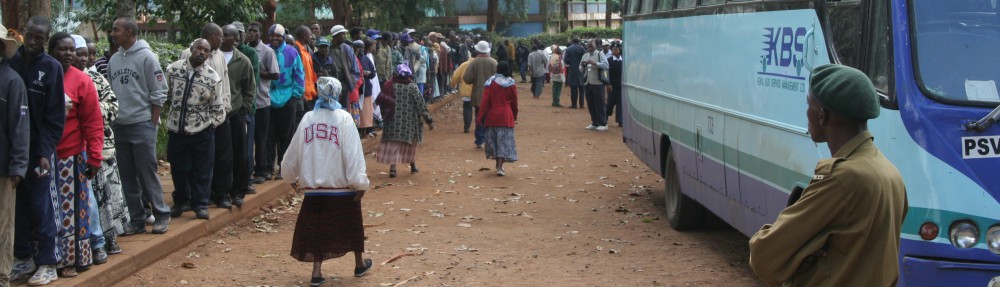
Djibouti IGAD Election Observation Mission press conference led by Kenya’s Issack Hassan of IEBC

There has been an explosion of great work in English relating to Africa in the podcast genre recently, and as an amateur I am way behind in sampling the free learning available just from time constraints. Today I want to flag the relatively new “On Africa” podcast hosted by Travis Adkins which has been a great teacher for me.

Start with Episode One, on October 4 of last year with Amb. Johnnie Carson, who has lived the history of the relationship between the U.S. and Zimbabwe, on “Zimbabwe after Mugabe.” November 6 on Cameroon as an “Electoral Dictatorship in Crisis” with Dr. Chris Fomunyoh of NDI was especially helpful for me since I focus on East Africa and do not have much background on the unique challenges there. Dr. Fomunyoh is a native of Anglophone Cameroon but attended university in Francophone Cameroon and has been a high level fixture for many years at NDI where he is Director for West and Central Africa.

Episodes of December 19, 26 and 31 on Sudan and South Sudan with Amb. Susan Page were especially good. Amb. Page has a personal background with the negotiations leading to the 2005 provisional government, served as NDI Regional Director and was appointed by President Obama as the first U.S. Ambassador following South Sudanese independence–so again, a sweep of recent history on into current events from an “insider” perspective.

Most recently for me, the February 13 episode with Zach Vertin, former diplomat now at the Brookings Institution Doha gives a 39 minute dive into the current “Red Sea Rivalries” shaking up international relations in the Horn of Africa region. Partin has a new book out on the birth of South Sudan which sounds fascinating and I have on my list.

Most of the best Africa podcasts I have been able to take time for in recent years have been more of an academic nature–what Adkins is doing at “On Africa” with accessible overviews of high level politics and diplomacy with people directly involved is a welcome addition for someone like me who wants to deepen and broaden their knowledge as an interested citizen with limited time due to other responsibilities.

Foreign Policy article gives insight on disagreements within Trump administration on backing off on criticism of flawed DRC vote

Foreign Policy has published a piece reporting significant internal dissent from the reversal of the U.S. position from significantly negative to largely positive on the recent DRC election:

. . . .

In a series of preliminary statements crafted by the team and released by the State Department on Jan. 3, 10, and 16—before confirmation of the final results—the United States sharply condemned reports of election-related interference and violence. The Jan. 3 statement included a threat that people involved “may find themselves not welcome in the United States and cut off from the U.S. financial system.”

With the Constitutional Court’s decision to confirm the election later in the month and with news of widespread election fraud, the group drafted a new U.S. response on Jan. 23. It noted the election results rather than welcoming them—a diplomatic way of signaling displeasure—and condemned the “deeply flawed and troubling” election, according to a draft reviewed by FP. It also stated that Congo’s electoral commission “failed to live up to the responsibility” it had to carry out elections fairly and ivowed that the United States would “hold accountable” any figures engaged in election fixing or violent crackdowns on any ensuing protests.

But none of this language made it into the final statement. Instead, Washington welcomed the results and declared itself committed to working with Tshisekedi. The revised statement made only passing mention to “electoral irregularities.”

Michael Hammer, the U.S. ambassador to Congo, along with Michael McKinley, a senior career diplomat advising Secretary of State Mike Pompeo, pushed for the revised statement, according to three U.S. officials. The department’s third-ranking official, David Hale, ultimately signed off on it, the officials said.

Senior U.S. officials in other agencies and some State Department officials—including the special envoy for the region, Pham—were kept out of the final decision entirely and did not know that a shift in policy was in the works, officials told FP. They said some officials found out about the shift in policy only once the statement came out. It left some of them fuming.

“If we said we’ll hold the government accountable … and five days later we congratulate a bunch of thieves, what good are our threats?” one senior U.S. official said.

One former State Department official familiar with the process said the implications went beyond Congo. “It was just a stupid decision to release that statement, a statement that has much bigger bearing on U.S. government democracy promotion in Africa,” the former official said.

The State Department, USAID, and NSC all declined to comment for this story. A State Department spokesperson also did not respond to a request to interview the senior diplomats who FP was told were involved in the process. . . . .

This is the kind of thing I always had hoped to see about Kenya 2007 where the U.S. initially relied on what my FOIA research indicates was a pre-determined blessing of Kibaki’s alleged re-election even after Ambassador Ranneberger witnessed vote totals being changed by the Kibaki-controlled Electoral Commission of Kenya and reported some pre-knowledge of unlawful rigging plans and conduct. In the face of violence the initial congratulations were withdrawn and the State Department pivoted to support a negotiation to include the opposition in a sharing of power with Kibaki. I know that there were differing internal opinions but I have never seen this level of public reporting on the internal debate.

Some of this may reflect differences in the internal environment and reporters’ expectations and aspirations during the Bush and Trump administrations as well as “the times” more generally. Regardless, I am glad to know more about how my government made this decision and encouraged that the problems with the positive statement final statement on the were recognized by some of those involved.

On the Congressional side, here is the January 18 Statement from the incoming Republican Ranking Member on the Foreign Affairs Committee:

Washington D.C. – House Foreign Affairs Committee lead Republican Michael McCaul (R-TX) released the following statement on the fraudulent election in the Democratic Republic of Congo (DRC).

“After eighteen years of the Kabila regime, the Democratic Republic of the Congo had a historic opportunity to give its people a voice by holding free and fair elections. Millions of Congolese bravely went to the polls to cast their vote amid long lines, intimidation and violence. Unfortunately, the fraudulent vote count does not demonstrate the will of the people. 

“I commend the African Union’s call for transparency and credible election results. All parties must refrain from violence as this process continues. It’s imperative for the United States and the rest of the world to stand with the Congolese people to demand an accurate vote tally and I urge Secretary Pompeo to fully engage at this pivotal moment. All individuals who impede this democratic process must be held accountable.”

I would also like to know more about slightly more gradual process of walking back the substance of our objections to Kabila’s 2011 re-election vote during the Obama administration.

Lake Edward into Congo


In Sudan, is the International Criminal Court an impediment to progress toward democracy and/or human rights now?

I am no expert on Sudan and the International Criminal Court practice, such as it is, is not my field in law.

But I am an observer of various related neighborhoods and did a bit of work in Sudan back in 2007-08. Also, over the years I have never quite seen answers develop to some of the conceptual uncertainties I looked at about the idea of an international criminal court while in law school. And, of course, there is my experience with the multifaceted failure of the ICC’s attempt to prosecute a few symbolic “most responsible” members of Kenya’s political elite for the instrumental murder and mayhem that was part of the competition for power in Kenya in December 2007-February 2008.

Thus, some questions:

1) Does the ICC indictment against Bashir hinder the prospects for Sudanese to get Bashir out of power through popular protest?

2) Are we all agreed that the ICC is not ready to prosecute a case against Bashir even though the facts of the case are many years old and the charges themselves have been pending for almost ten years? If so, is this not hugely important to weighing the practical value of the Bashir case to the Sudanese people today?

You can watch the discussion from a March 2009 event from the Overseas Development Institute and the Royal African Society on the ICC’s decision here.

3) How many Member States have declined to act on the Bashir warrant when he was in their jurisdiction? How many have attempted to act? How many Member States have honored the spirit of the case against Bashir during its pendency?

4) What diplomatic efforts have the Prosecutors been making during the pendency of the Bashir case? Is diplomacy by a Prosecutor a form of informal pleas bargaining? Is it really the case that the ICC cannot plea bargain? Is it in the larger interests of justice for a jurisdiction to have a prosecuting authority that cannot plea bargain? What about pardon authority?

5) What are the lessons from the failed cases against Uhuru Kenyatta and William Ruto? And more broadly from the overall success of the perpetrators of political violence in Kenya in avoiding prosecution, avoiding other penalties or sanctions, keeping the political gains achieved through violence and obtaining further support from Member State governments and other governments which notionally supported accountability?

I recognize that this is a very tough time for human rights and humanitarianism as reflected in this post on counter-humanitarianism, 2019’s biggest challenge: the humanitarian sell-out” from Christina Bennett at the Overseas Development Institute. All the more reason those of us who care about people in the hands of angry rulers need to ask ourselves the hard questions.

Update: The International Crisis Group has a new report out titled “Prospects for a peaceful transition in Sudan improving” (h/t The Official blog of David Shinn) which notes the ICC issue and discusses the idea of bargaining through the UN Security Council’s deferral process:

The UN Security Council might also offer to request the ICC defer investigation or prosecution of Bashir’s case for one year, pursuant to the Rome Statute’s Article 16, were he to resign or to leave office in 2020; the deferral could be extended provided Bashir stayed out of – and did not interfere in any way with – Sudanese politics. The downsides to deferring his case would be enormous, but without a pledge along these lines, Bashir is unlikely to step down.

One problem with this is that 3 of the Permanent Members of the Security Council are Non-Members of the ICC. China and Russia are hardly advocates of human rights, rule of law or democracy and the present United States administration expresses opposition to the existence of the ICC as such, escalating the complications associated with U.S. diplomacy involving ICC cases. What are the interests of the CCP here? Reports indicate that the Bashir regime has brought in Russian “Wagner Group” mercenaries.

Of course in the Kenyan cases, unsuccessfully pursuing a Security Council deferral was the major diplomatic priority for Kenya’s Government for a period of years, as well as attacks on the Court though the African Union, IGAD and whatever other fora could be found. The diplomacy failed, but the Prosecution failed anyway, with loss of life and other large costs left to the witnesses and victims.

Update Jan 16: World Politcs Review has a new piece from Richard Downey of CSIS.

Kenya: How will the Trump Administration’s support for the Uhuru-Raila handshake play out in 2019?

Happy 2019!

What will 2019 hold for the relations between the United States and Kenya, particularly the Trump-Pence and Kenyatta-Ruto Administrations?

Kyle McCarter, just confirmed by the U.S. Senate as Trump’s man in Kenya, after a delay since last spring, will shortly replace Robert Godec who shepherded U.S. interests as defined by the Obama and Trump Administrations, respectively, during the UhuRuto election in 2013 and re-election in 2017. The 2020 American presidential race is kicking off now a year ahead of the party primaries so it does not seem likely that McCarter’s efforts in Kenya will command a high place in the U.S. President’s personal attention soon. (If Trump is re-elected it would seem a fairly safe bet that McCarter would stay on for Kenya’s 2022 election, but as a political appointee he would likely be replaced in 2021 if the White House changes hands.)

It has been interesting to see a higher public profile recently from the U.S. administration on efforts to combat narcotics trafficking networks operating in and through Kenya, along with anti-addiction programs. McCarter has a voluntary service background in this challenge at home in Illinois in addition to his family missionary work in Kenya, so this might be a place where his talents would especially dovetail with diplomatic priorities. Here is a summary of the work of the State Departments’s Bureau of Narcotics and International Law Enforcement in Kenya.

We have also seen an encouraging new development with the recent and current prosecutions by the U.S. of cases involving bribery of high government officials in Uganda and Mozambique (going along with the U.S. extradition and prosecution of members of the Kenya-based Akasha narcotics trafficking syndicate). See the Amabhungane story on the Mozambique cases here.

The U.S. has been quietly supporting capacity building for Kenyan prosecutors; some people, including some Kenyans, think that the Director of Public Prosecution is now closer to “the real deal” than his predecessors and that President Kenyatta is actually now waging a form of a genuine if limited “war on corruption”. (We shall see.)

On the Kenyan side, with the end of 2018 we reached the end of the first year of the Second UhuRuto Administration and the first year of “Uhuru’s Big Four Agenda”.

In late 2017 we witnessed the opposition-boycotted “fresh” presidential election conducted by the highly controversial (and at least to some extent corrupt we now know) IEBC, followed by an international diplomatic circling of the wagons to close out Kenya’s political season on that basis.

Uhuru’s Jamhuri Day speech in December 2017, a month after his second inauguration, announced the UNDP (United Nations Development Program)-supported “Big Four Agenda”.

“On reflection, I came up with four responses to your concerns. I call them the Big Four: food security, affordable housing, manufacturing and affordable healthcare for all. During the next 5 years, I will dedicate the energy, time and resources of my Administration to the Big Four.”

Fulfilling these development targets would be the prospective reward to ordinary Kenyan citizens for their role, such as it was, in the re-election drama, and serve as Uhuru Kenyatta’s “legacy”, to cement his place within Kenya’s First Family and presumably secure the status of yet another generation of Kenya’s post-colonial pre-democratic elite.

I was struck by the fact that the Jubilee/UhuRuto election campaign did not offer the “Big Four” as its electoral platform. Needless to say, it is a bit incongruous to see the Jubilee Government and its international supporters (the same ones funding Kenya’s serially corrupt electoral management bodies) not offer a serious nod toward seeking a direct democratic mandate for such an ambitious and aggressive program to define a Kenyan president’s term in office.

I am fully in support of the concepts of “the Big Four” in having the Government of Kenya actually prioritize the common welfare of Kenya’s citizens. It is just that this type of service provision is frankly head-spinningly counterintuitive coming from Kenya’s existing political class. Anyone who has been blessed to live in Kenya and follows its politics must have asked at the inception a year ago if this “Big Four” was not just the another expression of foreign ambitions projected on Kenya and indulged by Kenya’s elite for their paramount purpose: looking out for themselves.

Now that a year has gone by, the attention of Kenya’s governmental leaders draws more and more tightly around their next election in three-and-a-half years while the reality of the debt load from the most recent pre-election period bears down. It would seem that skepticism was well warranted.

The United States reportedly took a key “leading from behind” role in late 2017 and early 2018 in bringing Raila into some form of post-election accommodation with the Kenyatta’s while taking both a publicly and privately assertive position against the “People’s Presidency” inauguration gambit last January. Since that time we have a new Secretary of State, a permanent Assistant Secretary for the Africa Bureau, and now a new Ambassador, but no open discontinuities in Trump Administration policy on Kenya. Dr. Jendayi Frazer who was the Assistant Secretary in 2007-08 is still around in the same various private capacities as she was in during 2013 and 17 (as far as I know). She was most recently in the Kenyan media visiting with Mombasa County Governor Joho, reportedly discussing “violent extremism” before a Mastercard Foundation event. Most of the other people who were involved in Kenya diplomacy and policy at a senior level in the Obama years are in quasi-official related positions and/or the Albright Stonebridge Group, awaiting a change in administration if not retired.

With the “handshake” between Uhuru and Raila it seems that Kenya’s opposition has been left with less power in parliament than at any time within the past twenty years.

Certainly Daniel arap Moi must rest easy knowing that the rumors of his political demise were greatly exaggerated. His succession project from 2002 has more-or-less succeeded. Kenyans are freer as a matter of civil liberties now than they were during the days of his rule as recorded in history and as described to me by politicians who were in opposition back in 2007 but have circled back in the years since. At the same time, extra-judicial killing remains a constant threat to the poor and to anyone whose exercise of those liberties might seem to present a real challenge to the political status quo. The killings by State security forces in support of the 2017 elections were significantly escalated from 2013 and after ten years it is now safe and necessary to say that the post-election violence of 2007-08 has been effectively ratified by the State as the violence of 1992 and 1997 under Moi was. And Kenya may be even more pervasively corrupt than ever. Elections arguably peaked in the 2002 landslide.

The “international community” as it identifies itself has accepted and moved on from its abject defeat by Kenya’s political elite (and by its own vanity and lack of substantive commitment) on the issue of “justice” for the politically instrumental murder and mayhem of 2007-08.

Trump’s “New Africa Policy” as per National Security Advisor John Bolton suggests that we should not expect any separate new “flagship” initiatives for development or assistance from the U.S., nor other major changes emanating from the White House. The “New Africa Policy” could be seen as raising questions of how far the U.S. will be willing to financially underwrite the “Big Four” approach on development assistance. Bolton himself was both the intellectual and political leader of the campaign to keep the ICC as far from any interaction with U.S. policy as possible and is a career U.N. skeptic. There are elements of the approach talked about for “the Big Four” that fit up with what we hear from USAID in the Trump era, in particular a heavier focus on creating opportunities for private foreign investment coupled with reduced direct assistance spending. At the same time, the sexiest sector for investment under the Big Four, under Universal Health Coverage, is predicated on the rejection of the Republican approaches to healthcare in the United States, so the rationale for U.S. Government support under a Trump Administration is fuzzy at best.

Just as most of Kenya’s major politicians have history as cooperators in some fashion with Kenya’s single party KANU regimes, some of those around Trump worked for Moi directly (Paul Manafort and Roger Stone most conspicuously) and Americans of longevity in the Foreign Service have background with the USG-GOK alliance under Moi. It will be interesting to see where Ambassador McCarter fits into this history.

On one hand, McCarter is a Trump political appointee from Republican politics; on the other his background with Kenya as a missionary makes him a somewhat anomalous figure in the world of Black, Manafort and Stone, Cambridge Analytica and other Trump-connected international operatives and lobbyists, and with Donald Trump and his Organization, the global hotel/gambling developer and brand broker.

McCarter has been around Kenya independently and will have is own pre-existing relationships and his own impressions on Kenya’s politics not tied to the Trump family.

McCarter’s religious background as an Oral Roberts University graduate and missionary in itself, and political background as an elected official from a less urbanized portion of the American Midwest may give the new Ambassador some head start in relating to ordinary Kenyans over someone from a more typical background for a professional diplomat.

Will McCarter tuck comfortably into the pre-existing Bush/Obama/Trump policy for Kenya of accentuating the positives about those in power and how we can keep things quietly spinning without risk of disruption? Or might he be more plainspoken? How will he see his role in the “handshake” and “Building Bridges” endeavor as Kenya’s pols move more quickly on to jockeying for advantage for the next dispensation from 2022? Can McCarter find a way to contribute something lasting on corruption and law enforcement even if the “Big Four” is “overcome by events” as politics moves on?

Kenya visit by IFES President Bill Sweeney March 2017

An earlier Handshake: IFES president Bill Sweeney calls on Jubilee Speaker of National Assembly Justin Muturi on visit coinciding with IEBC’s announcement of sole source deal with Safran Morpho to acquire Kenya Integrated Election Management System (KIEMS) in March 2017. Sweeney also brought the new IFES country director for its USAID election support program who was hired to replace the director who had been purged following criticism from the Jubilee Party and the Kenyatta Administration.
(Updated) Tea Leaves and Poker Hands: Bolton at Heritage on Africa

In a relatively short speech Thursday morning at Washington’s Heritage Foundation, President Trump’s current National Security Advisor John Bolton was said to announce the administration’s “new Africa policy”. Amb. Bolton stuck out during the George W. Bush Administration as both an aggressive hardliner by reputation on policy and as willing to fight hard within the bureaucracy. So no surprise that Bolton says we are not going to let the spigot run on aid projects or peacekeeping missions that are not “winning”, and will target programs more strategically to better match quids and pros, and such.

Overall, Bolton calls the policy “Prosper Africa”. He emphasizes concerns about the perceived unhealthy influence of China and Russia in Africa and frames U.S. interests as focused on competition among external powers. We want Africa to “prosper” through a growing middle class and business deals creating jobs and other benefits in both the U.S. and partner countries and in so doing to strengthen our influence and reduce that of our competitors. We intend to (continue to) play favorites, but in a more explicit and direct way, emphasizing “anchor” governments like Kenya (still our sentimental favorite African country) rather than focusing directly on poverty alleviation or “Sustainable Development Goals” as a global construct.

It seems to have raised eyebrows that Bolton did not mention PEPFAR and democracy and elections among other categories of assistance that we have emphasized both with rhetoric and dollars under Trump’s most recent predecessors. Contra some initial reactions, I anticipate that any major expenditure of political capital by the Administration with Congress to engineer large cuts to popular existing programs is not in the offing.

In fact, when the White House issued a press release “fact sheet” later in the afternoon reporting that it “was issuing” President Trump’s “new Africa policy” it explicitly mentioned “democracy” twice and otherwise sanded down Bolton’s sharper edges. Democracy, especially, as well as our health programs, are a comparative advantage for the United States vis-a-vis the PRC if we want to re-frame our rationale more explicitly in terms of traditional geopolitical competition.

The origins of U.S. development assistance philosophy come from offering a competing model to communism, especially following World War II and to some extent even earlier. Likewise U.S. overt explicit democracy assistance programs were established during the Reagan Administration. So talking more openly and frankly about our concerns about China’s role in Africa in the context of a recalibrated overall relationship that accounts for the Chinese Communist Party’s changes under Xi does not at all have to lead to a retreat from development or democracy assistance.

What plays out over the next two years from any of this remains to be seen.

Instructive are today’s two votes in the Republican led Senate approving resolutions calling for an end to support for Saudi Arabian war efforts in Yemen and condemning the role of the Crown Prince in the murder of American resident Jamal Khashoggi. The peak of unilateral latitude for the Trump Administration has already passed, even before the new Democratic controlled House is seated in the new Congress in January.

Testimony before the U.S. Senate Armed Services Committee, Subcommittee on Emerging Threats, by Judd Devermont, now Africa Diector at venerable Center for Strategic and International Studies, and recently national intelligence officer for Africa, gives a fuller and more nuanced picture of the range of Chinese involvement in Africa. Not all of it is necessarily contradictory to our immediate interests or longer term hopes, even though there are important concerns.

From my personal standpoint, I am still struck by the fact that according to what I read in the newspapers, combined with a letter from Washington, the Chinese hacked my security clearance file–and that of nearly every other clearance holder–from the Office of Personnel Management in Washington during the last Administration. (I also read they “wired” the African Union headquarters, among many other examples.) As for the Russians, they were screwing around in our own Republican Party and to some extent with our general election campaign.

Thus, we most need to be competent, purposeful and mature in conducting our own business in an environment which can be expected to punish complacency. Get through this temporary period of governance by Tweet and tabloid huckster hush money and get our own democracy back on a more even keel. Then we can more effectively deepen our relationships among African countries and with African citizens for the long run. In the meantime, I hope and expect that we will continue most of the incrementally helpful things we have been doing in Africa and not rock the boat too dramatically.

In the meantime, worth noting, for instance, is the presence of Somaliland’s Foreign Minister at Bolton’s speech.

What to make of the policy being announced by Bolton at Heritage instead of by the Secretary of State in an official or semi-official venue? Probably the same reason there are not details and documents: a point of the event is to stamp Bolton’s ideological role within the Administration, the Republican Party, and “The Movement” (big “C” Conservatism with American characteristics is how I might describe it). This is “framing” and “vision” with various audiences rather than actual “policy” as such.

It takes cognizance especially of the geopolitical struggle most compelling on a day-to-day basis in the White House: “red” versus “blue” in the rest of the United States. Thus the focus on competition with “Obama” as a symbol of “blue” who did not announce his “new Africa policy” until nearly the end of his first term. Bolton is a guy with seven pictures of himself on his Twitter profile who tried to mount his own run for President: he obviously enjoys the spotlight and enjoys being a lightening rod for the arena. More substantively, it announces the drawing of a line of demarcation against the perceived “feckless liberalism” of Obama and the perceived namby-pamby do-gooder “compassionate conservatism” that sometimes fuzzed the focus of G.W. Bush in Africa. “Africa” is to be normalized as a geographic space.

Realism of course tells us that the Americans who will make the day to day decisions that actually determine our role in the various African countries do not report to Bolton and that any deep reorientation of policy will require more time and attention than Trump and his cabinet as a whole likely have left in this term. This could tell us much more about what to expect if Trump were re-elected or if the next Administration involved a similar role for Bolton and like-minded officials.

Realism also notes the Administration lost votes on two foreign policy resolutions in the Senate between Bolton’s speech and the White House press release.

What to do now in Kenya?

Old Party Office in Kibera

Solo 7–Kibera

Kenya’s election rerun could be a major setback for African democracy” a new Washington Post editorial was published Monday evening in the United States.  I suspect The Post here has fairly well reflected the general view of the Kenyan situation in Washington.

What to do?  I think the International Crisis Group has a long track record of assessing conflict in Kenya and offering helpful suggestions.  They did good work that I relied on in the 2008 crisis.  The Daily Nation picked up their latest recommendation here:


At the same time, a conflict prevention organisation, International Crisis Group, asked the Independent Electoral and Boundaries Commission to go back to the Supreme Court and seek a limited extension of timeline by 30-45 days to allow all parties to take part in the election and avert a crisis.

The group said Kenya’s political leaders should support such an extension and commit to participate.

SUPREME COURT

According to ICG, the precedent for such a delay exists.

“The High Court in 2012 delayed elections by six months, which helped ensure a credible and peaceful vote,” the group said in a statement.

“The Supreme Court should favourably consider such an extension, given the IEBC chairman’s own acknowledgement that the commission cannot guarantee a credible vote within the allotted timeline.”

The ICG said that should it grant a delay, the court ought to state clearly that President Kenyatta would remain in office pending the fresh vote and that Nasa leader Raila Odinga should take part in a delayed poll without additional conditions.

“He should renew the welcome public pledge against violence that he made on October 20.

“He also should rein in and hold accountable supporters who have attacked election officials, made inflammatory threats to disrupt election or otherwise broken the Kenyan law,” the group said.

See my post discussing the International Crisis Group’s March report on “Avoiding another electoral crisis in Kenya”.

And see “World papers and magazines to postpone repeat poll” in the Daily Nation.

Don’t be confused: preparations for Kenya’s failed August election election were controlled by Kenya’s ousted “Chickengate” IEBC and its CEO and staff with support of international “partners”

From this blog late last year:

Meanwhile, Kenya is paying an average of about $343,000.00 “severance” to each of the outgoing Independent Electoral and Boundary Commissioners for leaving earlier this fall rather than completing their terms through November 2017. No signs of accountability for the #Chickengate bribes to the IEBC by Smith & Ouzman that were prosecuted by the UK and no sign of accountability for corruption in the subsequent 2013 election technology procurements.

While the “buyout” has been negotiated, the incumbent IEBC staff without the “servered” Commission has been proceeding to undertake election preparations that will be fait accompli for the new Commission when it is appointed next year.  

Accordingly, the chief executive has proceeded to report plans to spend an astounding 30Billion KSh to conduct the 2017 general election, while setting a target of 22 million registered voters. In other words and figures, roughly $13.40US per registered voter if the target is met or $19.60US per currently registered voter. (For comparative data from places like Haiti and Bosnia,see The Ace Project data on cost of registration and elections.)

Update: see Roselyne Akombe’s interview in the Saturday Nation, Credible Oct. 26 election not possible: Akombe” 

FREE, FAIR AND CREDIBLE? Turning The Spotlight On Election Observers in Kenya | The Elephant

Published today in The Elephant: FREE,FAIR AND CREDIBLE? Turning The Spotlight On Election Observers in Kenya | The Elephant by Ken Flottman.

A classic example of why Kenyans are frustrated with the mix of international Election Observers and Media

Kenya 2007 election Kibaki Tena Kazi iendelee re-election

Can John Kerry help stop Kenya from slipping into Post-Election Violence Again?“, Newsweek, 10 Aug 2017:

Beyond the “Western patrician savior” headline:

. . . .

I know what it’s like to lose an election. I lost by one state the presidency of the United States, and I had a lot of reasons to complain about what happened in Ohio or in other states. But you gotta get over it and move on,” said Kerry Thursday at a press conference in Nairobi, where he has headed up the election observation mission from the Carter Center. Kerry was likely referencing issues with the voting system in Ohio that led to a recount and reduced margin of victory for Bush.

 The result—and perhaps more significantly, the aftermath—of Kenya’s presidential election is not yet clear. With almost 99 percent of the votes counted, incumbent Uhuru Kenyatta is in front with 54 percent of the vote, ahead of opposition leader Raila Odinga at 45 percent. Kenya’s electoral commission has said the result will be confirmed on Friday.

But Odinga has signaled he will not accept the result quietly. Odinga stated on Thursday that unknown figures had hacked into the electronic systems of the electoral commission—using the identity of Chris Msando, the commission’s IT chief who was tortured and murdered less than two weeks before the vote—and swayed the vote in favor of Kenyatta. Odinga has called for calm but has also not ruled out summoning his supporters to the streets.

Such a move would have a dreadful familiarity in Kenya. After the 2007 election, which Odinga lost to incumbent Mwai Kibaki amid allegations of rigging, supporters of both candidates clashed over several months in an ethnically charged conflict that left more than 1,000 people dead.

Kerry has led the Carter Center’s observation mission in Kenya, which saw observers deployed at more than 400 polling stations across the country, as well as 36 tallying centers. The center said in a preliminary statement on Thursday that despite some problems in the transmission of results from polling stations to tallying centers, the vote had been conducted in a peaceful and calm atmosphere. It urged candidates to wait for the official results before commenting and to “use established legal channels” to resolve any disputes and “ensure that their supporters remain calm” before and after the results have been confirmed.

Kerry himself said the vote appeared to have proceeded in a free and fair manner. “The process that was put in place is proving its value thus far,” he said. “Kenya has made a remarkable statement to Africa and the world about its democracy and the character of that democracy. Don’t let anybody besmirch that.

Former President Barack Obama also has urged Kenyans and their leaders to reject “tribal and ethnic hatred” and to “work together no matter what the outcome.” (emphasis added)

Facile comparison to very dissimilar 2007 situation (see my The Debacle of 2007 in The Elephant here.)  Exaggerated time period for that violence ten years ago (most of the violence was within one month of the election and the settlement was reached at the end of the second month).  No mention that following new the constitution in 2010 as a result of the 2008 settlement, the Odinga v Uhuru dispute of 2013 resulted in no widespread violence and much smaller numbers of opposition supporters killed by State for protesting.  No mention that the country in August 2008 was basically locked down by a massive and oppressive state security deployment.

No substantive focus on the main electoral problem: failure of results transmission system, as in 2013 (and mirroring 2007) yet bare assertion that 99 percent of vote counted.

Advocacy by Kerry beyond written statement of his Carter Center Mission that the election appeared to meet standards and to achieve the (Western) goal of an African success story and “Don’t let anybody besmirch that”. Etc.

Kenya Election Trump White House congratulates Kenyatta on fair and transpaent re-election

A thought about the International Crisis Group statement headined “Kenyans should come together” . . .

3387011018_0499c6bf57_o

Kenya election banner Kibaki Nakuru 2007

Yes, of course, they “should”.  As we Americans should also, for instance.  How is another question entirely.  Anyone who wants to “help” Kenyans should engage with them and see what they want and need toward that far off goal.

Needless to say, politics and these elections have not historically been involved in bringing Kenyans “together”.  Quite the opposite in fact.

“Shocking” news again from Kenya:  the more things don’t change the more they stay the same.  This election time is quite different than 2007 or 2013 in many ways and not in others.

In regard to post election mechanics (analog and digital), these change a lot each election.  Not as much as the law requires perhaps, but significantly.The process of voting by paper ballot, counting the paper ballots by hand and recording the vote by hand on paper on Form 34A and posting it on the door (or in some cases deciding not to) is fixed and well established, 2007, 2013, 2017.  Kenyans have and do “come together” over this process.  They always do it peacefully.

Not sure why people are seeming to find that to be a novelty.  A great and important thing yes–and it should not be taken for granted. Nor should it be misrepresented as “progress” or any form of “change” each time it is repeated.

So no, this peaceful turnout in long lines to vote by this same process in 2007, 2013 and again in 2017 is not, in fact, an act of faith at all as described by ICG.  It is an act of hope each time.  Arguably for many an act of love for country or subgroup.  Kenyans are broadly faithful, but not in the election process as a whole.

Here is the ICG statement.