New Human Development Index ratings: most high and middle performers in SSA are underperforming relative to GNI

Nairobi Kenya Microsoft billboard

Here are the Sub-Saharan African countries with a Human Development Index in the “High” and “Medium” categories as listed by the recent release for 2017 from the UNDP.

Interestingly, Kenya along with Sao Tome and Principe stand out for having a Medium HDI level relative to a lower Gross National Income per capita. Equatorial Guinea was the most extreme under-performer relative to GNI rank.

HDIRank # GNI/capita HDIRank-GNIScore

HIGH

101 Botswana .717 15,534 (-26)

110 Gabon .702 16,431 (-40)

MEDIUM

113 South Africa .699 11,933 (-23)

129 Namibia .647 9,387 (-25)

137 Congo .606 5,694 (-5)

140 Ghana .592 4,096 (3)

141 Equatorial Guinea .591 19,513 (-80)

142 Kenya .590 2,961 (16)

143 Sao Tome and Principe .589 2,941 (16)

144 eSwatini .588 7,620 (-29)

144 Zambia .588 3,315 (2)

147 Angola .581 5,790 (-16)

151 Cameroon .556 3,315 (2)

Democracy Assistance needs an external non-governmental watchdog

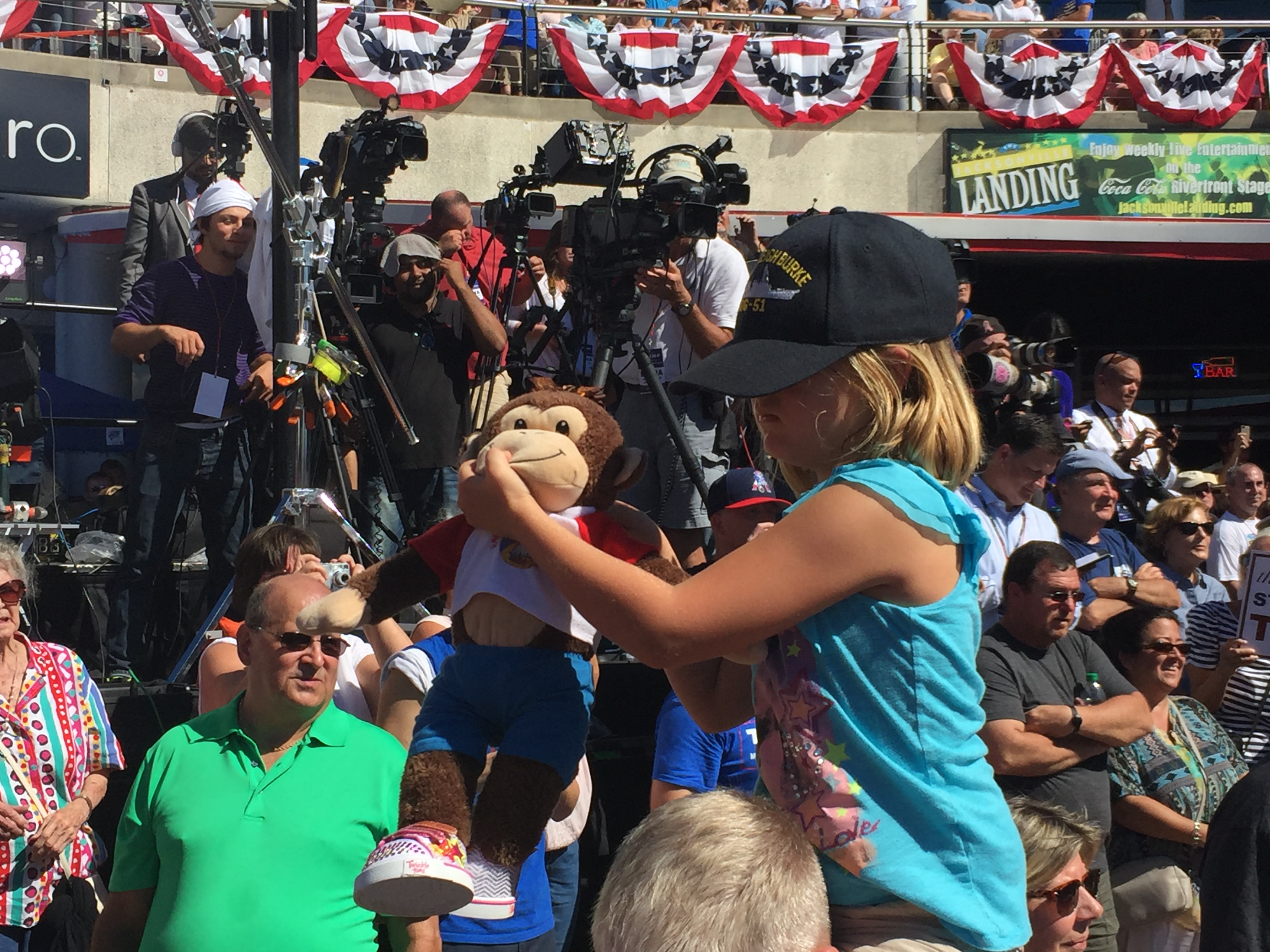
Democracy assistance needed - Presidential campaign rally Trump Floida Democray assistance needed

This recommendation for the creation of a democracy assistance “watchdog” organization is where I have ended up from my own experience as an election observer and a volunteer trainer. And especially my role as a “sentimentalist whistleblower” from my time as “East Africa Resident Director” for the International Republican Institute with the failed 2007 Kenyan election.

I recently had the chance to visit with a wise American friend from my Kenya time who is of the persuasion that we, the United States, would be better advised on balance not to try “democracy promotion” and to step back from being entangled in foreign politics. My accumulated years of watching democracy assistance in addition to my own search to understand what has happened in Kenya in spite of my best efforts force me to take this view seriously in a way that I would not have some years ago. Nonetheless, I am still in a “different place”and have an alternative suggestion. (When my friend stated that she would rather we spent the money on educating children I had to concede that would be better, but we have been around long enough to know that would not happen.)

Admittedly I have not been objective. This goes to the “sentimentalist” aspect of my speaking out about what went wrong on my watch in Kenya in 2007-08 and what I saw going wrong in 2013. Even though losing or limiting valued personal friendships was inevitable as a result of being a dissenter and agreeing to speak on the record to The New York Times about what happened I did it because I felt obligated and I have continued to feel affection for my former colleagues. Nonetheless, having been briefly an insider and otherwise around the democracy assistance community does give me a basis to continue to believe that most of the people involved in democracy assistance are relatively sincere and would prefer to accomplish more for the intended beneficiaries of the assistance.

Beyond that, the reality is that we are going to continue to do democracy assistance anyway. The question is just whether we want to get better at it or not.

Democracy assistance has solid bipartisan support from Republicans and Democrats in Congress whether or not the base voters of either party are persuaded conceptually. Yet we observe by consensus that we are in a period of global “democratic recession” suggesting that what we have been doing may be suboptimal. People outside Washington generally do not have time and other resources to be engaged unless they are either participants (and thus beneficiaries) of the system or ideologically engaged to a degree that inhibits having a place at the table in Washington.

One of the problems is the inability to develop the learning and community of practice that would be available if there was greater transparency. Transparency is not really in the immediate short term interests of implementing organizations like IRI, NDI and IFES which for perfectly natural reasons would rather stay out of the line of fire from beneficiary critics of donor policies and just find it easier, like any of us, not to have anyone looking over their shoulder.

It is clear to me that the values behind “open government” would be most compelling in the area of democracy assistance itself. Donor taxpayers and intended beneficiaries of democracy assistance ought to see what they are paying for, and intended to receive respectively. The practice of informal secrecy creates opportunities for incumbent host governments to manipulate and divert programming. Informal secrecy also creates opportunities to avoid scrutiny of irregular interference in democracy programming by donor diplomats or others who may have competing objectives. [The essence of my experience as I summarized in “The Debacle of 2007″ for The Elephant.]

See also: “President Trump’s new Assistant Secretary of State for Africa candidly explained why election observation and technical assistance have to be firewalled from diplomacy to have integrity“.

Meanwhile donor funds are available to tell positive, promotional stories as part of the donors’ general public diplomacy efforts even if the stories may gloss over the grittier realities that would need to be dealt with to actually improve an aspiring democracy– whether just to burnish images or to serve “stability” by avoiding angering voters who might be upset to know more about how their leaders are conducting themselves.

Existing watchdog organizations do not seem well equipped to work on foreign democracy assistance–partly because they have so many seemingly bigger fish to fry. In an era of “permanent war”, massive defense budgets and big expenditures in health and other programs and huge, growing deficits, democracy promotion programs are going to continue to be below the radar and outside the ordinary bandwidth of most groups like the Project on Government Oversight that do much of the best oversight in other areas. Related limitations apply for public interest journalism.

The Inspector General function is available to deal with certain specific wrongdoing within USAID programs and can deal with things like theft of funds from implementing organizations but a watchdog outside government could help all of us learn whether we are really doing the right things with our resources to help democratic development. While the USAID investigation process of my complaints regarding my experience in Kenya at least generated the informal confirmation of my concerns there was no remedy offered nor public reporting. Realistically democracy assistance gets into messy political questions that can only be addressed candidly in the first instance from outside of government.

There is new attention in Washington to “competing” with China in East Africa. In the bigger picture we have entangled our own economy deeply with China’s for too many years to simply change our minds now so our relationship with China will be nuanced. We do see that China has moved in a more rather than less authoritarian direction in recent years and that the Communist Party of China is doing more to directly collaborate with like minded ruling parties as we see with Jubilee in Kenya.

If we care about democracy in the long term the size of China as a power committed enough to its own authoritarianism to work to suppress its own expatriates and manipulate news coverage in Africa is concerning even if it does not succeed in propagating the CPC model.

But we do not need to be reactive: let’s do what we do better instead of playing catch up on their terms if competition with China is a motivator. It is the ballot box, not Bechtel Corporation (as an example) that gives the United States a comparative advantage over China. To mutually share the opportunities of democracy effectively, we need to generate more transparency and better oversight for our democracy assistance.

Expect US Africa policy to be led from Pentagon rather than State Department or White House, in near term if not for the next four years [updated]

(https://flic.kr/p/6fgHxc)

The President himself has never been to Africa and has shown no particular interest or inclination toward engagement on any of the various issues on his plate regarding the United States’ activities in and relationships with African countries.

In some respects this suggests a level of continuity through inertia that is unavailable in those areas to which Trump has some personal connection or exposure through his business organization or personal relationships (Russia on one hand and Mexico on the other, for instance).

Trump seems to be networked into the Safari Club and is politically very much indebted to Franklin Graham (the  American evangelist/missionary who has been especially engaged in Sudan and otherwise in Africa) but I don’t think that this will put much claim on Trump’s attention, as he already ordered a cutoff in U.S. funding to organizations that separately have connections to programs touching on abortion (a significantly broadened approach to the Reagan and George W. Bush administrations’ rules) as an early low cost “deliverable” to “pro-life” supporters on an issue he doesn’t personally have any particular feelings or opinions on. [Graham does not make specific candidate campaign endorsements–my perception of his influence for Trump is subjective from my vantage point as a white Southern American Protestant, who has been involved in congregational mission efforts that include support for one of Graham’s programs.]

Trump did not get where he is by building a reputation for paying his debts (any more than for forgiving his debtors), so I will be surprised, pleasantly, if Graham were to influence Trump on non-abortion related health issues that involved spending rather than cutting, like famine relief or other things that had some political purchase under “compassionate conservatism” in Africa during the G.W. Bush administration.

Trump is pretty clearly anti-conservation domestically and probably disinclined to have anything much to do with things involving wildlife or the environment in Africa other than to reduce funding for any direct or international programming in these areas, Safari Club notwithstanding.  Generally speaking my big game hunter friends are more concerned about wealth accumulation and tax cutting–Trump’s policies will leave them net ahead even with a likely loss of habit and species diversity (and better situated to buy private reserves).  Along with the expected big overall aid cuts, I would speculate that  conservation programs may be especially attractive targets to “zero out” to give Congress political bragging rights for some program “kills”.

So outside the military and Department of Defense we will probably see Trump to be as slow to fill key policy positions on Africa as Obama was, but with more turnover in the next tiers of the bureaucracy.

Because the Defense Department has already been the big repository of funding to maintain policy expertise in the U.S. on Africa (as elsewhere) during the Bush/Obama years, as funds and political bandwidth are reduced in other areas, we will be more dependent on those functions under the portfolio of Secretary Gen. Mattis at the Pentagon.  It is very fortunate that he stands out as unusually well-qualified and genuinely respected.

In the event any of the major players in the hospitality/tourism/”conferencing” business–say the Kenyatta family of Kenya–were to entice the Trump Organization into their market, certainly that would be expected to profoundly change everything I have observed here.

In that regard, perhaps we will see “The Scramble for Trump” as a new frame for engagement in the post-development era.

Having apologized for having gotten our shoes in the way of the vomit, donors to Kenya’s government are now finally alarmed again about the (ongoing) corruption

Here is the latest from Kenya’s Journalists for Justice on the corrupt involvement of personnel in the Kenya Defense Forces in the charcoal and sugar smuggling trade.

It’s not so much that I’m jaded, it’s just that I have watched this movie before–and even been an “extra” of sorts in one of the previous remakes.

Yes, corruption is obviously getting even worse within this Kenyan administration than within the last.  But that was also true when I lived in Kenya during the end of the first Kibaki administration and into the beginning of the second.

There are several readily apparent reasons.  For instance, when I lived in Kenya I made the acquaintance of a Western expat whose spouse was in the tourism business. Prior to the 2007 vote count corruption and violence, the tourism business was booming.  But corruption was up as a cost of doing business as it was explained to me because to operate you had to pay off a second generation, too–the kids of the senior politicians.  Presumably this generational expansion has continued.  Why wouldn’t it?

The year before I moved to Kenya the UK and US envoys had been outspokenly opposed to the corruption, in the context of the Anglo Leasing revelations by John Githongo of massive corruption involving national security procurements, touching our own security interests aside from our sensibilities about criminal behavior, along with the outrageous shenanigans involving the Artur Brothers, and the Standard media raid, among others.  The British envoy even offered the memorably colorful “vomit on our (the donors’) shoes” metaphor about the extent of the gluttonous “eating”.

But by the time I arrived in mid-2007 things were different.  New personnel led the diplomatic missions.  On the US side we apparently helped Moi and Kibaki get back together, and hosted Interior Minister John Michuki, of “rattling the snake” fame, who had taken credit for the Standard raid, on a security tour of the U.S.  Michuki represented Kibaki at our Embassy’s Fourth of July party, where Moi unofficially planted himself to catch the receiving line.

And then we looked the other way at the corruption of the Electoral Commission of Kenya.  Ambassador Ranneberger made sure to get his predecessor Ambassador Bellamy removed from our IRI Election Observation Mission on the basis that he was “perceived as anti-government”.  Bellamy had spoken out on the corruption, in particular the Standard raid.  The week before the vote, Ranneberger noted for the Kenyan public that Kenya was “on track” in fighting the vice of corruption, that  we had had Enron in the U.S., that prosecutions for Anglo Leasing and Goldenburg could take time, and that the World Bank had given the Kibaki administration an award for procurement reform (of all things) and that he expected a “free and fair” election.  And then we tried at first to sell the ECK’s election “count” even though we knew full well that it was bogus.  When that didn’t fly, we supported “power sharing” so long as there was no new election before Kibaki’s full second term was up.  According to a news report from Nairobi years later from stolen cables from “Wikileaks” we issued a couple of “travel bans” based on alleged evidence of bribery against two of the ECK commissioners, but we never disclosed this action or the evidence, why we singled out these two or anything else about the matter.

During the post election violence a diplomat explained to me that the reason many of the younger pols in Kibaki’s PNU coalition were against a power sharing settlement was that they didn’t want to share the secondary ministry appointments.  Ultimately by adding opposition politicians into the second Kibaki administration through “power sharing” with extra ministries you further expanded the multigenerational set of stomachs to let eat.  One way to look at the settlement naturally has been that Kibaki and Raila were willing to stop the fighting (so long as Kibaki retained with further ambiguity the full second term Presidency which the ECK had delivered to him) and the rest were bribed to acquiesce.

So you cannot tell me with a straight face that the diplomatic position of the United States in 2007-08 was to “oppose” corruption as a high rather than a subordinated priority.

After being stung by criticism from the election debacle, Ranneberger was reborn as an outspoken “reform agenda” campaigner for his extended tour on through the passage of a new constitution.  He compiled dossiers on money laundering and drug smuggling through politico/business interests and encouraged action, albeit to no avail. His successors quietly moved on, however, and we helped sell a new badly handled election in 2013 by a new, but probably more pervasively corrupted electoral authority.  We helped pay for expensive technology that was doomed by procurement fraud but kept quiet.  The British Serious Fraud Office successfully prosecuted one of their companies and its owners for bribes on other election procurements, but the Kenyan administration has taken no action to follow up and we have kept our silence.

With time, we have come again to affectionately embrace our usual suspect “partners”, with new programs headquartered in our favorite African city of Nairobi.  A photo op in the Oval Office with POTUS and FLOTUS for the Kenyan President and First Lady last year, followed this summer by a glowing official Presidential visit to Nairobi with a telegenic dance party at State House.   Never mind what we said before; please can we give you more?  Some eloquent speech about the cost of corruption, safely abstract from the burgeoning accumulation of years of specific cases on the impunity docket.  Yes we can dance with this new set of shoes without even looking down at the vomit.

Surely then it can be no surprise that things have gotten that much worse.  With a new report by Kenyan journalists on the longstanding implication of Kenyan Defense Forces which we help underwrite in Jubaland in the sugar and charcoal smuggling rackets, and fresh levels of embarrassment from the international press from the National Youth Service, irregular handling of bond proceeds amid rising debt levels, more land grabbing and another looted bank, all with a new election cycle approaching, the season has turned again and it is the time for furrowed brows.  Time for the U.S. to lead a donor group to call on the current version of the anti-corruption authority.  To talk again of “visa bans” and offers again to assist in “asset recovery”.

Instead of another remake, could this be a sequel offering a surprise ending, with say, even a few villains in jail, or at least less rich, as a cautionary tale for some and a bit of hope and inspiration for others? Or is this just another iteration of “the formula” in which the sheriff rides into town, frowns at the drunken brawl, then passes along to enjoy the cinematic scenery on the way home?

Only time will tell.  I do think we genuinely would prefer to be against the corruption rather than aligned with it.  We just lose our nerve and get distracted by other priorities that seem more immediate.  Making a dent in Kenya’s entrenched culture of impunity would take a long hard slog, in the face of bitter opposition formal and informal.  It would be messy and likely involve putting up with a bit of embarrassment–it could involve some risk and actual cost.  In any event  it would take a good while for us to convince the players that we had become serious.

“Whosoever will be chief . . . “


London

Why does the House Foreign Affairs Africa Subcommittee keep leaving the Carter Center off their election hearings?

The U.S. House of Representatives Committee on Foreign Affairs, Subcommittee on Africa, Global Health, Global Human Rights and International Organizations is holding a hearing Wednesday morning, March 18, on U.S. Election Support in Africa.

Good.  Unfortunately, as was that much more conspicuous with the hearing about the 2013 Kenyan election, the subcommittee has scheduled testimony from the IFES/NDI/IRI troika, but without the Carter Center scheduled.  The Carter Center conducted the USAID-funded Election Observation Mission itself for Kenya in 2013, so the omission was hard to understand on a hearing on that very election; it is still hard to understand for an Africa-wide hearing.  (I have no idea why things have turned out this way, I am simply making the point that Congress would have an opportunity to be better informed if this wasn’t just an “all in the Beltway” experience.)

For Kenya’s last vote, see Carter Center quietly publishes strikingly critical Final Report from Kenya Election Observation.

For further discussion of the Subcommittee’s April 2013 Kenya hearing, see AfriCOG’s Seema Shah asks in Foreign Policy: “Are U.S. Election Watchdogs Enabling Bad Behavior in Kenya?”

In new developments, now with the British #Chickengate prosecutions for bribing Kenyan election officials: USAID Inspector General should take a hard look at Kenya’s election procurements supported by U.S. taxpayers.

The Carter Center also observed the 2002 and 1997 elections in Kenya, along with many others, including the most recent election in the Democratic Republic of the Congo in 2011 which provides perhaps another set of lessons as the Kabila government arrests democracy supporters and even a U.S. diplomat.

DRC: “We have to debunk the idea that it is peace versus transparent elections. The idea that lousy elections are going to bring peace is madness.”

Carter Center calls it as they see it in DRC

U.S. and other Western donors support review of election irregularities in DRC–offer technical assistance.

State Department to Kabila on DRC Presidential Election: “Nevermind”?

IRI Poll Releae Press Conference

The U.S. “official” infatuation with Kenya, in numbers

I’ve spent some time looking at “Official Development Assistance” (“ODA”) numbers for Africa to test my perception that the U.S. seems, for some reason that is hard to pin down, to give an inordinate amount of “development” money to Kenya.

At play Monkeys at play on UN vehicle

Sure enough. Going through the ODA summaries by country from the OECD, for each of 47 countries in continental Africa, we find plenty of verification of this. The U.S. is the leading bilateral ODA donor for 25 of the 47, including Kenya (Kenya’s number two donor is Japan). Kenya is the number three recipient of bilateral ODA from the U.S. for a 2010-2011 annual average (the most recent listing) of $642M, behind only the Democratic Republic of Congo at $1,053M and Ethipia at $791M.

On a per capita basis this is $15.53 for DRC, $15.43 for Kenya and $9.34 for Ethiopia. What about “need” based on poverty? PIn the DRC the Gross National Income (GNI) per capita is $190; in Ethiopia $400. Kenya, on the other hand, has a GNI per capita of $820, more than double that of Ethiopia and well more than four times that of the DRC.

Across the continent as a whole, Kenya ranks ninth in per capita U.S. ODA. Three countries of those getting more per capita are special cases: Liberia and South Sudan, post-conflict states where the U.S. has a special historic relationship and responsibility relating to the founding of the country itself and Libya, an immediate post-conflict situation where the U.S. government was instrumental in supporting the removal of the prior regime. All of the recipients ahead of Kenya except for the DRC have relatively small populations.

Among the five countries of the East African Community, Kenya receives both the largest amount and the most per capita in ODA from the U.S., even though its GNI per capita is by far the largest:

Country        GNI Per Capita      U.S. Bilateral ODA      Per Capita      Rank/Reference

Burundi           $250                             $48M                      $5.58        2 (1-Belgium 161M)

Kenya             $820                              $642M                   $15.43       1 (2-Japan $139M)

Tanzania         $540                             $546M                    $10.74          1 (2-UK $219M)

Rwanda           $570                             $167M                   $15.32           1 (2-UK $121M)

Uganda           $510                              $388M                   $11.24           1 (2-UK $163M)

————-
And a sampling of other countries of interest:

Somalia           —-                                 $90M                      $9.38           2 (2-UK $107M)

C.A.R.           $470                                $16M                      $3.56           3 (1-France $29M)

Malawi          $340                                $140M                    $9.69           1 (2-UK $126M)

Mali               $610                                $232M                  $14.68          1 (2-Canada $106M)

Niger             $360                                  $97M                     $6.02          1 (2-France $56M)

Chad              $690                                $124M                    $10.75       1 (2-France 45M)

Canadian High Commissioner misses the point in warning Kenyan politicians about ICC pullout

A diplomat has warned that the move last week by law makers to have Kenya pull out of the Rome Statute could jeopardise future search for international justice for Kenyans.

Canadian High Commissioner in Nairobi David Angell said pulling out of the Rome Statute, that established the International Criminal Court (ICC), would deal a blow to any future victims of violence that Kenyan judicial system would not handle.

“Canadian envoy warns in Kenyan ICC pull-out” Daily Nation

What search for international justice? Kenya’s last Parliament did not follow suspect William Ruto’s “Don’t be vague, go to The Hague” lead out of a preference for “international” justice over trying the suspects locally–rather it was an excuse for not prosecuting anyone themselves. Likewise the last Parliament did not then turn around and vote in December 2010 to withdraw from the ICC as soon as the charges came down against Ruto, Uhuru Kenyatta, Sang and the three others in consideration of the interests of “justice”. If the members of Kenyatta and Ruto’s Jubilee coalition who voted again to withdraw from the ICC on the eve of Ruto’s trial were in the least concerned about a “search for international justice” for victims of election violence–past or present–they would not have done so.

Kenyatta and Ruto as KANU leaders were on the side of election violence in Kenya in 1992 and 1997 and they certainly have not done anything to express remorse or “search for justice”–international or otherwise–for the victims. The very idea that there should be such a search for justice for victims of electoral violence is an affront to the political order in Kenya and on this Kenyatta and Ruto can easily circle the parliamentary wagons against the threat to their private sovereignty and that of their cohort.

The High Commissioner ought to appreciate that he is speaking to an audience which has, over many years, shown that it takes these thing deadly seriously. If the Canadians want to step into the current diplomatic vacuum in Nairobi to address the situation, I certainly applaud the intention, but they if they want to have influence they need to speak of things that their audience cares about.

Party hardly? [but buy these books . . .]

A quick plug for Sebastian Elisher’s new book Political Parties in Africa: Ethnicity and Party Formation from Cambridge University Press. The cover photo is one of my shots from Kenya’s election day in Kibera in 2007. Pre-order now for release on September 30.

Political Parties in Africa: Ethnicity and Party Formation

Likewise, the paperback is just out from one of the other Oxbridge publishers for “From Parties to Protest: Party Building and Democratization in Africa”, last year’s African Studies Association award-winner from my friend Adrienne LeBas. 

The great thing about books about Kenyan political parties:  the books and the analysis are always more substantial than the parties themselves.  I will hope to develop this theme further and discuss both books here later in the year.  In the meantime, enjoy your choice of hard or soft power publishing.

Are “free and fair” elections passe in Kenya?

Uganda Debt NetworkHappy American Independence Day–it has now been a full four months since Kenya’s 2013 election, yet the results have still not been released by the Independent Electoral and Boundaries Commission.

The 2012 Kenyan Constitution mandates in Article 81: “The electoral system shall comply with the following principles––

(e) free and fair elections, which are—

(i) by secret ballot;
(ii) free from violence, intimidation, improper influence or
corruption;
(iii) conducted by an independent body;
(iv) transparent; and
(v) administered in an impartial, neutral, efficient, accurate
and accountable manner.

Thus “free and fair” is the legal standard in Kenya. So what standard did the international observer missions that issued their reports on Kenya’s elections without waiting for the official results apply?

Note this from Mienke Mari Stetytler’s “Observing the observers: how the Kenyan election was verified” republished in the Daily Maverick this week:

One month after the election, on April 4th, the Carter Center released its postelection statement. “In spite of serious shortcomings in the Independent Electoral and Boundaries Commission’s management of technology and tabulation of final election results, the paper-based procedure for counting and tallying presented enough guarantees to preserve the expression of the will of Kenyan voters.”
Kenneth Flottman, an independent elections consultant, noted that not one of the observer missions referred to the elections as “free and fair” in their preliminary or post-election reports. “Holding back on calling the election ‘free and fair’ reflects the reality of the known problems with the election,” Flottman said. “At its most crass, this is a way to say that the government in power cheated some, but the opposition probably would have lost anyway.”

He conceded that “there is a tendency to apply lower standards to achieve a ‘free and fair’ election in Africa compared to other regions [of the world]. If anything, this makes the decision not to apply the label to this election in Kenya more noteworthy.”

David Pottie, associate director of the Carter Center’s democracy programme, contested this view. “It isn’t that African elections are held to a different (higher or lower) standard than countries elsewhere in the world,” Pottie said in an e-mail. “Rather, the Carter Center bases its assessment on a) Kenya’s international obligations and b) Kenya’s constitutional and legal framework.” He added that “free and fair” is no longer the “language of choice in international public law”.

Peter Visnovitz, EU election observation mission spokesperson, agreed: “The ‘free and fair’ phrase fell out of use because defining an election as ‘free and fair’ is very black and white—it requires a yes or no answer. Whereas, in fact, electoral processes are complex and it is very difficult to come up with a concept of ‘fair’ that would please everyone.”

Ilona Tip, operations director at EISA’s South African office in Johannesburg, explained that phrases like “transparent and credible” or “the expression of the will of voters” are now preferred.

.  .  .  .