Next “Shoe to Drop”: Besigye to Return to Entebbe Wednesday Morning ahead of Museveni Swearing-in

Wednesday morning the Ugandan opposition/protest leader is due to land at Uganda’s international airport at Entebbe. The Museveni government is giving signs of that much less tolerance on the basis of Museveni’s swearing in as his rule extends for another term in its 25th year. Human Rights Watch has issued a report that is sharply critical of the government over violence against protestors, while the EU Election Observation Mission issued their Final Report on the February election on May 6 with a press release that seems more to address the current Walk to Work situation–and in a way that contrasts with the Human Rights Watch criticism–than the actual election. See quotes below.

Great report today from Will Ross in Kampala on BBC’s From Our Own Correspondent: “Would Uganda’s Museveni recognize his former self?”

One obvious question at this point is why the U.S. doesn’t seem to have more ability to influence the Ugandan military in a more professional direction.

“Human Rights Watch pins Government over Killings” in the Daily Monitor:

At least nine unarmed Ugandans were shot dead – many of them in the back – by government security agents in the recent walk-to-work protests despite not being involved in rioting, a new report says. In a report issued yesterday, Human Rights Watch (HRW) called for a “prompt, independent, and thorough investigation” into the use of lethal force by security forces to counter the protests against the rising cost of living.

“Uganda’s security forces met the recent protests with live fire that killed peaceful demonstrators and even bystanders,” said Maria Burnett, senior Africa researcher at Human Rights Watch. Supporting the need for an investigation, she added: “For far too long Uganda’s government has allowed a climate of impunity for serious abuses by the police and military.” Police spokesperson Judith Nabakooba said the Professional Standards Unit and the Special Investigation Unit (SIU) were investigating all the shooting incidents. “Once there reports have been compiled, the police will be in position to avail details,” she told Daily Monitor last evening. She added that the Masaka shooting suspect was still in custody. “He will be arraigned in court any time from now,” she said, but declined to comment where the force would welcome an independent investigation team from the African Union and the United Nations.

The HRW report was released a few hours before women in civil society organisations marched peacefully and uneventfully through Kampala to protest against the security agencies’ brutal response to the protests that started last month. The women’s march followed a three-day strike by lawyers against the government’s response, which they said infringed on the rule of law and the independence of the judiciary.

EU Election Observation Mission announces release of its final report:

The EU EOM drew up its Final Report independent of any European Union institution. However, it will now fall to the EU’s permanent representation in Uganda to follow up on the issues it raises.

Ambassador Ridolfi said: “The question of the legitimacy of the outcome of the election should not now be under question. Moving forward, what is important is that the government, political parties and civil society establish a peaceful and conducive dialogue inside and outside the parliament. “The European union is concerned about respect for the right to peaceful demonstration, as freedom of speech and assembly are fundamental pillars of any democracy. We call on the protesters to respect the law and conduct themselves in a peaceful manner. The police should act always in a proportionate and impartial fashion.”  Dr Ridolfi added: “On this, the EU is ready to engage positively with political dialogue and development actions.”

The EU EOM was invited by the Government of Uganda and the Uganda Electoral Commission to observe the entire electoral process. Around 120 observers were deployed to the country’s 112 electoral districts.

The EU EOM operates in accordance with the “Declaration of Principles for International Election Observation” adopted by a number of international bodies involved in election
observation at the United Nations in New York in 2005.

Four out of the Five Members of the East African Community are among the 20 USAID “‘Feed the Future’ Focus Countries

From a USAID press release, “USAID Administrator Rajiv Shah Announces 20 Feed the Future Initiative Focus Countries“:

In 2008, the Lancet identified just 36 countries that are home to 90 percent of all children whose growth was stunted for lack of adequate food. Based on this global burden of undernutrition and other criteria that examined the prevalence and dynamics of poverty, country commitment, and opportunities for agriculture-led growth, the 20 Feed the Future focus countries are: Ethiopia, Ghana, Kenya, Liberia, Mali, Malawi, Mozambique, Rwanda, Senegal, Tanzania, Uganda, and Zambia in Africa; Bangladesh, Cambodia, Nepal, Tajikistan in Asia; and Guatemala, Haiti, Honduras, and, Nicaragua in Latin America.

These countries experience chronic hunger and poverty in rural areas and are particularly vulnerable to food price shocks. At the same time, they demonstrate potential for rapid and sustainable agriculture-led growth, good governance, and opportunities for regional coordination through trade and other mechanisms. USAID will work with strategic partners Brazil, India, Nigeria, and South Africa to harness the power of regional coordination and influence in these focus countries.

Certainly it is encouraging that USAID finds Kenya, Uganda, Tanzania and Rwanda to present potential for rapid improvement–and perhaps the potential of the EAC itself is significant to this.   The listing is also a good reminder for Kenya that in spite of its significantly higher level of aggregate and per capita GDP, and overall growth, rural hunger remains all too common.  While this seems a constructive approach for USAID, I am skeptical that donors will  change the situation dramatically in Kenya until Kenya’s leaders share the priority to a greater extent than they have seemed to in recent years.

Another Ugandan Weapons Procurement Scandal?

The East African reports:  “$740M fighter jets scam sneaks under the radar.”

In a deal reminiscent of previous purchases of military hardware in which the army bypassed civilian oversight, the Ministry of Defence and Bank of Uganda are in the news again following revelations that on the express instructions of President Yoweri Museveni, the ministry withdrew money from the central bank without due parliamentary approval, to buy six fighter jets and other military equipment from Russia worth $740 million.

It also emerged that this money is from the supplementary budget and that part of it — over $400 million — has already been spent. Hence government only wants parliament to rubberstamp the acquisition.

The deal marks a return to the late 1990s, when under the cover of classified expenditure, the country lost $6 million after shadowy middlemen sold the Uganda People’s Defence Forces attack helicopters that could not fly.

.  .  .  .

As usual, the president is once again on hand to let Defence off the hook.

On the night of March 24, Museveni met the National Resistance Movement parliamentary caucus at State House Entebbe and told the legislators to support the $740 million supplementary expenditure.

Although he did not mention the country the jets were bought from, the Daily Monitor reported last week that Russian defence websites claimed that Uganda and Algeria had gone shopping in the Russian capital.

It further revealed that the two countries paid a joint price of $1.2 billion for 22 jets — Uganda’s being only six.

Hence each of Uganda’s jets should have cost $54.5 million, translating into a total of $327 million.

.  .  .  .

The army also bought some 90 tanks from Bulgaria, only 10 of which proved operational.

The purchase earlier of another set of MiG jet fighters also followed a similar pattern: They arrived with one wing, had no spare parts nor bomb loading capacity.

Public policy analysts argue that these dubious procurements are not just bad luck hounding Uganda’s military.

Rather, they say, defence spending is the conduit through which public finances are channelled to fund politics.


In the meantime, the Kenya Broadcasting Corporation reports that the drought and increasing food prices leave 5 million people at risk of hunger in the greater Horn of Africa region:

The World Food Program – WFP Executive Director Josette Sheeran has expressed fears that drought coupled by rising food prices could drive some 5 million people into hunger in the Horn of Africa sub-region.

Sheeran said the number of hungry people in the Horn of Africa was growing and WFP aims to assist 5.2 million people as drought, rising food and fuel prices and conflict take their toll.

“More and more people need help in the Horn and we’re now on high alert over the impact of the March to May long rains. The drought began with the failure of the October to December short rains last year in eastern parts of the Horn of Africa, pushing an additional 1.4 million people into hunger,” said Sheeran.

The World Food Program is also warning that the number of people in need of assistance may increase if the current long rains – from March to May – are poor.

Sheeran who is in Nairobi on a fact finding mission noted that farmers in producing areas that have abundant supplies are selling their produce to WFP so that it can be used to help the poorest in drought-stricken areas.

In 2010 WFP bought food worth a total of US$139 million in Kenya, Uganda and Ethiopia.

Food prices have started rising in areas that relied on the failed short rains for food production, with increases for maize of 25 percent to 120 percent in some remote parts of the Horn.

Cereal prices in the region over the next six months are expected to increase by 40 to 50 percent.

Enough to drive one to drink . . . Museveni on Gaddafi (and Western company bribes to Gaddafi)

The obvious question that comes to mind after reading Ugandan President Yoweri Museveni’s  “The Qaddafi I Know” at Foreign Policy is:  do politically-minded people go to bars?

The Middle Eastern radicals, quite different from the revolutionaries of black Africa, seem to say that any means is acceptable as long as you are fighting the enemy. That is why they hijack planes, use assassinations, plant bombs in bars, etc. Why bomb bars? People who go to bars are normally merry-makers, not politically minded people.

We were together with the Arabs in the anti-colonial struggle. The black African liberation movements, however, developed differently from the Arab ones. .  .  .  .

(you may remember that Gaddafi directed the bombing of a nightclub frequented by American servicemen in West Germany in 1986)

So is Museveni a radical?  If so, a radical for what?  For just a small sample of the rest of the sophistry:

I know Qaddafi has his system of elected committees that convene to form a National People’s Conference. Actually, Qaddafi thinks this is superior to our multi-party systems. Of course, I have never had time to study how truly competitive this system is. Anyway, even if it is competitive, there is now, apparently, a significant number of Libyans who think that there is a problem in their country’s governance. Since there has not been internationally observed elections in Libya, not even by the AU, we cannot know what is correct and what is false. Therefore, a dialogue is the correct way forward.

Museveni, of course, has allowed international observers to the elections that his government has conducted and is thus “too legit to quit” twenty-five years after taking power by force.  And since Libya is on the same continent as Uganda, Museveni is entitled to write in Foreign Policy and  have a large role is solving Libya’s problems without even claiming to know much about the details of the issues, all while stridently denouncing “foreign” meddling.  (And to take lots of American and other Western money to train and otherwise fund his military, and especially to “peacekeep” in Mogadishu–and to operate his government and otherwise meet some of the needs of his constituents while his government funds his re-election).

Pretty sobering to realize that Museveni is, in many ways, our bestest ally in the region .  .  .  .

And of course more information is coming out about Museveni’s mobilization of the Ugandan military in his election.  And now Human Rights Watch finds that a Ugandan “Rapid Response Unit” is using torture and extra-judicial killings.

And reporting by The New York Times discloses some of the massive shakedowns by Gaddafi of Western companies seeking to do business in Libya to fund his payment to the families of Lockerbie bombing victims.

The wealth that Colonel Qaddafi’s family and his government accumulated with the help of international corporations in the years since the lifting of economic sanctions by the West helped fortify his hold on his country. While the outcome of the military intervention under way by the United States and allied countries is uncertain, Colonel Qaddafi’s resources — including a stash of tens of billions of dollars in cash that American officials believe he is using to pay soldiers, mercenaries and supporters — may help him avert, or at least delay, his removal from power.

The government not only exploited corporations eager to do business, but willing governments as well. Libya’s banks apparently collected lucrative fees by helping Iran launder huge sums of money in recent years in violation of international sanctions on Tehran, according to another cable from Tripoli included in a batch of classified documents obtained by WikiLeaks. In 2009, the cable said, American diplomats warned Libyan officials that its dealings with Iran were jeopardizing Libya’s enhanced world standing for the sake of “potential short-term business gains.”

AU selects Museveni to Negotiate on Libya Crisis Resolution with Gaddafi

From Monday’s Daily Monitor via AllAfrica.com:

Addis Ababa/Kampala — President Museveni has been named by the African Union (AU) alongside South African President Jacob Zuma to negotiate a resolution to the mounting crisis in Libya.

AU chairperson Jean Ping made the announcement at a Peace and Security Council meeting in Addis Ababa at the weekend. Mr Museveni and Mr Zuma will work alongside presidents Mr Denis Sassou Nguesso of the Republic of Congo, Mr Amadou Toumani Touré of Mali and Mr Mohamed Ould Abdel Aziz of Mauritania. The team is expected to travel to Tripoli this week to assess the situation on the ground and meet all parties involved in the ongoing conflict.

Libyan leader Col. Muammar Gaddafi is facing the strongest challenge to his 42-year rule, after demonstrations demanding he step down last month escalated into civil unrest across the country. Rebel forces have since taken control of most of western Libya and the situation has now been described as a full-fledged civil war.

However, rebels continued to lose ground this week, and international consensus remains elusive on extending economic sanctions, as well as establishing a no-fly zone – some observers say is essential to preventing government air strikes on rebel territory.

President Museveni is known to be an old ally of the defiant Libyan leader. But the President’s press secretary, Mr Tamale Mirundi, said the President “cannot refuse” helping in the face of such a crisis, citing his past involvements in neighbouring Kenya and Rwanda, among others. “The president believes that African problems can easily be solved by Africans using regional and continental approaches,” Mr Mirundi said yesterday.

Gaddafi and Museveni

Gaddafi and Museveni by AfriCommons
Gaddafi and Museveni a photo by AfriCommons on Flickr.


Ballot Stuffing Interrupted in Kampala–What Happens When Ruling Party Gets Caught Red Handed?

Daily Monitor: “Chaos in the City:  Details on how Sematimba’s rigging plan was hatched”

Kampala mayoral candidates, observers and legal minds have demanded the disqualification of the ruling party candidate, Peter Sematimba, from the contest after leaked ballot papers pre-ticked in his favour were intercepted in various parts of Kampala.

Large-scale ballot stuffing and other electoral malpractices yesterday forced the Electoral Commission to suspend the voting exercise in Kampala and promise an investigation into the source of the ballot papers and boxes found in possession of private individuals.

Calls for disqualification
The local government elections went on in other parts of the country even though our correspondents talked of a very low voter turn-out, largely blamed on voter disillusionment and fatigue.
Mr Michael Mabikke, Mr Erias Lukwago, Ms Sandra Ngabo Kateblirwe and Capt. Francis Babu accused the NRM party of hatching a plan to help Mr Ssematimba win through dubious means, an accusation the NRM candidate stoutly denied.

The Uganda Law Society and the Democracy Monitoring Group (DemGroup) and other observers also called for disqualification of mayoral candidates implicated in the ballot stuffing. However, the EC said any action will be taken only after an investigation.

.  .  .  .

Rigging began at Bat Valley polling station, where five pre-ticked ballot boxes were intercepted at 3am by mayoral candidate Erias Lukwago’s agents. A fracas later ensued in this area after it emerged that Kampala Metropolitan Police commander Andrew Sorowen was allegedly among the police officers protecting ballot stuffers, a claim the police spokesperson denied.

But after hours of standoff, police later allowed the counting of the stuffed ballots but couldn’t put a finger on the suspects. In one of the boxes counted at around 7:30am in the presence of our correspondent at Bat Valley, there were 399 pre-ticked ballot papers– all in favour of Mr Sematimba, who is also a pastor.

In a second box, there were 424 ballot papers pre-ticked in favour of the National Resistance Movement councillors and the remaining three boxes were confiscated before they were pre-ticked. The intercepted pre-ticked ballot papers at Buganda Road polling station had not yet been counted by 9:50 am waiting for Electoral Commission instructions.

.  .  .  .

According to the source, Mr Sematimba’s henchmen were only discovered because another mayoral candidate, Erias Lukwago, and his loyalists somehow came into the know of this plot.  Sematimba and Lukwago’s supporters were involved in violent confrontation for most of the night until the wee hours of Wednesday morning when police intervened. It is also emerging that several Electoral Commission officials and police officers were facilitated to look the other way as the malpractices happened.
This will be a good test for the state of the “rule of law” in Uganda–and a test of the level of seriousness of the Western donors who have helped underwrite the NRM government for so many years now.  How many other races did this happen in–or does rigging only happen in the competition for local office?

Uganda International Election Observation Roundup

“African Union observers fault Uganda election”, AP story at RealClearPolitics.

The leader of the AU observer mission, Gitobu Imanyara, said that many voters couldn’t vote due to the poor management of polling centers.

“Many voters with voter cards were turned away from polling stations because names could not be found on the voter registrar,” Imanyara said. “A good number of polling officials did not seem to have adequate training or confidence to perform their responsibilities and as a result procedures were not properly followed.”

Imanyara also said the large deployment of security forces on voting day could have intimidated some voters, and that allegations of vote buying by Museveni’s side undermined the integrity of the process.

Despite those shortcomings, Imanyara said the AU mission believed the 2011 election was better than the 2006 vote.

EU Uganda Election Observation Mission–Preliminary Statement:  “Improvements Marred by Avoidable Failures”

Chief Observer of the EU EOM, Mr Edward Scicluna, Member of the European Parliament (MEP), said the elections showed some improvement on those held in 2006. However, he said the electoral process was marred by avoidable administrative and logistical failures which led to an unacceptable number of Ugandan citizens being disenfranchised.

“In addition to this, we have found that the power of incumbency was exercised to such an extent as to compromise severely the level playing field between the competing candidates and political parties.” Mr Scicluna said the campaign was conducted in a “fairly open and free environment, in which freedoms of expression, assembly and association were generally respected”. At the same time, he noted a significant increase in campaign spending on 2006 and raised concern at what he described as the “monetisation” of the election.

“The distribution of money and gifts by candidates, a practice inconsistent with democratic principles, was widely observed by EU EOM observers.”

Mr Scicluna noted the lack of trust shown by stakeholders in the electoral process towards the Electoral Commission and the National Voter Register, the compilation of which it oversaw. At the same time, he welcomed the Commission’s adherence to best international practice by publishing the results as they became known polling station by polling station.

Joint EAC-COMESA-IGAD Uganda Observation:

In most polling stations visited, some teams observed general low voter turnout in the first six hours of voting; less than 50% of the voters had cast their votes. In some places such as Mbale, the team observed a few incidences of violence.

There was high presence of military personnel in fatigue uniforms which may have intimidated and frightened some voters. The capacity of the Election polling personnel to manage the voting process was inadequate. In some cases they did not have sufficient knowledge and skills on voting operations.

This was exemplified by slow voting process, unsealed ballot boxes and abdicating the role of guiding assisted voters to unauthorised personnel including the police and members of the public; Even though the open air voting lends itself a transparent voting process, it however compromises the secrecy of the ballot as witnessed in some areas. In certain cases, rain interfered with the voting process;

Uganda Commonwealth Observer Group:


Key Findings

  • The 18 February Presidential and Parliamentary Elections in Uganda were the country’s 2nd multi-party elections. It is clear that in some respects the country is still in the process of consolidating its multi-party political system. There was a largely peaceful campaign and a reasonably calm Election Day in most areas but regrettably marred by localised incidents of violence.
  • However, some serious concerns remain which mirror findings highlighted after the 2006 elections. Of particular note is the lack of a level playing field and the “commercialisation of politics”, both of which will need to be addressed.
  • It is encouraging that during the election campaign basic freedoms, including freedom of association, freedom of movement and assembly, were generally provided for. Parties conducted extremely active national campaigns which attracted large crowds. The campaign was generally peaceful, though some localised incidents were reported. The Electoral Commission (EC) coordinated the campaign schedules and thereby contributed to the generally peaceful conduct of the campaign by ensuring party rallies did not overlap.
  • The 2011 elections were contested by more candidates compared to previous polls. But the lack of a level playing field and strong advantage of incumbency compromised the competitive nature of the polls. The ruling party in Uganda is by far the largest and best-resourced party and following many years in power, elements of the state structure are synonymous with the party. Further, reports regarding the “commercialisation of politics” by the distribution of vast amounts of money and gifts are most disturbing.
  • The EC undertook to improve the voter register with an extensive update and cleaning exercise aided by the use of Information Technology. Overall the register shows some improvement, but it is clear that it remains a work-in-progress with some names still missing and some voters lacking awareness of their place of poll. It is regrettable that the National Identification Card was not made ready for use during these elections.
  • On the day of the elections, our teams reported a reasonably calm process in the majority of areas, but with some localised incidents. We also noted reports of some other serious incidents of violence, which is deplorable. Our teams reported that in most areas the voting process proceeded reasonably well. The main problems encountered related to the widespread late delivery of materials and late opening of many polling stations; inconsistent application of procedures by polling officials and instances of voters not finding their names on the list, the scale of which varied. In some areas the nature of the presence of security forces, particularly the military, was a concern.
  • Our teams followed the count at polling stations and tabulation in a number of Districts. Overall, the polling station count was transparent, but again inconsistencies were observed, notably in the completion of documentation. At the District level, the process was again transparent and proceeded smoothly, but the poor completion of paperwork at polling stations became evident.
  • The new results aggregation system is welcomed as it helps increase transparency and the National Tally Centre provided access to timely and transparent information. During the tabulation, Observers did report tensions in Mbale outside the District office, reflecting tensions encountered in the area during voting, but elsewhere the process was calm.
  • We continue to follow the process and our Final Report containing our conclusions and recommendations will be made public in a few weeks.

Election Campaign

The election campaign was generally calm, with Presidential and Parliamentary candidates holding meetings across the country. The Electoral Commission’s coordination of campaign schedules to help to avoid direct clashes between party supporters was a great help in this regard. While a number of isolated incidents were reported these were the exception and not the norm, which is heartening. However, media monitoring reports indicate that the ruling party enjoyed a large advantage in coverage by state-owned radio and TV.

The main concern regarding the campaign, and indeed regarding the overall character of the election, was the lack of a level playing field, the use of money and abuse of incumbency in the process. The magnitude of resources that was deployed by the ruling National Resistance Movement (NRM), its huge level of funding and overwhelming advantage of incumbency, once again, challenged the notion of a level playing field in the entire process. Indeed, the ‘money factor’ and widespread allegations of bribery, and other more subtle forms of buying allegiance were key features of the political campaign by some, if not all, the parties. By all accounts, the 2011 elections were Uganda’s most expensive ever. It is therefore important that for the future serious thought be given to election campaign financing and political party fundraising.

This is more so given that there are virtually no checks on the levels of campaign financing and expenditure due to the cash-based nature of the campaign and the lack of stringent campaign financing regulations, both of which facilitate the use of illicit payments to voters as inducements and has the potential to undermine their free will.

Electoral Framework and Management of the Electoral Process

The legal framework provides the basic conditions for a competitive election. However, in some ways it still reflects the pre-multi-party era. For instance, EC and senior District officials are directly appointed by the President. This has raised questions about their ability to be independent.

The late changes to the legal framework for the elections impacted on some of the Election Commission’s preparations. But overall it stuck to its published road map. The Election Commission held numerous meetings with stakeholders from political parties and civil society, but there were still complaints of lack of information on all issues. Further, the poor voting and counting procedures showed that the Election Commission had not adequately trained its staff.

The voter register remains a work-in-progress. While some improvements have been made following cleaning of the list and public verification exercises, many anomalies remained. The extent of this varies from area to area but the phenomena are consistent. The absence of voter cards or some other regulated form of ID together with the inaccuracies in the voters register opened the process up to abuse and disenfranchisement.

Uganda will next go to the polls for President in 2016.

Watching Alliances Experience “Blow Out” from a Build Up of Democratic Pressure

Its a beautiful spring day here in coastal Mississippi.  A nice day for a Mardi Gras parade and to rake leaves, which we do here in the spring instead of the fall, and to watch events unfold in Africa.  As election results are coming in from Uganda, the Libyan army is attempting to repress a budding revolution against Museveni’s recent friend from the north, Col. Gaddafi.  Of course, Museveni is not the only one who has been cozy with the theatrical Libyan dictator, oil baron and would-be “Pan African” leader.

From today’s Guardian, “Britain’s alliance with Libya turns sour as Gaddafi cracks down”:

Now Britain’s risky and controversial relationship with Libya is beginning rapidly to unravel.

BP, which is also heavily involved in the country, is weeks away from beginning a major drilling operation in a vast area around the desert town of Ghadames. Indeed, a group of US senators last year suggested that the decision to free the Lockerbie bomber Abdelbaset al-Megrahi could have been influenced by lobbying over BP’s commercial interests in Libya — an allegation fiercely denied by the Scottish government.

And it is not only Britain’s foreign policy on Libya that has sent diplomats scurrying into disarray as they have tried to keep up with the wave of popular uprisings against regimes that Britain supported, but the policy for the entire region.

According to Claire Spencer, head of the Middle East and North Africa programme at Chatham House, the rapprochement with Libya in 2004 was founded on assumptions that dominated for a decade post-9/11, obsessed as the west was with the fight against al-Qaida, the wider “global war on terror” and fear of mass migration and the rising influence of Iran.

“Against that we backed the other half, the so-called moderates standing up for our values – regimes in places like Saudi Arabia, Egypt and Israel.” The domination of that foreign policy agenda, she believes, meant that not only in the Foreign Office but in the Quai d’Orsay and the US State Department, those warning of the growing potential for unrest across the region were ignored.

Though Libya had faced accusations of refusing to recognise the rights of refugees, indefinite detentions, torture and arbitrary expulsions, Spencer believes that British diplomats felt they had only the most limited leverage on their new partner.

By yesterday the queasiness had turned to outright horror, as Britain’s foreign secretary William Hague, a day after his department revoked all British arms licences to Libya and Bahrain, condemned the “unacceptable and horrifying” use of violence by Gaddafi’s security forces against his own people, “including reports of the use of heavy weapons fire and a unit of snipers against demonstrators”.

Which leaves the crucial question of whether Gaddafi can survive. In the past, as Spencer points out, the self-styled Supreme Guide has been adept at ditching prime ministers and others to protect his position and place himself on the side of the people, a tactic he tried to use even in the current protests. Now he has abandoned that in favour of the use of outright violent suppression.

If he believes that he can confine the problems to the country’s east, he may be mistaken. Many from that region have families in Tripoli. He may find it impossible to stop rebellion spreading.

And Britain’s manoeuvring to distance itself from the man it has supported for the last seven years may have come too late.

Needless to say, here on the Mississippi Gulf Coast BP has not been especially popular since last April. I don’t think many people here have paid especially great attention to Gaddafi, but neither I suspect, have they been particularly confused about him.

I pulled out a copy the other day of a J. Peter Pham column from World Defense Review from March 2010 entitled “Libya as an African Power” which I would encourage you to read and reflect on:

The breakout came in 1997 when the annual summit of Organization of African Unity foreign ministers was held in Qadhafi’s hometown of Sirte (some of the diplomats attending were only able to do so because Libya paid their country’s arrears to the pan-African organization, thus restoring their voting rights). The foreign ministers also set up a five-member committee to mediate between Libya and the West over the Lockerbie dispute. On the heels of the summit, Uganda’s President Yoweri Museveni and South Africa’s President Nelson Mandela both visited Tripoli. African backing proved critical to the breakdown of the sanctions regime and the subsequent agreement to hand over two Libyan suspects for trial in the Netherlands under Scottish law for the Pan Am bombing.

Meanwhile, Libya’s strategic engagements across Africa multiplied—a state of affairs symbolically demonstrated by the change in name of the country’s state broadcaster from the “Voice of the Greater Arab Homeland” to the “Voice of Africa.” .  .  .  .

Even the creation of the African Union in place of the tired Organization of African Unity has a Libyan connection that is usually glossed over. In response to an initiative promoted by Tripoli, the OAU Assembly of African Heads of State and Government met in extraordinary session for only the fourth time in its nearly forty-year history at Sirte in September 1999. In the resulting “Sirte Declaration,” the African leaders professed to have been “inspired by the important proposals submitted by Colonel Muammar Qadhafi, Leader of the Great Al-Fatah Libyan Revolution, and particularly, by his vision for a strong and united Africa, capable of meeting global challenges and shouldering its responsibility to harness the human and natural resources of the continent in order to improve the living conditions of its peoples” and resolved to “establish an African Union” better able to “cope with the challenges and to effectively address the new social, political, and economic realities in Africa and in the world.”

.  .  .  .

Considerably more important than its role as a donor of development assistance has been Libya’s role as an investor in Africa. A government entity, the Libya African Portfolio for Investments (LAP), overseen by the country’s main sovereign wealth fund, the Libyan Investment Authority (LIA), numbers among its companies the Libyan Arab African Investment Company (LAAICO), which has a mandate to promote business growth in Africa by investing in sectors as diverse as agriculture, mining, manufacturing, real estate development, telecommunications, and tourism. Currently, LAAIC has holdings in some more than two dozen African countries, including Benin, Burkina Faso, Central Africa Republic, Chad, Comoros, Congo (Brazzaville), Democratic Republic of Congo, Eritrea, Ethiopia, Gabon, The Gambia, Ghana, Guinea, Kenya, Liberia, Madagascar, Mali, Niger, Nigeria, Rwanda, South Africa, Togo, Uganda, Zambia, and Zimbabwe. Another LAP company, the Oil Libya Holding Company (formerly Tamoil Africa), is engaged in refining, marketing and distribution of petroleum products in a similar number of African countries. In Morocco, for example, the Libyans have invested more than $5 billion to acquire about 200 gas stations, approximately 10 percent of the local market. Yet another LAP asset, LAP Green, has had telecommunications operations in Côte d’Ivoire, Niger, Rwanda, and Uganda. Last month LAP Green acquired 80 percent of Gemtel in South Sudan and the company has been shortlisted among the suitors seeking to acquire a 75-percent stake in the Zambia Telecommunications Company (Zamtel) being offered by the Zambia Development Agency.

.  .  .  .

Uganda is a good example of a case where Libya’s investments have served its strategic objectives while simultaneously helping the target country’s economic and social development. There are few African countries where Tripoli’s past interventions were so much on the wrong side of history.  .  .  .

.  .  .  . Currently at least $500 million in Libyan capital is participating in Uganda’s growing economy. Libya owns a 49-percent stake in the National Housing and Construction Company (NHCC), a public enterprise with a mandate to increase the housing stock in the country, rehabilitate the housing industry, and encourage Ugandans to own homes in an organized environment. Libya also owns 69 percent of Uganda Telecom Limited (the Ugandan government owns the other 31 percent), where its capital has been used to aggressively expand the company’s market share. In a joint venture with the Uganda Coffee Development Authority (UCDA), Libya has invested in a soluble coffee plant that adds value to Ugandan production by making it compliant with European standards. Libya also has the contract to build an extension of the Mombasa-Eldoret oil pipeline in Kenya to the Ugandan capital of Kampala. The extension will be designed to permit reverse flow once Uganda begins its own petroleum production. Earlier this year, a team from Oil Libya visited Uganda to explore the possibility of building an oil refinery.

The Qadhafi regime’s decision in 2003 to abandon its WMD program, settle the Lockerbie claims, and give up its hitherto support of international terrorism (the United States removed Libya from its list of state sponsors of terrorism in 2007) led to the lifting of numerous economic and trade restrictions as well as the ban on American citizens doing business there. The potential economic and political rewards of deciding to work with instead of against Washington may actually strengthen Tripoli’s capacity in dealings with the rest of the African continent, especially the poorer states of Sub-Saharan Africa.

Given some of the anti-Western, post-colonial rhetoric that has emanated from Tripoli over the years, it may be surprising for some to learn that since the thaw in bilateral relations with Washington, Libya has even demonstrated greater openness to the U.S. Africa Command (AFRICOM) than some other states on the continent. AFRICOM Commander General William E. “Kip” Ward actually traveled to Libya twice in 2009 and met with Colonel Qadhafi .  .  .

Thus last May, the U.S. Coast Guard Cutter Boutwell arrived in Tubruq for a three-day port visit that was the first of any U.S. military vessel to Libya in more than four decades.  .  .  .  The visits were returned in September when a delegation of three senior Libyan officers visited AFRICOM headquarters in Stuttgart, Germany, as well as U.S. Air Force Africa headquarters at Ramstein Air Base.During the officers’ visit, General Ward gave an unprecedented interview to Al-Musallh, the official journal of the Libyan armed forces, in which he described his discussions of African security matters with Qadhafi and “we look forward to working together in ways that help us achieve those common objectives for peace and stability.”

In the interest of renewing links to professionals in the Libyan military and security services after a nearly four-decade hiatus, the Bush administration requested $350,000 in State Department-administered International Military Education and Training (IMET) funding for Libya in fiscal year 2009. The Obama administration requested the same amount for the current fiscal year, specifying that the funding would be used for English language education as well as courses on civil-military relations, border security, and counterterrorism (Libya has been invited to join the U.S.-led Trans-Sahara Counterterrorism Partnership). In addition, the Obama administration budget also allocated, for the first time ever, a token $250,000 in Foreign Military Financing (FMF) to provide assistance to the Libyan air force in developing its air transport capabilities and to the Libyan coast guard in improving its coastal patrol and search-and-rescue operations. As significant as these steps may be, there is no reason why bilateral cooperation should not extend to other spheres. As Saif Aleslam al-Qadhafi, noted at the start of the U.S. rapprochement with his father: “Libya does not envisage limiting relations to fighting terrorism. It proposes joint efforts, for example, to meet the needs of Africa by eradicating disease and promoting investment.” .  .  .  .
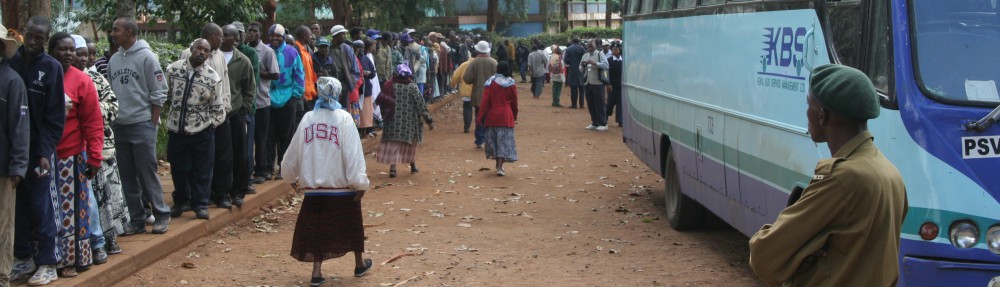

Uganda Votes (updated)

A reminder of the link to the Uchaguzi “Citizen Election Watch–IT” site. And the “Uganda Watch 2011” site, which is a partnership including Citizen Election Watch–IT with funding from the multi-donor Deepening Democracy and the U.S.’s National Democratic Institute.

Also follow the hashtag #ugandavotes on Twitter.

[Update:  with voting concluded, the internet is alive early evening Uganda time with unverified vote totals being reported on Twitter directly and from SMS from various polling stations.  The dispersion of communication technology is continuing to have an impact–this is well beyond what was available in Kenya in December 2007.  Here is the initial Bloomberg story from Sarah McGregor an hour after polls closed.]

The BBC reports that voting has been proceeding smoothly after delayed poll opening.

Here are a couple of the overview articles from yesterday’s international press.

“Heads I Win, Tails You Lose”, Michael J. Wilkerson in Foreign Policy:

It’s hard to overstate Museveni’s advantage in Friday’s ballot. He has significantly more campaign funds — both legitimate and under the table — than the opposition. He has access to state resources to mobilize his supporters, and the loyalty of the security services. Uganda has seen record economic growth in recent years under his oversight. And Museveni has strong Western backing, winning praise for example for his innovative HIV/AIDS campaign and his commitment to fighting terrorism. (It also helps, of course, that he appointed the electoral commission.)

Sounds easy, right? Yet Museveni and his party, the National Resistance Movement (NRM), are leaving nothing to chance. Across Kampala, major billboards usually devoted to expensive advertisements for Coca-Cola, phone companies, or other big spenders have almost all been replaced with NRM campaign items. The party has even hired a helicopter to fly around the city dropping leaflets and blaring Museveni’s campaign song — a remixed version of his attempt to bond with young voters by rapping at a rally. And then there is Museveni’s use of government resources, like the presidential helicopter, to travel around the country and campaign.

Since it’s not officially reported, campaign spending is hard to gauge here. But Andrew Mwenda, editor of the Independent weekly magazine and consistent critic of Museveni’s regime, has an estimate: “Museveni has spent $350 million dollars on this election alone,” he told me.

Meanwhile, the government is effectively bankrupt. In January, parliament passed a supplemental budget increase of $260 million, yet just weeks later, Minister of Finance Syda Bbumba announced that the government was broke and ministries would be examining emergency cost-cutting measures. According to local newspaper reports, government officials confirm that money was diverted to NRM campaigns for the presidency and parliamentary seats, and $1.3 billion, or almost a third of the annual budget was spent in January alone. (Unsurprisingly, the IMF refused last week to sign off on Uganda’s economic policies, diplomatically describing them as “inconsistent” with previous agreements with the fund.)

“Uganda Will Deploy Security at All Polling Stations” by Sarah McGregor, Bloomberg.