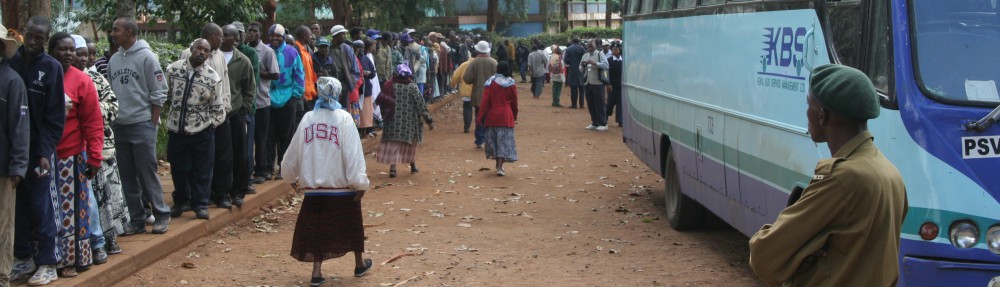
Malawi 2019 Election – with Court annulment, a look back at USAID’s version of post election “Lessons Learned”

Update: the latest on the annulment of the election from Quartz Africa. And from The Guardian: “Malawi court annuls 2019 election results and calls for new vote.”

Here is what USAID has had to say as of June 27, 2019 on “Lessons From Malawi’s 2019 Elections”:

. . . .

In part due to considerable programmatic support – including USAID assistance – monitors observed commendable improvements in the MEC’s electoral preparation, voting process and results transmission system compared to previous elections.  Notably, as shown above, the MEC’s final result closely tracked with the USAID-supported non-partisan parallel vote tabulation, implemented by the Malawi Election Support Network (MESN) and National Democratic Institute (NDI).  

In addition, despite pre-electoral intimidation and violence against female candidates, 44 of Malawi’s 193 new parliamentarians are women, up from just 32 in 2014. 

Nevertheless, many voters have raised questions about the integrity of the process and Malawian opposition parties have petitioned to the courts to annul the results. While USAID/Malawi’s Democracy, Rights and Governance (DRG) team played a significant role in supporting the MEC to deliver a credible election, as well as civil society’s oversight of the process, more work remains to be done. USAID will continue to provide post election support, through NDI and International Foundation for Electoral Systems (IFES), to build confidence in Malawi’s political processes and improve citizen-state relations.


USAID Supported a Stronger Electoral Process…


In 2018, USAID joined DFID, European Union, Norway, Irish Aid, and UNDP by investing $1 million in the UNDP’s “Election Basket Fund,” which was established to pool international donor resources in support of the MEC’s election strategy, preparation, management, and tabulation. UNDP led the donor community in helping the MEC with critical institutional reforms and electoral preparations, registered 6.8 million voters through newly-issued biometric ID cards, engaged with political parties in preparation for the elections, supported women’s participation in the electoral process, strengthened the capacity of the Malawi Police Services to mitigate electoral violence, and supported election-day logistics and results transmission.

To complement the UNDP Basket Fund efforts, USAID and DFID jointly provided $4 million to the National Democratic Institute(link is external) (NDI) and the International Foundation for Electoral Systems(link is external)(IFES) to improve civil society and political party oversight and engagement. NDI and its partner MESN coordinated with the MEC on civic and voter education initiatives and mobilized long term observers.  Working with with Democracy Works Foundation, MISA Malawi and broad group of local actors, NDI produced three televised presidential debates and trained political party monitors for election day oversight.

Given the highly competitive race for president, strengthening citizen confidence in the results management process was critical.  On election day, MESN and NDI deployed over 900 observers to monitor all day and conduct a parallel vote tabulation to try to give Malawians greater confidence that the tally of ballots was transparent and accurate. NDI’s partner Institute for War and Peace Reporting (IWPR) and the Media Institute of Southern Africa (MISA) Malawi tracked and reported on media bias and established a fact-checker to combat fake news(link is external) on social media.

IFES helped the MEC to train judges on electoral dispute resolution, established an online election Early Warning/Early Response (EWER)(link is external) system to track and mitigate electoral violence, and  provided technical assistance on strategic communications in the lead-up to the elections, and throughout the voting and tabulation processes. 

In addition to these measures, USAID’s DRG team coordinated the US Government observer effort on election day. More than 80 observers from the US, UK, Ireland, Japan, Norway, Canada travelled together to visit polling and tabulation stations in 13 of Malawi’s 28 districts and submitted 240 observer reports.

But Challenges Remain …

. . . .

Through these and other efforts, the MEC and electoral stakeholders addressed many critical challenges from the 2014 election.  While observers noted a few logistical and organizational problems in some of the more than 5000 polling stations throughout Malawi, the consensus of the observer missions are reflected in the African Union’s Election Observer Mission preliminary statement, which concludes that:

 …the 2019 Tripartite Elections have provided Malawians with the opportunity to choose their leaders at various layers of government in accordance with the legal framework for elections in Malawi, and in accordance with the principles espoused in the various instruments of the AU. The elections took place in a peaceful environment and at the time of this statement, the mission had not notes any serious concerns with the process, either witnessed or observed.

Despite these efforts and a generally well conducted election, the public reaction post-election has been largely negative highlighting remaining gaps as well as a concerning level of mistrust between the public towards its democratic institutions and political actors.  Neither improved electoral transparency and preparations, election-day operations nor an independent PVT has assuaged the public’s concerns over election rigging.  Since the results were announced, Malawi has seen continued protests – some marred by violence – calling for the annulment of the results and resignation of MEC Commissioners.  Once again Malawi’s electoral outcome is in the hands of the courts.  

Implications for Future

Clearly, we need to do additional work to support both Malawi’s election management and to increase the citizenry’s trust in democratic institutions.  The trust issue is critical.  Afrobarometer’s recent study(link is external) underscores these issues in its June 2019 paper that shows that in 2017 only 57% of Malawians “agree” or “agree very strongly” that leaders should be chosen through regular, open, and honest elections. This means out of 34 African countries surveyed, Malawi’s trust in democratic systems is 3rd from the bottom – a concerning position for a democracy that has just completed its sixth election.


I hope this can be an occasion for a deeper and more open discussion about the learning opportunities than has happened from the problems over the years in Kenya.

Kenya’s Moi hired Paul Manfort and Roger Stone’s firm to lobby the National Democratic Institute and others ahead of 1992 election

Back in the 2008 presidential campaign between John McCain and Barack Obama, Senator McCain got some criticism for using Charlie Black, previously of the Black, Manafort, Stone & Kelly firm as a campaign consultant in part because of the firm’s background in lobbying in Washington for various dictators like Moi and Mobutu of African nations and Marcos of the Philippines. More recently, the spotlight has shifted to Paul Manafort and Roger Stone from that storied firm who have been convicted recently of multiple felonies related to their service to Donald Trump’s 2016 campaign and in Manafort’s case also involving money laundering associated with more recent work for a Russian oligarch in Ukrainian politics.

Washington reporting that I saw during the 2008 campaign noting the Black, Manafort Stone & Kelly work for Moi had a significant oversight in accepting spin that the Moi relationship had concluded with the end of the Cold War and the beginning of active U.S. support for democratization in Africa, including the push on Moi to legalize non-KANU parties, which came to fruition in the December 1991 legalization of political opposition.

My guess is that reporters relied on an incomplete aggregator rather than going directly to the original Foreign Agent Registration Act filings (online at http://www.fara.gov). Regardless, the point is that Black, Manafort Stone & Kelly made a third filing for Kenya under Moi for March 1, 1992 to February 28, 1993 that covers Moi’s December 29, 1992 re-election. Along with the U.S. Executive and Legislative branches, Black Manafort Stone & Kelly were to lobby the IMF and World Bank and “public interest and activist groups such as the Black Caucus, Africa Watch, Environmentalists, National Democratic Institute, Civil Rights Lawyers, African-American Institute, Article 19 (journalists) and other activists and public interest groups.”

[Another discrepancy is that the summary list on the Justice Department website lists an incorrect name, a successor firm, for the Black, Manafort Stone & Kelly, Inc. filing for 1992-93.]

As I have written previously, see “My Joel Barkan Tribute“, US Ambassador Smith Hempstone, a George H.W. Bush political appointee, wrote in his memoir Rogue Ambassador that he had recommended to Moi that Kenya allow the National Democratic Institute (NDI) to observe that first post-independence multi-party election featuring FORD-Kenya (Jaramogi Oginga Odinga), Ford-Asili (Kenneth Matiba) and the Democratic Party (Mwai Kibaki) among others challenging Moi’s KANU. Moi vetoed NDI for the Election Observation Mission but went ahead to invite “sister organization” the International Republican Institute (IRI) for whom I served years later in 2007-08 as Resident Director for East Africa in Nairobi.

IRI and NDI are private District of Columbia not-for-profit corporations established originally at the Republican and Democratic National Committees, respectively. Along with two other special purpose democracy assistance not-for-profits associated with two other parents, the United States Chamber of Commerce and AFL-CIO (an affiation of labor unions), these four “core institutes” receive funding from the National Endowment for Democracy or NED, pursuant to 1983 legislation. NED receives direct funding from the United States Government and is also able to raise private donations, as are the four “core institutes”.

It never came to my attention one way or the other whether Black, Manafort, Stone & Kelly consulted Moi on the decision to reject NDI in favor of IRI or what Moi’s considerations might have been in taking that position. Nor of the State Department, USAID and/or others in the US Government and in IRI in going along.

Moi was re-elected according to the Electoral Commission of Kenya with approximately 36% of the vote.

The election was seen as badly flawed but nonetheless representing “the will of the people”. Presumably that would mean a recognition that within a year of opposition being legalized and with State resources deployed on behalf of Moi, a good 2/3 of Kenyans wanted to replace him, but without a runoff or a pre-election “deal” among the fledgling opposition parties Moi would be able to keep power and claim to have switched from a single-party authoritarian system to a “democratic mandate” without giving up power or persuading a majority of Kenyans that he deserved it.

After Bill Clinton defeated President George H.W. Bush and Ross Perot in the November 1992 elections, Bush launched Operation Restore Hope, landing Marines and Navy Special Forces on the beach in Somalia December 9 leading UNITAF, a new UN humanitarian mission to replace UNISOM I, the ultimate predecessor of the current AMISOM which began in 2007. See an early official postmortem on Operation Restore Hope from the United States Institute for Peace here.

In Kenya after 27 years the Moi family remains prominent in political and business matters in Kenya with the son of Moi’s original benefactor Jomo Kenyatta eventually succeeding Moi as president in 2013 after a 2003-2013 interregnum under Mwai Kibaki who was Moi’s Vice President for the first ten years of his presidency from 1978 to 1988.

UNDP releases 2019 “Multidimensional Poverty Index” (updated)

Updated: For Multidimensional Poverty Index rollout from 2010, see “‘300 million people are suddenly poor”; the Multidimensional Poverty Index and Rwanda“.

For the 2019, read the release and related documents and see the data set at Table 1 here.

The report covers 101 developing countries. As a percentage of population living in “multidimensional poverty” Sub-Saharan African countries fare worse than other regions on average but there are wide variations between countries as well as within countries.

The countries in Sub-Saharan Africa with less than 50% of the population living in multidimensional poverty:

South Africa 6.3

Gabon 14.8

Eswatini 19.2

Sao Tome & Principe 22.1

Congo (Brazzaville) 24.3

Ghana 30.1

Zimbabwe 31.8

Lesotho 33.6

Namibia 38.0

Kenya 38.7

Cameroon 45.3

Cote d’Ivoire 46.1

Togo 48.2

Others in East Africa:

Sudan 52.3

Rwanda 54.4

Uganda 55.4

Tanzania 55.4

Burundi 74.3

Ethiopia 83.5

South Sudan (pre-civil war survey) 91.9 (worst of the 101 listed)

Observation: Some global comparisons for reference might include India 27.9, Myanmar 38.3, Cambodia 37.2, Haiti 41.3, Guatemala 28.9; Honduras 19.3, Mexico 6.3.

As far as other places with terrorist conflict: Nigeria 51.4; Chad 85.7; Burkina Faso 83.8; CAR 79.2; Mali 78.1; DRC 74.0; Mozambique 72.5. Libya was listed as 2.0, Egypt 5.3, Tunisia 1.3 and Algeria 2.1.

Djibouti, Eritrea and Somalia/Somaliland were not included.

Since the 2007 election debacle, pervasive hunger has continued to grow in Kenya, while China and the United States promote and backstop the power of leaders who do not care enough

The population of Kenya has grown roughly 25% since my year “promoting democracy” in 2007-08, from around 40 million to around 50 million. These are loose numbers because they do not reflect anything that is of the highest priority for Kenya’s leaders (and thus those outsiders who promote and underwrite Kenya’s leaders).

Kenya is to conduct a census this year, but the process is politically contentious and corruption makes it hard to carry off undertakings of this nature (another area where the United States seems to be moving toward convergence with Kenya recently). And there is always a new gambit, like “Huduma Namba” that comes along, with the help of Kenya’s politically-connected corporates and foreign corporate foundations, to get in the way of the core functions of the Government of Kenya, like conducting the census.

Unfortunately, although the size of the economy has continued to grow hunger has increased and Kenya remains a “middle income” country where the majority of citizens are inadequately fed. Agricultural performance has actually declined rather than merely grown at an insufficient pace as experienced in many other sectors.

Please take time to read this report from the Daily Nation’ Newsplex: Poor planning and inaction to blame for food insecurity” There are a lot of important facts and figures, but here is a key summary of where things stand:

But despite the decline in the undernourishment rate, which is, however, higher than Africa’s 20 percent, the prevalence of severely food-insecure Kenyans jumped four percentage-points from 32 percent in 2014 to 36 percent in 2017, resulting in Kenya’s ranking as the eighth-worst on the indicator globally.

Yes, Kenya continues to have a problem with employment as a whole and the failure of the various power generation schemes over the years has been one factor for Kenya’s reliance on imports rather than it’s own manufacturing. But the decline of agriculture is the more immediate and inexcusable problem–and would be much easier to address if it were prioritized–as opposed to yet another questionable power generation scheme.

Important reporting from Der Spiegel on “China’s expanding media dominance in Africa”

China’s expanding media dominance in Africa, Spiegel Online, June 14:

Chinese state television is gaining influence in Africa. But while the media outlets involved officially claim their journalism is independent, those who work for the companies tell a different story.

An interview? Or perhaps just a discussion on background? “We have no interest in speaking with you,” Liao Liang writes in an email. And, thank you for understanding, but a visit to his television broadcaster in Nairobi isn’t possible either, he writes. Indeed, the rejection is so complete, it’s as though he is protecting a state secret.

Yet Liao Liang’s mission in the Kenyan capital is hardly confidential: As a senior editor of the China Global Television Network (CGTN), a subsidiary of Chinese state television, his task is that of shining a positive light on his country’s ambitious activities — particularly those in Africa, where China’s reputation has suffered as its footprint has grown.

The broadcaster occupies three floors in the K-Rep Centre, a mirrored-glass high-rise in the upscale neighborhood of Kilimani. The first security check comes right at the building entrance, including a pat-down and questions from the suspicious receptionist. After that, though, there’s no getting by the next receptionist on the third floor. “To be honest,” she says with fake regret, “there is no chance you’ll be allowed to see Mr. Liao.”

Liao Liang is top dog at the broadcaster. He was allegedly an army officer in a previous life, but little else is known about him. CGTN employs around 150 people, including journalists from China, South Africa, Britain, Nigeria and Kenya, yet even when promised anonymity, nobody initially agreed to speak with DER SPIEGEL. “They’re afraid of Liao,” an employee would later say.

Malawi Election follow-up

See Opposition Protests in Malawi Threaten Mutharika’s Already Fragile Mandate, by Elliot Waldman, in World Politics Review, June 13, 2019.

My previous posts of May 25-27: #MalawiDecides2019: My inquiry to the Malawi Electoral Support Network, MESN, on PVT

(Noting “a hole in media reporting and public affairs announcements”:

Dear MESN,

Does your PVT receive funding from USAID (as per usual practice for these GNDEM PVT’s in Africa)? If so, what is the contractual arrangement for this funding? If not, how is the PVT funded? Thank you for a quick response given approaching deadlines!)

With Parliamanentary results released by Malawi Election Commission but final Presidential results announcement stayed, IFES works on Security and Conflict Prevention

Malawi Election Commission announces incumbent win in a ‘squeaker’–waiting on PVT

Malawi PVT released by MESN: Presidential results consistent with MEC official results, but top two candidates’ ranges overlap

I did receive a response from MESN on June 6 to my inquiry:

Thank you for your media inquiry about MESN and our observation of the
2019 Tripartite Elections. MESN receives funding from an array of
development funders. MESN’s funding for both long-term observation and
the parallel vote tabulation (PVT) comes from the United States Agency
for International Development (USAID) through the Malawi Electoral
Integrity Program (MEIP) managed by the Consortium for Elections and
Political Process Strengthening (CEPPS) . All questions about the
terms and conditions of funding agreement should be addressed to
USAID. I have attached for your information copies of our preliminary
and verification statements.

From our Embassy before the vote:

It might have been worthwhile for the Embassy to note in its May 23 Tweet that when “Both men were learning more about the system to validate the election results” the USAID Mission Director was visiting a USAID-funded program.

[You will notice if you read my previous posts I do not have any substantive criticism of how the PVT results were reported, rather I was inquiring about the funding prior to the reporting. I also noted in Zimbabwe that the reporting seemed to be carefully worded to avoid being misconstrued in the way that I have been concerned about in Kenya in 2013.]

Malawi PVT released by MESN – presidential results consistent with MEC official results, but top two candidates’ ranges overlap

Malawi PVT results from the Malawi Electoral Support Network  shows:

• Dr. Lazarus Chakwera (MCP) between 32.8% and 37.4%;

• Dr. Saulous Klaus Chilima (UTM) between 18.8% and 21.4%;

• Professor John Eugene Chisi (UP) between 0.3% and 0.5%;

• Mr. Reverend Hadwick Kaliya (Independent) between 0.2% and 0.4%;

• Mr. Peter Dominic Sinosi Driver Kuwani (MMD) between 0.3% and 0.5%;

• Mr. Atepele Austin Muluzi (UDF) between 4.3% and 5.7%; and

• Mutharika between 36.4% and 40.8%.

The PVT estimates, listed above, are consistent with the MEC’s official presidential results and therefore, the PVT can independently verify that the official results for the presidential election as announced by MEC reflect ballots cast and counted at polling streams. While PVT does not provide evidence that the presidential results have been manipulated, the PVT results data cannot definitively determine the order for the two leading candidates because of the overlap in the estimated ranges.

Read the whole release here.

Malawi Election Commission announces incumbent win in a “squeaker” – waiting on PVT

With the incumbent announced as winning with a narrower margin and a total of less than 39% of the vote, with turnout over 75%, there will be questions and frustrations.

Since the election is so close, the PVT is likely to show either of the top two candidates as a possible winner, although it could be pretty interesting if it shows something different. Since it has been done for days presumably it was ready for release some time ago.

Here is what was released for the last election in 2014.

With Parliamentary results released by Malawi Election Commission, but final Presidential results announcement stayed, IFES works on security and conflict prevention

Update: It is worth looking carefully at the MESN Detailed Preliminary Statement from the PVT. In general it suggests the voting was well conducted. I would flag the seven percent of the sampled polling stations where the results were not posted. See the USAID-funded research paper from Posner and Osofu at UCLA I linked below for why they identify the lack of posting of results as one of their indicators of potential fraud. I have never seen any legitimate excuse for not posting the results at the polling station and it certainly seems fundamental to me. I would note that seven percent is, to my recollection, a much better performance than what the Carter Center observers were seeming in their Preliminary Statement in Kenya in 2013, although that was not structured as a “PVT” sample as such.

——

Malawi’s election results being delayed after vote forgery claims” Quartz Africa

Under the USAID Malawi Electoral Integrity Program with CEPPS (the Consortium for Electoral Party and Process Strengthening)–the program under which NDI is providing “technical support” to the Parallel Vote Tabulation discussed in my last post–IFES is doing the work it has described in an April 2019 summary for the continent here:

Malawi Through the Consortium for Elections and Political Process Strengthening (CEPPS), IFES is supporting the 2019 tripartite elections under the “Malawi Electoral Integrity Program.” Particularly, IFES’ activities are focused on addressing electoral security through violence monitoring and incident reporting for more effective conflict mitigation and resolution, and by strengthening cooperation and information exchange between civil society, multiparty liaison committees and governmental electoral security actors, including the Malawi Election Commission (MEC). IFES will strengthen existing conflict mitigation and mediation platforms, support targeted interventions in areas identified as lhotspots, and raise public awareness about electoral violence, conflict mitigation and mediation tools available to the public. IFES will coordinate with the United Nations Development Programme on its “Malawi Electoral Cycle Support” program to build stronger linkages among the MEC and local stakeholders involved in conflict prevention.

CEPPS is a consortium among IRI, NDI and IFES which provides for a master funding arrangement between USAID and the group under which USAID then enters specific subsidiary agreements for individual programs such as the polling program in Kenya that funded Exit Polls through IRI for the 2005 and 2007 elections, or the Kenya Election and Political Process Strengthening Program for 2011-15 which was led by the coalition with separate workshares for IFES, NDI and IRI, with NDI supporting the PVT through the domestic observation group ELOG (set up as a permanent successor to 2007’s KEDOF domestic observation group at the recommendation of the 2008 Kreigler Commission report).

As an example of a different permutation, for the 2017 election, USAID solicited proposals for agreements involving one overall organization, with sub-agreements for other workshare. In that case the program was awarded to IFES, with the IRI and NDI work (including the PVT piece) under subagreements with IFES rather than directly with USAID as I understand it (this is based on the USAID solicitation and award announcements; the agreement is not published).

I have not watched Malawi closely and do not have any idea of the specific contractual arrangements of the MEIP program for this year.

With the presidential results finalization delayed, this will put everyone under significant pressure and may involve some hard judgment calls. We will all have to hope for the best as far as both the election and any negative situations regarding violence or insecurity.

Update: as a bonus, here is a 2015 paper from Daniel Posner and George Ofosu of UCLA, “Domestic Election Observers and Electoral Fraud in Malawi’s 2014 Election“.

Abstract

We present findings from a field experiment that estimates the causal effect of domestic election observers on election day malfeasance and downstream aggregation fraud in Malawi’s 2014 general elections. Our analyses leverage the random assignment of election observers to 1,049 polling stations located in a nationally representative sample of 90 constituencies. Since these polling stations already had observers assigned by other domestic monitoring organizations, our results speak to the marginal impact on electoral fraud of having an additional observer. We find that polling stations to which an additional observer was deployed had systematically lower rates of turnout and overvoting, and fewer votes for the presidential candidate who ultimately won the election—all results consistent with the deterrence of electoral fraud by the presence of the additional observer. We also find that the presence of the additional observer increases the likelihood that election results are not publicly posted, and that the non-posting of results is associated with an increased likelihood of aggregation fraud on behalf of the winning party, which we measure by comparing polling station-level election tallies with the official results reported by the Malawi Electoral Commission. We interpret this finding as suggesting that the presence of the additional observers may have displaced fraud from election day to the aggregation phase, and that the non-posting of the results may have been part of a conscious strategy to mask these efforts.

“Freedom Under Threat”: New report on the spread of laws restricting NGOs in Africa from Freedom House

The new report “Freedom Under Threat: the Spread of Anti-NGO Measures in Africa was released today. It provides a valuable review of recent developments in counter-democracy push back from governments in power in numerous countries.

In Kenya, here is a good, straightforward recitation of the approach taken after the “UhuRuto” election of 2013 with a Jubilee Party platform calling for a crackdown on independent NGOs said to be modeled after post 2005 repressive measures established by the Meles Zenawi government in Ethiopia (see “Attacks on Kenyan civil society prefigured in Jubilee ‘manifesto’“) and the legal “pitched battle” since:

In Kenya, meanwhile, the new government elected in 2013 made six successive attempts to modify the PBO Act—a progressive law passed by Parliament and signed by the outgoing president just months prior to the elections.49 All of the attempts were loudly opposed by NGOs and the political opposition, and the High Court ordered the government on October 31, 2016, to publish the original PBO Act in the official gazette to bring it into operation.50 The government refused to comply, prompting NGOs to request that two cabinet secretaries—overseeing the Ministry of Devolution and Planning and the Ministry of Interior and Coordination of National Government—be held in contempt of court.51 The court ruled in the NGOs’ favor on May 12, 2017. Rather than implement the court order, however, the government continues to apply the outdated NGO Act of 1990, and it is unclear how the situation will be resolved. The broad-based Civil Society Reference Group, an alliance of over 1,500 leaders of national and international NGOs that ran a multiyear campaign for the adoption of the PBO Act,52 continues to insist on its implementation. Indeed, Kenya represents an interesting case study of the pitched battles that have characterized the struggle between governments on the continent that seek to narrow democratic space on the one hand and civil society sectors that seek to preserve democratic gains on the other.

The moves by African rulers appear related to or inspired by authoritarian trends elsewhere:

Although no attempt is made in this report to analyze laws outside Africa, there are parallels between anti-NGO measures adopted across the continent since 2006 and those adopted in Russia and China—two influential global actors that have forged close ties with African governments. Sudan’s anti-NGO law coincided with the first of several Russian laws,6 closely followed by Rwanda’s measure in 2008. Russia’s second wave of legal restrictions coincided with those of several African countries—notably Ethiopia, Zambia, and Mozambique—while China’s 2016 and 2018 regulations came alongside measures by several other African governments surveyed in this report. It is difficult to establish specific links between the African laws and those adopted by the two global powers, but the close relationships built in Africa since 2000—particularly by China—support a modeling hypothesis.