New Congressional Research Service report on the U.S. response to the Lord’s Resistance Army

The Lord’s Resistance Army: The U.S. Response was submitted by CRS on May 15 and has been published by the Federation of American Scientists.

The LRA is assessed to remain in much diminished capacity in a territory covering parts of Northern Democratic Republic of Congo, South Sudan, Sudan and the Central African Republic, but still resilient in these remote areas.

The most recent concerns are the deterioration of the overall stability and governance of the Central African Republic and South Sudan–with related questions of U.S. and regional priorities.  Likewise there are questions regarding the relationship of continued U.S. support for the Ugandan military to the intention to “review” overall U.S. relations in the wake of Uganda’s new laws targeting homosexuals and more broadly to U.S. support for democracy and human rights within Uganda. In early 2013 AFRICOM’s commander identified the anti-LRA operations, known as “Observant Compass”, as the command’s third highest operational priority after the anti-terrorism efforts in Somalia and Northwest Africa, but obviously a lot of things have been happening since then.

Readout of Secretary Kerry’s Call with South Sudanese President Kiir

Readout of Secretary Kerry’s Call with South Sudanese President Kiir

Press Statement

Jen Psaki
Department Spokesperson
Washington, DC
April 26, 2014

Secretary Kerry spoke today with South Sudanese President Salva Kiir to express grave concern about the ongoing conflict in South Sudan, including recent violence in Bentiu and Bor and the deliberate targeting of civilians by armed groups on both sides of the conflict. Secretary Kerry welcomed the Government of South Sudan’s decision to release the four senior political officials who had been in detention since December. He urged President Kiir to stop military offensives and to adhere to the Cessation of Hostilities agreement, and noted U.S. demands that anti-government forces do the same. Both Secretary Kerry and President Kiir expressed their support for the IGAD-led peace process. Secretary Kerry noted the important role played by the UN Mission in South Sudan, denounced recent attacks on UNMISS bases and personnel, and encouraged President Kiir to ensure full and unfettered access throughout South Sudan for UNMISS, the African Union Commission of Inquiry, and the IGAD Monitoring and Verification Mechanism.

In other regional news on national unity this weekend, see “Tanzania marks 50th anniversary with mid-life crisis” from Africa Review.

Updated: Burgeoning South Sudan crisis will increase Kenya’s leverage over donors, NGOs, international media

The news from South Sudan seems quite serious and disturbing. This is an area of special responsibility for the United States, and needless to say, I hope we are able to help.

Nairobi’s role for many years as the “back office” for international assistance to South Sudan has always given the Government of Kenya extra leverage through control of visas and work permits. My twitter feed indicates that the U.S. is recommending that Americans evacuate South Sudan as the current crisis swells with reports indicating 400-500 people may have been killed.

This brings to bear what I have called “the Nairobi curse” for Kenyans seeking political space, democracy and civil liberties of their own and hope for support from the international community. The thing you always hear, but never read, from internationals working in Kenya is “what if I can’t renew my work permit” because of some offense taken by someone in the Kenyan government.

Back in 2007-08 when I was East Africa director for IRI in Nairobi, we shared space with our separate Sudan program, which was much, much bigger than our Kenya program (and was IRI’s second largest program worldwide I was told, after Iraq). Under my East Africa office, our Somaliland program also got more funding than Kenya. Obviously there would have been repercussions from soured relations with the Kenyan administration. The same situation would pertain for NDI or other international organizations with large permanent regional operations based in Nairobi.

In my case, I arrived in Nairobi on the job in June 2007 expecting my work permit to come through within perhaps a few weeks of ordinary bureaucracy. With no explanation, it was not forthcoming until February 2008 during the late stages of the post election violence period. Thus, I did not have my permit issued yet when I was dealing with our controversial election observation and the issues about whether or not to release the exit poll that showed the opposition ODM winning the presidential race rather than the ECK’s official choice of Kibaki.
At some point that month I was summoned to an Immigration office at Nyayo House (where political prisoners where tortured in the basement during the Moi era) for no readily apparent reason and received the permit shortly thereafter. Of course Nairobi was a much more easy going place before the 2007 election than it is now. Nothing was ever said to connect any of this delay to anything to do with politics or the election and it may have been strictly a coincidence.

Fortunately for me, I was on leave from my job as a lawyer back in the United States, so being denied a permit and thus losing my job in Kenya and having to move my family back precipitously would not have been consequential for me in the way that it would have been for the typical young NGO worker. Everyone has their own story I am sure.

Earlier this year the Kenyan government announced, for instance, that it would start enforcing work permit rules for academic researchers on short assignments. Lots of room to maneuver for creatively repressive politicians.

By the way, Uhuru did end up signing that Media Bill.

Update: See the editorial in today’s Star: Work Permit Crackdown Is Counter-Productive. And the news story, “Rules on Work Permits Tighten“.

Secretary Clinton visiting South Sudan, Uganda and Kenya (including TFG meetings) on six nation Africa mission

Here is the official State Department language describing the diplomacy:

Secretary Clinton travels to South Sudan where she meets with President Kiir to reaffirm U.S. support and to encourage progress in negotiations with Sudan to reach agreement on issues related to security, oil and citizenship.

In Uganda, the Secretary meets with President Museveni to encourage strengthening of democratic institutions and human rights, while also reinforcing Uganda as a key U.S. partner in promoting regional security, particularly in regard to Somalia and in regional efforts to counter the Lord’s Resistance Army. She will also highlight U.S. support in the fight against HIV/AIDS.

The Secretary will then travel to Kenya where she plans to meet President Kibaki, Prime Minister Odinga, and other government officials to emphasize her support for transparent, credible, nonviolent national elections in 2013. To underscore U.S. support for completing the political transition in Somalia by August 20th, Secretary Clinton will also meet with President Sheikh Sharif and other signatories to the Roadmap to End the Transition.


Should the U.S. do more about corruption in South Sudan? Are there historical lessons from Kenya?


Alan Boswell of the McClatchy papers has an interesting story today, “U.S. not probing allegations of massive South Sudanese corruption”, highlighting a difference of opinion between Senator Leahy and the Administration about how to apply U.S. law on foreign corruption.

Travel bans are one of the few tools available to American officials to fight corruption, and U.S. law requires that they be imposed if the State Department has credible evidence that foreign officials are profiting corruptly from a country’s natural resources. The law allows for exemptions only for travel to the United Nations in New York, though an individual ban can be lifted if the reason for the banning has been corrected.

In June, the South Sudanese government admitted that it’s missing $4 billion in stolen funds, or roughly double its annual revenue since the mostly autonomous administration was established in 2005 as part of a U.S-brokered peace deal that led to South Sudan’s independence last year from Sudan. . . .

Boswell reports that the U.S. is not considering such visa bans and that Presidential Envoy Princeton Lyman has indicated that the U.S. is looking to the South Sudanese to investigate the situation themselves.

“You have to know exactly who you are going to target. It’s not exactly clear who did it,” Lyman said. “We are looking to the Sudanese to do the investigations. President Kiir has promised a vigorous anti-corruption policy and we encourage him in this direction.”

Under American law, foreign officials and their immediate family members who steal from the public treasury or display other significant corruption are ineligible to enter the United States. Sen. Patrick Leahy, D-Vt., the chairman of the state and foreign operations subcommittee and the author of the “anti-kleptocracy” law, said he didn’t think the State Department was doing enough to find out who stole the money.

“If the State Department has such information, we expect the U.S. Embassy to determine if it is credible and to apply the law rigorously,” Leahy said.

The U.S. has known about the scale of South Sudanese corruption for some time. “From early on, I had people who knew the SPLM well citing this problem and very worried about it,” Lyman said.

Lyman said corruption wasn’t unusual in young developing countries. He pointed to the example of Kenya’s first president, Jomo Kenyatta, who was well-known for welcoming gifts and kickbacks as part of official business.”You don’t like to see it happen, but it happens. That doesn’t excuse it,” Lyman said.

Obviously this puts the U.S. in a difficult position because of our “special relationship” with South Sudan, the tremendous other challenges the new country faces, and the ongoing brutality from Khartoum.  At the same time, it can also be argued that we have unique responsibility to address the problem because of our role in facilitating South Sudanese independence and our place on the inside through our support for the new government.

Ambassador Lyman cites Kenyatta, so what are the lessons from Kenya?  Kenyatta’s corruption begat Moi’s, which begat that within the Kibaki administrations.  In the course of fifty years after independence the U.S. and the international community as a whole never found the will to consistently stick to a strong, clear anti-corruption effort in Kenya–there have always been other priorities to intervene.  Yet Kenyatta’s heirs and cronies, and Moi and his partially overlapping set of cronies still literally own an awful lot of Kenya, and have done very well through Kibaki (who was part of the Kenyatta and Moi circles himself for many, many years).  While the press is now free enough to report scandal after scandal after scandal, and write more of the history, the deals are not undone and no one is prosecuted in almost all significant cases old and new.  While there may be some hope for the future from movement toward a more independent judiciary, the track record so far is just plain bad.  The precedent seems risky.
 

Some good reading on South Sudan’s first anniversary–Updated

From bloggers I follow:

“To mark South Sudan’s first anniversary read this” from Jina Moore is a great linked digest covering a range of perspectives.

“South Sudan’s Unhappy Anniversary” from Terah Edun

“Is a little balance too much to ask?”  and “99 problems, but Bashir ain’t one” from Roving Bandit (Lee Crawford)

. . . the core of impact evaluation; the counterfactual. Imagine what would have happened if the event we are examining had not happened. So let’s imagine for a second what would be happening in South Sudan if there had not been independence. Peace and prosperity? New schools, roads, and hospitals? There are a couple of approaches we might use to think about what would have happened. We could look at the history of South Sudan pre-independence. We could look at all of the sterling development initiatives led by indicted war criminal Bashir in the South between 1989 and 2005. All of the schools and hospitals that he built. Or we could look at some of the people still living in the North. Perhaps those who have fled their homes to hide in caves from Bashir’s bombers. Or the 100,000 who have fled to the South from Blue Nile. The counterfactual for South Sudan is not flowers and kittens, it is rule by a man wanted for five counts of crimes against humanity; murder, extermination, forcible transfer, torture and rape. Happy Birthday South Sudan.

WALKING TO COLLECT WATER IN JAMAN REFUGEE CAMP–“SOUTH SUDAN, ONE YEAR AFTER . . . ”
A young women walking to collect water, Jamam refugee camp
Photo by John Ferguson/Oxfam; some rights reserved by Oxfam International under Creative Commons, attribution, non-commercial, no derivatives generic 2.0 license.

UPDATE 11 JULY–A new “must read” from Reuters:  “Special Report: the wonks who sold Washington on South Sudan” from Rebecca Hamilton.

•  Some thoughts on “Fighting for Darfur: Public Action and the Struggle to Stop Genocide” (africommons.com)

Independence Day–Secretary Clinton’s Congratulations to the Republic of South Sudan

Flag of the Sudan People's Liberation Army/Mov...

Image via Wikipedia

Secretary of State
Washington, DC
July 9, 2011

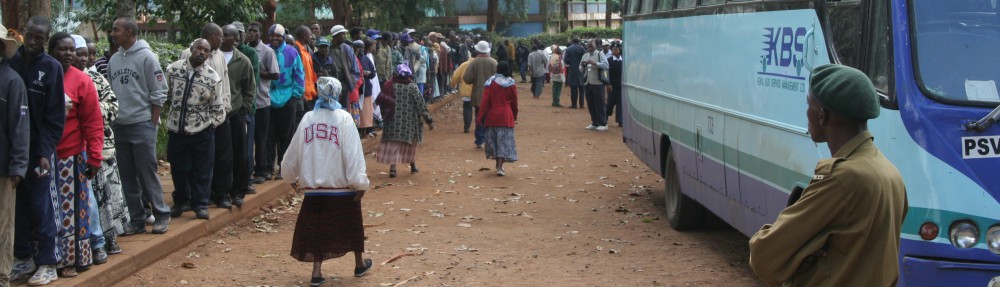
I am delighted to join President Obama in congratulating the Republic of South Sudan on its independence today. The realization of this historic day is a testament to the tireless efforts of the people of South Sudan in their search for peace. We commend South Sudan’s current leaders, including President Salva Kiir Mayardit, for helping guide Southern Sudan to this moment. And we recognize the determination and courage of the many southern Sudanese who never abandoned their hope that peace was possible and who stood in long lines on January 9 to cast their votes.

Independence presents a new beginning for the people of South Sudan; an opportunity to build a nation that embodies the values and aspirations of its people. The challenges are many, but the South Sudanese people have demonstrated their capacity to overcome great odds. The United States will remain a steadfast partner as South Sudan seeks to peacefully meet these challenges and build a free, democratic and inclusive society. The strong ties between our peoples go back many decades, and we are committed to continuing to build on the partnership we have already established in the years ahead.

This historic day not only offers opportunity for the people of South Sudan, but also for the people of Sudan and all of Africa. We commend the Government of Sudan on its decision to be the first to recognize South Sudan’s independence. By continuing on the path of peace, the Government of Sudan can redefine its relationship with the international community and secure a more prosperous future for its people. The United States recognizes the important roles played by the United Nations, African Union, European Union, Arab League, Intergovernmental Authority on Development, and Sudan’s neighbors in supporting the CPA and its implementation, and we look forward to working with them and other international partners toward supporting Sudan and South Sudan as two viable states at peace with one another.

China to send observers to Sudan Referendum–what will they look for? [Updated Jan. 6]

The link to the Reuters report from Beijing is here.

China will send observers to Sudan when the south holds an independence referendum on January 9, the Chinese Foreign Ministry said on Tuesday.

“At the invitation of both the north and the south, China will send observers to participate in the referendum,” Foreign Ministry spokesman Hong Lei told reporters at a regular news conference.

“China is willing, together with the international community, to continue to play a proactive and constructive role for the sake of Sudan’s peace and stability,” Hong said.

Hmm. Will these be people who have observed an election before, much less participated in one? If China is serious about peace and stability within the parameters of a democratic process then great and welcome to the community, but if they are just protecting their own interests irrespective then what are they adding?

This is surely a clear example of a diplomatic observation rather than an assistance effort–no indication that China has an interest in improving democratic elections abroad.

Radio France International has an interesting take on the Chinese diplomatic strategy:

Beshir’s more reconciliatory tone is however a diplomatic advantage for China, which is a long-time ally of Beshir and a major investor in the country’s oil industry, which is mainly based in the south.

“China is working very hard to in effect play both sides of the border,” says David Shinn, the former deputy chief of mission at the US embassy in Khartoum. “It wants to maintain its very close relationship with the Beshir government and it wants to maintain as close a tie as possible to the southerners if they secede.”

China has a consulate in Juba and has been providing some assistance to southerners over the last year, but Shinn says it will still have to work hard to create a good relationship with the south, should it become independent.

“They certainly will have an uphill climb in that they are well known to have been very strong military backers of the northern government and those feelings will not disappear quickly,” says Shinn. “On the other hand, the Chinese have shown great propensity over the years to be able to make the switch to the new rulers in town”.

Chinese financial resources will give it an advantage, especially as it is almost alone in having a state sector that is willing to make investments. The Chinese government also backs several banks in Africa, which able to provide low interest loans fast.

Shinn says China has enough invested in the north to want to maintain a good relationship with the north even though most of Sudan’s resources come from the south. Beshir’s diplomatic approach has given China a chance to work with the south without upsetting the Khartoum government.

“Who knows, behind the scenes maybe China has even been encouraging that,” says Shinn.


Kenya To Launch Publicity Campaign In The US [Mwakilishi.com] and Denies Reports it is Arming Southern Sudan [VOA]

Kenya To Launch Publicity Campaign In The US | Mwakilishi.com

VP Kalonzo Musyoka and Speaker Marende to New America Foundation and to visit IRI and NDI in Washington.

Meanwhile, the Kenyan Government denies reports it is helping to arm Southern Sudan, including reports that the tanks brought to Mombasa on the M/V Faina in 2008, after being held by pirates, are now in Southern Sudan.