Enough: Menkhaus on Somali Famine–Somaliland, al-Shabaab and TFG

Here are excerpts from  “Q&A:  Somalia Expert Ken Menkhaus on the Famine”, at the “Enough Said” blog (h/t to AidNews)

How are independently governed areas like Somaliland and Puntland faring? I understand the crisis hasn’t been as severe in those areas, but it’s interesting to consider how governance factors in to either prevention or response to the famine.

MENKHAUS: Actually, the drought has been quite severe in the north of Somalia as well, but what is interesting is that the north is generally much more arid than the south. The south has rivers and generally has better rainfall. But the north, despite being more arid and being affected by the drought, has not seen famine. The reason for that is pretty straightforward: There is a social peace, [managed by clan elders]. There is governance. The Somaliland government has been able to maintain a reasonable level of security and stability that has allows for the flow of commercial food, and as the drought hit, for the flow of international assistance. As a result, they have been hosting more and more displaced people from the south.

There have been conflicting reports on whether the militant group al-Shabaab would let aid groups into the most gravely affected parts of Somalia or not. But you’re in touch with people in the region all the time – local sources, aid groups, governmental entities. How has the group’s presence impacted the response?

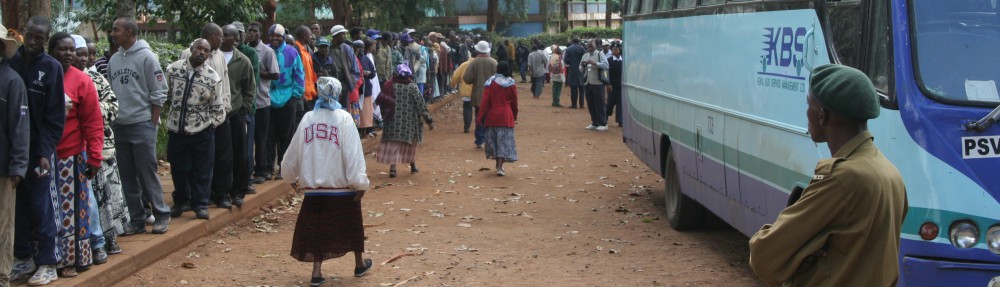
MENKHAUS: We’re pretty sure that Shabaab is splintering now. The famine has been a source of tension within the organization, and the hope is that we’ll see some breakaway wings again that would say, ‘our people are starving, and we welcome aid.’ It would be very risky for those splinter groups, but desperate times call for desperate measures. That could open some space for aid groups to come in. That’s the last best-case scenario we’ve got left, because right now we have people flooding the Kenyan border, and that creates a massive, long-term refugee crisis that will haunt us.

It’s important to flag the breaking news that Shabaab has pulled out of Mogadishu. We’re still trying to make sense of that – Is it a tactical measure? Do they want to launch more hit-and-run attacks instead? There are a lot of possible explanations, but it could be that the social pressure now is so great that clans are rebelling, that the group is fragmenting and actually being pushed out by local Somali communities. That would be a major break for the famine response. Regardless, Shabaab’s in trouble. [The famine] is just disastrous for this group – by blocking food aid, blocking people from getting out, they have just shredded what little credibility they had left with Somalis and jihadist around the world.

What lessons should the international community take away from this present humanitarian crisis? How should the U.S. government revamp its approach to Somalia or to the Horn more broadly to help prevent crises from continuing to occur in regular intervals?

MENKHAUS: This crisis is a potential opening, both for humanitarian response and for new policy directions on Somalia. The scale of this crisis has forced people to do a fundamental rethink of all of our policies and assumptions.  .  .  .But the broader question is what do we do about governance in this country. Shabaab may be crumbling, but the TFG remains irrelevant and is just a source of massive corruption. I think what we’re going to see over the next year is a rethink about continuing to support the TFG versus finding alternatives. But it’s difficult to get people to think about alternatives when we’ve got such immediate problems.

Horn of Africa Famine Updates

Africa Works has a short post today that I will quote in full, recognizing the hard reality:

Africa Works (G. Pascal Zachary):  Somalia and the limits of humanitarian aid:

Jeffrey Gettleman’s excellent article on the Somali famine presents a useful reminder of Amartya Sen’s famous insight that famines, chiefly, are human constructions. The persistence of famines isn’t a tragedy but rather a consequence of social and political breakdowns. In the Somali case, the country’s long civil war– and the tactics used by contending factions — means that famine is a tool of combat rather than the result of “food shortages” as such.

Because famines usually arise from dysfunctional distribution of food resources (rather than from an absolute shortage of food), aid agencies are inevitably limited in what they can do to alleviate famines. Moreoever, realities on the ground mean that famine aid inevitably benefits combatants as much or more than the truly needy. In Somalia, political dysfunction mocks the good intentions of relief agents. That famines are man-made does not obviate the need for famine relief efforts. However, the social construction of famines ought to give rise to a parallel public understanding of why famines persist and the limits of humanitarian aid.

The U.S. State Department has a “background briefing” on “Somalia and the Delivery of Humanitarian Assistance”:

. . . nearly 12 million people primarily in Ethiopia, Kenya, and Somalia in urgent need of humanitarian assistance. Three reasons for this: This two-year drought that we’re currently experiencing, which is part of a 60-year drought cycle; then continued lack of central government in Somalia; and then the work of al-Shabaab or the depredations of al-Shabaab in southern and central Somalia.

We are taking all of the necessary steps. We’re doing everything we can to provide assistance to Somalis in need. That is really – right now our primary concern is helping to save lives in the Horn of Africa. And I just have to point out that it’s not a coincidence that the two areas in Somalia where the UN has declared famine conditions exist are areas under al-Shabaab’s control. Be that as it may, we are doing everything we can to get aid to people who need it. And we do remain, of course, concerned about the actions of al-Shabaab. And so as we’re delivering aid to people in need, we have got to take care that al-Shabaab is not able to profit from this humanitarian crisis.

Now, U.S. law has never prohibited humanitarian assistance to people in need in Somalia. In fact, about 90 million – or rather, about $80 million of our aid thus far has, in fact, been delivered to people in Somalia. But in the face of this evolving crisis and the extreme humanitarian needs, we have issued new guidance to allow more flexibility and to provide a wider range of age – of aid to a larger number of areas in need. We hope this guidance will clarify that aid workers who are partnering with the U.S. Government to help save lives under difficult and dangerous conditions are not in conflict with U.S. laws and regulations that seek to limit the resources or to eliminate resources flowing to al-Shabaab.

. . . .

We don’t expect there to be any grand bargain where we’ll be able to have access to all of southern Somalia, but we are working to find whatever ways we can to deliver that assistance and have a significant contribution of food arriving as we speak.

19,000 metric tons started arriving last week. We have been working throughout the Horn since the early warning systems alerted us to a possible drought last fall, and we were able to preposition supplies and increase programming throughout the Horn. The difficulty has been access in southern Somalia, and so that is the biggest challenge facing us right now, is how to get aid to the people who need it most who are still stuck inside of south Somalia. We’ve seen a huge refugee outflow into Ethiopia and Kenya as well as a significant displacement – about 1.6 million Somalis have fled north into the urban areas, which is – also presents a humanitarian challenge for us.

We believe that there will be ways and opportunities to move selectively into parts of southern Somalia with food, health – health is a critical piece of this given the leading cause of death in the ’92 famine was health-related causes – and send the therapeutic and supplemental feeding that will help save lives. We’re moving aggressively to provide all of that assistance.

Owen Barder at “Owen Abroad” has excellent background on the context of the famine and how preparation from past experience and political divergence make the situation now so different in Somalia and Ethiopia. And links on where each of us can contribute financially to relief efforts. (h/t Texas in Africa).

Somaliland’s President Silanyo Official Guest for Saturday’s South Sudan Independence Ceremony

HARGEISA (SomalilandPress)—President Ahmed Siilaanyo received an official invitation from the president of South Sudan Salva Kiir to attend the Declaration of Independence of the Republic of South Sudan on the 9th of July, 2011. South Sudan is set to become the 54th nation in the African continent after long fought civil against Northern Sudan’s rule that saw thousands of lives lost and millions displaced.

The invitation of Somaliland’s president Ahmed Siilanyo to South Sudan’s historic day has been welcomed with delight in Somaliland by both the government of Somaliland and its citizens. Somaliland believes it could use the south’s independence as a precedent as it seeks more support for its case for international recognition and become the 55th nation in the continent after South Sudan. Some foreign observers and politicians believe the Juba government will recognize Somaliland which will pave the way for other regional powers to follow.

Ethiopian Mediation for Somaliland-Puntland Border Dispute

Hiiraan Online reports:

Regional authorities of Somaliland and Puntland are meeting in Ethiopia amid a longstanding
dispute that worsened the security situation of the two breakaway regions over the past few
years.

An Ethiopian embassy official in Somaliland Mr. Berhia Tesfie, said that leaders of the two
regions have reached a preliminary agreement to discuss the border problem in order to forge
peace between the authorities which were at loggerheads following disagreement over Sool,
Sanaag and Ceyn regions.

“The Ethiopian government is working to mediate the difference between Somaliland and
Puntland . We have advised leaders of the two authorities to embrace peace between their
people”.

.  .  .  .

The center of the conflict is the Sool region in the central north of Somalia. On Monday, 1
October 2007, Puntland and Somaliland armed forces fought near Laasaanood, the capital of
Sool region. Fighting worsened again two weeks later, on 15 October. Since then, Laasaanood
has remained in the hands of the Somaliland forces.

The heightened border security divided a community already fractured by a number of internal
conflicts, clan rivalries.

Somaliland Turns 20 Today–Legal Next Year?

More and more, Somaliland is being “discovered” in the media, and is attracting more interest and attention from international investors and businesses, and international organizations. As progress has been made in the south militarily against Al-Shabaab, but the TFG continues to face extensive institutional uncertainty, the time is surely approaching for other nations to start moving toward formalizing Somaliland’s status.

Good coverage this week in three stories and a multimedia presentation in the Financial Times.

Western Union adds Somaliland service, reports the UNPO:

The Western Union Company (NYSE: WU), a leader in global payment services, has extended its rapidly growing agent network to Somaliland, taking the total number of African markets it serves up to fifty.

The strategic agreement between Western Union and Global Exchange and Money Transfer, a subsidiary of Global Export and Import Agency Ltd, will see it offer the Western Union® Money TransferSM service for the first time in the area, initially at a location in Hargesia with additional locations to be rolled out across Somaliland in the course of 2011.

This follows a string of recent agent network expansions by Western Union, which last year celebrated 15 years in Africa and has grown its agent network on the continent to reach more than 22,000 Agent locations.

Somaliland has been receiving an estimated $1B per year in transfers from it’s diaspora, but inclusion in the Western Union network should make a variety of inflows easier and more “regular” for institutions.

[Updated April 6 and 16] Senate Hearing this Afternoon on Gration as Ambassador to Kenya

[Update April 16:  The Gration nomination was approved on voice vote by the Committee, vote by full Senate to be scheduled.]

[Update April 6:  The National Journal reported on the hearings which generated relatively little coverage.  The story notes the strong opposition to Gration from Sudan activists but concludes that he is expected to be confirmed, with support from Committee Chairman Kerry (as well as the President) and with no indication of opposition from the Republican side either.  There is probably just too much other news out of Ivory Coast and Libya, along with Sudan itself, for these hearings on the appointments for Kenya and Botswana to get much mainstream media coverage.]

Confirmation hearings for Scott Gration for Ambassador to Kenya and Michelle Gavin (recently Africa director for the National Security Council) for Ambassador to Botswana begin at 2:30pm Washington time.

Here is the link to the video and for subsequent transcript and submissions from the Senate.

See Diplopundit for counter-Gration advocacy from Save Darfur and related Sudan activists who are unhappy enough with Gration as Special Envoy on Sudan to work against his Kenya nomination.  Staying away from domestic politics, and not being a Sudan expert myself, I won’t weigh in other than to say that the Kenya/Somalia job seems much different than the Sudan envoy job.  And to point out that the post in Nairobi has been waiting for him for a long time and that he has loyalty from President Obama as discussed in previous posts.

Previous on Gration:  Discussion about Gration as Ranneberger Replacement Hits the Media and Gration Spoke Out on Obama/Odinga ‘Smears’ in 2008 Campaign and Obama taps Gration.

Somalia Policy Update

At The Sahel Blog, Alex Thurston discusses Assistant Secretary Carson’s recent comments on Somalia in an interview with allAfrica.com.  In summary:

Stepping back, Washington is clearly happy to see AMISOM make headway against al Shabab, but it seems that Washington’s disappointment with the TFG outweighs that happiness. The parliament’s reach for more time alienated the US, and it appears that going forward Washington will decentralize its political contacts in Somalia even more. What that says for the TFG’s future I can’t say, but August is not far off, and from the TFG’s standpoint it’s a bad time to have run afoul of Washington.

I’ve added a link to a good site from the “Movement for an Independent Somaliland” to the Organization roll at right.  As Washington’s “two track” policy seems to be becoming more established and bearing at least some fruit, perhaps the next evolution is a “three track” policy that moves closer to “the facts of the ground” in acknowledging Somaliland’s functional independence.  At some point, it seems to me there needs to be some type of grand bargain among Somaliland and Puntland and the local groups to establish a relatively understood and stable border between Somaliland and Puntland.

In the meantime, Burundi is sending 1000 more troops to the AMISOM mission.

For an interesting look at a policy challenge in Somaliland, an article from IRIN discusses a recent run-up in the price of charcoal, which is the dominant fuel source for urban residents (and of course helps drive deforestation which impacts the rest of the population which is primarily pastoralist).

Five Links

“Why Tunisia’s winds of change aren’t blowing south to sub-Saharan Africa” Scott Baldauf in CSM

County Council of Nakuru website. An example of action to carry out the opportunities for devolved government under the new Kenyan Constitution.

Paul Muite:  Runaway insecurity a symptom of a failed state in Kenya.

Somaliland journalist jailing More from the Committee to Protect Journalists

“Ugandan Who Spoke Up for Gays is Beaten to Death” Eloquent Jeffrey Gettleman coverage of the Kato murder.


Somaliland’s new administration assessed five months in by the heads of the international election observation efforts

“Hope and Caution in Somaliland” by Steve Kibble and Michael Walls, in Pambazuka, suggests some positive developments from the Silanyo government but also significant work that has yet to get underway domestically. Diplomatic efforts seem to be positive in the region (and a visit to China has just been announced):

There is nevertheless ample evidence of general donor goodwill. In September, the US assistant secretary of state for African affairs announced a new policy on Somaliland that would see ‘aggressive’ engagement with the administration there, as well as that in Puntland. This is part of a ‘dual track’ strategy which will see the US continue to support the Mogadishu-based Transitional Federal Government, but which will also result in an increase in direct aid to Somaliland. The British ambassador to Ethiopia, a Danish minister, the Swedish ambassador and the UN envoy to Somalia all also confirmed increased aid to Somaliland and there has been some talk of direct budget support for the Somaliland government. If implemented, this would mark a significant shift in donor engagement with Somaliland, contributing materially to the process of incremental recognition mentioned above. However, these discussions are yet to result in action.

Finally, Somaliland has a significant potential opportunity at the present time given the impending expiry of the mandate of the Transitional Federal Government in the south. With the TFG representing an obstacle if Somaliland is to extend the depth and breadth of its formal engagement with the international community, negotiation over their future offers a leverage opportunity for both Somaliland and those amongst the international diplomatic community who would like to see a change in the nature of that engagement.

The new Hargeisa government will need to be far more clear-sighted and long-term in its vision to obtain not just outside support but sustained momentum for democracy and development. Civil society too can play a material role in seeing that Somaliland continues down a road in which the transition from discursive to representative democracy continues to advance the needs of the wider population, not just of a political elite.

“Linkage”–remembering how we got here, from “rules of the game” with the Russians and the “Carter Doctrine” to Al-Queda in East Africa and the Embassy Bombings

A mixed verdict today in the Ghailani trial from the 1998 al-Qaeda bombing of the U.S. embassies in Kenya and Tanzania led me to pull of the shelf Zbigniew Brzezinski’s Power and Principle: Memoirs of the National Security Adviser 1977-1981. These were my high school years and I wrote a paper contrasting the views in Brzezinski’s book and Jimmy Carter’s memoir Keeping Faith as an undergrad. Kenya was handed off from Kenyatta to Moi during this time. My children are roughly the age I was then.

So what did Brzezinski have to say, writing in 1983, about U.S. policy in Kenya and Somalia and the Horn of Africa generally? For him it was all about strategic confrontation between the U.S. and the Soviet Union, globally and in regard to the Middle East, most importantly Saudi Arabia. “Linkage” was between the Ethiopia-Somalia conflict and the Strategic Arms Limitation Treaty negotiations.

The more immediate source of friction between Vance and me was the Soviet-sponsored deployment of the Cuban military in the African Horn. In the summer of 1977, the long-standing territorial disputes in the Horn of Africa were complicated by the dramatic switch in allegiances of the Ethiopians and Somalis. The increasingly extreme leftist government of Ethiopia broke with the West, while the Somalis, who had been aided by Moscow, turned to the United States. The unsettled situation was of serious concern to Egypt, the Sudan, Saudi Arabia, Iran, and us, because we all had evidence that the Soviets were providing increased aid and using Cuban forces in the already tense border war. Of course, our ability to assist the Somalis was not helped by the fact that they were the nominal aggressors in the Ogaden, having crossed over an established border into territory they claimed belonged to them.
However, in my view the situation between the Ethiopians and the Somalis was more than a border conflict. Coupled with the expansion of Soviet influence and military presence to South Yemen, it posed a potentially grave threat to our position in the Middle East, notably in the Arabian peninsula. It represented a serious setback in our attempts to develop with the Soviets some rules of the game in dealing with turbulence in the Third World. The Soviets had earlier succeeded in sustaining, through the Cubans, their preferred solution in Angola, and they now seemed embarked on a repetition in a region in close proximity to our most sensitive interests.
I was strengthened in my view by the repeated, like-minded expressions of concern by both Giscard and Sadat, leaders with a refined strategic perspective. Both warned Carter on several occasions not to be passive or to underestimate the gravity of an entrenched Soviet military presence so close to weak, vulnerable, yet vitally needed Saudi Arabia. Sadat let it be known that he was afraid the Soviets were seeking to embarrass him specifically by seizing control of territory crucial to Egyptian interests. We had a report from the Shah, who had traveled to Aswan and to Riyadh, that both the Egyptians and the Saudis were increasingly concerned by the increased Soviet activity. In fact, the Shah reported that the Saudis were “petrified” by the prospect of a Soviet presence across the Red Sea. The Sudanese had also expressed to Carter their worries about Soviet activity and U.S. lack of activity. In a personal message the Sudanese President wrote: “We believe that the Soviet Union is pursuing a sinister grand strategy in Africa leading to some definite goals. We are truly alarmed . . .
Yet in spite of such expressions of concern, throughout the late fall of 1977 and much of 1978 I was very much alone in the U.S. government in advocating a stronger response: Vance insisted that this issue was purely a local one, while Brown [Sec. of Defense] was skeptical of the feasibility of any U.S. countermoves. But by the late summer of 1977, intelligence sources provided mounting evidence of growing Soviet-sponsored involvement. As a result, I promoted . . . a recommendation to the President, which he approved, to accelerate our efforts to provide support to the Sudan, to take steps to accelerate our efforts to reassure and strengthen Kenya, and to explore means of getting as many African leaders as possible to react adversely to the Soviet-sponsored Cuban military presence.
. . . . Continue reading