Stronger together?  Scott Gration, Hillary Clinton and the road ahead

I was reading Ambassador Scott Gration’s autobiography, Flight Path: Son of Africa to Warrior-General, and had his experience in mind in some respects in my last post which went a bit further than I have previously in its breadth of frustration with how American policy gets made from Washington for Kenya.

General Gration’s memoir is worth reading and I’m glad I was able to take time for it while waiting for the election here in the U.S. to be over.

If you have read about Ambassador Gration’s alleged email hygene at the time he was forced aside as U.S. Ambassador to Kenya in the summer of 2012, and have read the news dribbling out over the last 22 months over the Secretary of State’s email hygene and the related practices of her key staff in Washington, it becomes unavoidable to recognize that the purge of the Ambassador didn’t really have to do with the email or personal computer use issue asserted prominently in the publication of the report of Acting Inspector General’s review of the Embassy that was the “public”–meaning talked about anonymously to reporters then released afterwards–reason he was forced out.

It may well be that within the State Department bureacracy that General Gration stepped on toes of people who didn’t even know that the Secretary of State herself was operating from her private family server in Chappaqua, New York instead of the State Department’s U.S. Government system.  

Reading the media from the time, it seems, perhaps, that there was concern that he could be promoted (which could make people who didn’t like his management style unhappy).  Who knows?  And who has time for that sort of office politics speculation?  Regardless, when Secretary Clinton’s Cheryl Mills called Ambassador Gration to tell him it looked like he needed to fall on his sword, she obviously knew all about the private email server–just not that it would end up revealed on the front page of the New York Times two-and-a-half years later.
The bottom line for me is General Gration is an American who had a great career in the military, serving in a number of important foreign affairs related roles, who grew up in Africa, including significant time in Kenya, and is fluent in Swahili and other local languages.  He bonded personally with Senator Obama during their professional interactions, agreed that we needed to do some things differently in our interactions in the world, and did a lot to help President Obama get elected.  As an Obama ex-Republican, and recently retired General,  in a Clinton State Department he may have been a bit of a “fish out of water”, especially in a job that is most frequently a top plum for the career Foreign Service.

Secretary Clinton will be President-elect shortly.  This has been a foregone conclusion for quite a long time as the Republicans essentially defaulted on an election that would have been very winnable by almost any conventionally qualified or even broadly likeable candidate.  Secretary Clinton will come into office facing a range of difficult security and international affairs challenges, but with a lot of accumulated experience.  It seems to me she would be a smart leader not to leave someone like General Gration with a figurative knife sticking out of his back but rather find a way to use his accumulated talents and experience to serve the country.

Reading Graton’s book, I have an appreciation for his perspective, his courage, his work ethic, his faith–even if I have not personally warmed to some of the diplomatic language regarding “partnership” between our government and Kenya’s that he, like other officials, frequently used.  We are at war and have been for a long time, and it is not going as well as we need it to.  We have to find solutions beyond war to bring security for our interests and freedoms for others.  

“Stronger together” is a great slogan against Trump in this campaign, but it also reflects were we need to go as a country after the election to become the kind of global leaders we want to be.  Gration may be the kind of person that could help us avoid mistakes and build relationships (whether he was the best person to run a particular embassy at a particular time).  [I update to correct the Hillary Clinton campaign slogan from “Better Together” to “Stronger Together”]

(Updated) U.S. and IGAD statements on #Djibouti election

imageIn the previous Djibouti election in 2011 the incumbent administration kicked out the US-funded Democracy International Election Observation Mission–this time we didn’t go, nor offer substantive criticism of Guellah’s latest re-election:

“The United States commends the Djiboutian people for peacefully exercising their right to vote during their country’s April 8 presidential election.

While elections are an integral component of all democratic societies, democracy is also built on the foundation of rule of law, civil liberties, and open political discourse between all stakeholders. We encourage the Government of Djibouti to support the freedoms of peaceful assembly, association, and expression for all of Djibouti’s citizens.

The United States has a strong partnership with Djibouti. We look forward to advancing our shared interests and helping Djiboutians build a more prosperous, secure, and democratic future. We take note of the reports released by the Intergovernmental Authority on Development, the African Union, and others and the recommendations by the African Union on improving future electoral processes in Djibouti. We hope to work with the Government of Djibouti to advance those recommendations.”

In addition to hosting AFRICOM’s Combined Joint Task Force-Horn of Africa (CJTF-HOA) and Japanese military, Djibouti has also agreed to what appears to be a significantly larger Chinese People’s Liberation Army Navy (PLAN) base.  Obviously we can’t buy love, but perhaps Djibouti can buy quiet on democratization pressures?

See “Jostling for Djibouti” from Katrina Manson at the Financial Times. Outstanding journalism, setting the scene in the country before the vote.

From RFI’s Clea Broadhurst following the vote:

Ahead of Friday’s vote, opposition groups had complained of curbs on freedom of assembly while rights groups accused the government of political repression and crackdowns on basic freedoms.

Djibouti has been on the radar of human rights groups for some time, with allegations of a pattern of political repression and lack of freedom of expression. Just days before Friday’s election, three BBC journalists were detained and expelled from the country without explanation.

“Everybody knew that Ismaïl Omar Guelleh would be the winner of those elections. It’s important to understand the real opposition did boycott those elections because there was absolutely no guarantee for a fair, transparent and democratic election,” Dimitri Verdonck, the president of the association Culture and Progress working on human rights issues in Djibouti, told RFI.

“It’s important to know also that the international community is looking at these elections with a very high level of caution. The European Union did not send any observers in Djibouti, same goes for the United States and other partners of Djibouti – the only ones who did accept to be there during the elections are the Arab League and some members of the African Union. But nobody wants to give any credibility to these elections.”

Well, not no one exactly:  the dependable and indefatigable Issack Hassan, chair of Kenya’s IEBC, headed up an IGAD observation delegation. “The overall objective of the Mission was to observe the Presidential Elections held on April l 8th in Djibouti in the efforts by this country to conduct free, fair, and credible elections by providing positive and constructive feedback.”

Here is the Conclusion from the IGAD EOM Preliminary Statement:

CONCLUSION
IGAD Election Observer Mission was limited to three days observation only which entailed two days of pre-election assessment and the observation of the voting day on the poll opening, polling, poll closing and vote, counting and tallying processes. Therefore, the Mission will not be in a position to provide complete and comprehensive conclusions on the entire election process. However based on what it has been able to observe, the Mission preliminary conclusion is that the 2016 Presidential election was conducted in a transparent, peaceful, and orderly manner and in accordance with the Constitution and the laws governing the Republic of Djibouti.

IGAD wishes to take this opportunity to express its gratitude to Ministry of Foreign Affairs and the International Cooperation and the Ministry of Interior of the Republic of Djibouti, the Constitutional Council, the National Independent Electoral Commission (CENI) as well as the Media for the assistance rendered to IGAD to make the Observer Mission task easy.

Finally, the Observer Mission would like to congratulate the people of the Republic of Djibouti for the peaceful and orderly manner in which they conducted the election and wish them peace, continuous progress and prosperity.

Done on 9th April 2016, Kempinski Palace Hotel,
Djibouti, Republic of Djibouti

U.S. fights in Somalia; Old lions–Kissinger, Moi, Scowcroft, Brezenski–outlast the post-Cold War democratization era in East Africa 

Things had gone so far awry on the democratization front by last year  to trigger a Washington Post editorial noting the authoritarian trend in East Africa.

Recently we have news of a major U.S. airstrike (manned and drone) on an al-Shabaab training camp, followed by a raid involving U.S. and Somali special forces.

We are now also faced with a major ISIS presence in continental Africa in the wake of the proverbial “ungoverned space” in Libya and are in discussions considering a new military coalition to organize resistance.  Prior to the 2011 uprising AFRICOM was joining our European allies in coordinating military relationships with Gaddafi but the revolution, in which we intervened, has not resulted in a stable or unified replacement government.

Let’s face it; 14 years after 9-11, 15 years after the USS Cole bombing, 17 years after the U.S. Embassy bombings in Kenya and Tanzania, the window of opportunity for a U.S.-led focus on the building of shared democratic values in the region may have largely slipped shut.

Years ago I got some attention for a post noting that “the aid bubble has burst” and Western attention had moved past the Gleneagles era toward a more normalized mode of profit-seeking investment.  While private actors will remain more alert for opportunities in Africa and “public-private” endeavors including the current Power Africa program can still have legs, it seems to me that “conflict management” and irregular warfare have come to the fore to the point that we seem to be back in an era more akin to the Cold War in which perceived immediate “security” interests are predominant.

Museveni in particular “surfed the wave” of democratization after the fall of the Soviet Union and came out onshore as a primary U.S. military ally in the region anyway.  We are willing to chastise him to a point, but there is no indication from Washington that the fundamental facts of our relationship are at issue over another awful election.

While much has been accomplished with AMISOM in Somalia, we are still a long way from seeing a stable, sustainable government there that would create an opportunity to de-militarize our relationships with Uganda, or Kenya or Ethiopia.  The increasingly direct U.S. role in fighting al-Shabaab reflects the limitations of Ugandan and Burundian proxies, as well as the reality of limited capacity and contradictory objectives from the Kenyan and Ethiopian contingents in AMISOM.

This also leaves Somaliand in suspended animation.  Sudan remains an awful paradox for our policy goals and our values, and South Sudan is simply a fiasco.

It seemed to me in Nairobi during the post-election violence in 2008 that the Ethiopian invasion of Somalia in December 2006 to displace the ICU and save in some fashion the remains of the TFG was a turning point for U.S. policy.  After that, we seemed to have effectively dropped our criticism of the corruption failures of the Kibaki administration and its failure to reform the constitution and then helped get Moi and Kibaki back together.  We upped our security cooperation and looked the other way as Kibaki stole re-election.

The USAID democracy programming I inherited in mid-2007 as regional director at the International Republican Institute included the pre-war era 2005 criticisms of Kenyan government backsliding and I failed fully appreciate how much had changed until the midst of that year’s disaster.

Back in the U.S., Kissinger is now personally embraced by key elements of the leadership of both our parties.  In early 2009 after the New York Times published its investigation on the Kenya exit poll,  IRI, to my amazement, gave Kissinger its “Freedom Award” even though it has long worked to promote democracy in Cambodia, in particular, as well as places like Bangladesh and East Timor where I was invited a few years before I worked for IRI in Kenya.  Now, the likely Democratic nominee apparently holidays with Kissinger in the Dominican Republic.  A new, old, era, apparently.

A little Kenyan-American history: Kissinger, Waiyaki, Kibaki–getting the F-5s, safaris and slums

More Kenyan-U.S. diplomatic history: Kenyatta’s health and succession; status of whites; military assistance

“Linkage”-remembering how we got here, from “rules of the game” with the Russians and the “Carter Doctrine” to Al-Queda in East Africa and the Embassy Bombings

Why the U.S. got started training the Kenya Police Service; 1977 Embassy cable

Impunity consolidates power with “mistrial” for Ruto and Sang; congratulations to American friends and factors of UhuRuto administration

As I noted in my post at the time of the dismissal of the Uhuru Kenyatta charges in December 2014, Ocampo, the Donors and “The Presumption of Arrogance,” a story of babes in the woods of Mt. Kenya?,  the United States’ support for “local tribunals” for the murder and mayhem in the 2007-08 political contest connected to the failed December 27, 2007 general election was akin to support for Santa Claus to bring a cure for Ebola.  Local tribunals were never going to happen under any scenario after we helped divert attention from the falsification of the vote tallies in the presidential race to give Kibaki an unwarranted second term and a continued monopoly over state violence.

It was always the ICC or nothing; we have now gone from six cases to none, without even getting any of the perps to trial.  Eight years after the PEV, we can say conclusively that the violence worked in spite of the (temporary) grousing of some in the “international community” and the steadfast courage of Kenyan human rights and democracy advocates.

Presumably we will never see the evidence regarding the post election murders in the possession of the Kenyan Government, but someday perhaps we will know what evidence the United States Government gathered.

I was sad to see Kikuyu wananchi celebrating the demise of the Kenyatta prosecution on the notion that Kenyatta had effected the violence to protect his “tribesmen”.  Certainly I have always felt that his motivations were, to the contrary, to protect and advance his own power and privilege, and I see Ruto in the same light.

UhuRuto Campaign Ad Kenya 2013

UhuRuto billboard March 2013

When Amb. Gration was purged in mid-2012, the Secretary of State had been using her private email system for 3 1/2 years

This was my point from the last post.  I was prompted by the latest news stories in the international press about Secretary Clinton’s emails containing top secret material not being released.

Obviously, in releasing a report from the Acting Inspector General focused on criticizing Ambassador Gration’s email security and public records compliance in mid-2012 coinciding with the Ambassador’s resignation, the State Department was surely “blowing smoke”.  Plenty of people involved in this, aside from the Secretary of State and the President, must have known that the Secretary herself was using an insecure, “off the public record” system for her own official emails.

Did the Acting Inspector General know? If not, shouldn’t someone have told him?

I don’t know Ambassador Gration and was not in Kenya during his tenure and have no opinions or personal knowledge about the backstory (but will note that someone at the State Department bothered to mention a day ahead of time that the OIG’s report was coming out and the Ambassador was leaving).  Likewise, I am uncommitted and unaffiliated regarding the U.S. presidential race.  My interest here is that this is a foreign policy and public records issue regarding Kenya.

See: Hillary Clinton, Scott Gration and “public-private” email at the State Department

Remember what the State Department’s Acting Inspector General said about Ambassador Gration’s email in 2012

Image

State Department OIG on Amb. Gration Email

Top new posts of 2015

USAID Inspector General should take a hard look at Kenya’s election procurements supported by U.S. taxpayers

Washington sees that Uhuru’s security approach is counterproductive; Kenya’s democrats must still counter Uhuru’s DC lobbyists to hope for better U.S. policy by 2017

“The War for History” part ten: What was going on in the State Department on Kenya’s failed election, recognizing change at IRI–and how the 2007 exit poll controversy turned into a boon for IRI in Kenya

Is it still easy to buy Kenyan identity documents?

In October 2013 The Standard ran an investigative expose on the readily available purchase of Kenyan identity documents including birth certificate, national identity card, school certificates, drivers license or certificate of good conduct from the Kenyan Police.  

This was shortly after the Westgate attack and many years after the disclosure of the Anglo Leasing national security procurement fraud schemes which the Kibaki and Kenyatta administrations elected to pay for rather than prosecute.  Since then we have seen growing corruption in multiple sectors, even with the sugar and charcoal smuggling issues involving the Kenya Defense Forces as reported by UN monitors and the new Journalists for Justice report.  Police reform under the 2010 constitution has been sidetracked by politicians who prefer other appoaches to those established in the law.  

Are false Kenyan identity and other documents still readily available for purchase?

Having apologized for having gotten our shoes in the way of the vomit, donors to Kenya’s government are now finally alarmed again about the (ongoing) corruption

Here is the latest from Kenya’s Journalists for Justice on the corrupt involvement of personnel in the Kenya Defense Forces in the charcoal and sugar smuggling trade.

It’s not so much that I’m jaded, it’s just that I have watched this movie before–and even been an “extra” of sorts in one of the previous remakes.

Yes, corruption is obviously getting even worse within this Kenyan administration than within the last.  But that was also true when I lived in Kenya during the end of the first Kibaki administration and into the beginning of the second.

There are several readily apparent reasons.  For instance, when I lived in Kenya I made the acquaintance of a Western expat whose spouse was in the tourism business. Prior to the 2007 vote count corruption and violence, the tourism business was booming.  But corruption was up as a cost of doing business as it was explained to me because to operate you had to pay off a second generation, too–the kids of the senior politicians.  Presumably this generational expansion has continued.  Why wouldn’t it?

The year before I moved to Kenya the UK and US envoys had been outspokenly opposed to the corruption, in the context of the Anglo Leasing revelations by John Githongo of massive corruption involving national security procurements, touching our own security interests aside from our sensibilities about criminal behavior, along with the outrageous shenanigans involving the Artur Brothers, and the Standard media raid, among others.  The British envoy even offered the memorably colorful “vomit on our (the donors’) shoes” metaphor about the extent of the gluttonous “eating”.

But by the time I arrived in mid-2007 things were different.  New personnel led the diplomatic missions.  On the US side we apparently helped Moi and Kibaki get back together, and hosted Interior Minister John Michuki, of “rattling the snake” fame, who had taken credit for the Standard raid, on a security tour of the U.S.  Michuki represented Kibaki at our Embassy’s Fourth of July party, where Moi unofficially planted himself to catch the receiving line.

And then we looked the other way at the corruption of the Electoral Commission of Kenya.  Ambassador Ranneberger made sure to get his predecessor Ambassador Bellamy removed from our IRI Election Observation Mission on the basis that he was “perceived as anti-government”.  Bellamy had spoken out on the corruption, in particular the Standard raid.  The week before the vote, Ranneberger noted for the Kenyan public that Kenya was “on track” in fighting the vice of corruption, that  we had had Enron in the U.S., that prosecutions for Anglo Leasing and Goldenburg could take time, and that the World Bank had given the Kibaki administration an award for procurement reform (of all things) and that he expected a “free and fair” election.  And then we tried at first to sell the ECK’s election “count” even though we knew full well that it was bogus.  When that didn’t fly, we supported “power sharing” so long as there was no new election before Kibaki’s full second term was up.  According to a news report from Nairobi years later from stolen cables from “Wikileaks” we issued a couple of “travel bans” based on alleged evidence of bribery against two of the ECK commissioners, but we never disclosed this action or the evidence, why we singled out these two or anything else about the matter.

During the post election violence a diplomat explained to me that the reason many of the younger pols in Kibaki’s PNU coalition were against a power sharing settlement was that they didn’t want to share the secondary ministry appointments.  Ultimately by adding opposition politicians into the second Kibaki administration through “power sharing” with extra ministries you further expanded the multigenerational set of stomachs to let eat.  One way to look at the settlement naturally has been that Kibaki and Raila were willing to stop the fighting (so long as Kibaki retained with further ambiguity the full second term Presidency which the ECK had delivered to him) and the rest were bribed to acquiesce.

So you cannot tell me with a straight face that the diplomatic position of the United States in 2007-08 was to “oppose” corruption as a high rather than a subordinated priority.

After being stung by criticism from the election debacle, Ranneberger was reborn as an outspoken “reform agenda” campaigner for his extended tour on through the passage of a new constitution.  He compiled dossiers on money laundering and drug smuggling through politico/business interests and encouraged action, albeit to no avail. His successors quietly moved on, however, and we helped sell a new badly handled election in 2013 by a new, but probably more pervasively corrupted electoral authority.  We helped pay for expensive technology that was doomed by procurement fraud but kept quiet.  The British Serious Fraud Office successfully prosecuted one of their companies and its owners for bribes on other election procurements, but the Kenyan administration has taken no action to follow up and we have kept our silence.

With time, we have come again to affectionately embrace our usual suspect “partners”, with new programs headquartered in our favorite African city of Nairobi.  A photo op in the Oval Office with POTUS and FLOTUS for the Kenyan President and First Lady last year, followed this summer by a glowing official Presidential visit to Nairobi with a telegenic dance party at State House.   Never mind what we said before; please can we give you more?  Some eloquent speech about the cost of corruption, safely abstract from the burgeoning accumulation of years of specific cases on the impunity docket.  Yes we can dance with this new set of shoes without even looking down at the vomit.

Surely then it can be no surprise that things have gotten that much worse.  With a new report by Kenyan journalists on the longstanding implication of Kenyan Defense Forces which we help underwrite in Jubaland in the sugar and charcoal smuggling rackets, and fresh levels of embarrassment from the international press from the National Youth Service, irregular handling of bond proceeds amid rising debt levels, more land grabbing and another looted bank, all with a new election cycle approaching, the season has turned again and it is the time for furrowed brows.  Time for the U.S. to lead a donor group to call on the current version of the anti-corruption authority.  To talk again of “visa bans” and offers again to assist in “asset recovery”.

Instead of another remake, could this be a sequel offering a surprise ending, with say, even a few villains in jail, or at least less rich, as a cautionary tale for some and a bit of hope and inspiration for others? Or is this just another iteration of “the formula” in which the sheriff rides into town, frowns at the drunken brawl, then passes along to enjoy the cinematic scenery on the way home?

Only time will tell.  I do think we genuinely would prefer to be against the corruption rather than aligned with it.  We just lose our nerve and get distracted by other priorities that seem more immediate.  Making a dent in Kenya’s entrenched culture of impunity would take a long hard slog, in the face of bitter opposition formal and informal.  It would be messy and likely involve putting up with a bit of embarrassment–it could involve some risk and actual cost.  In any event  it would take a good while for us to convince the players that we had become serious.

Are the Goodyear bribes in Kenya, as disclosed in US Foreign Corrupt Practices Act case, disappearing into Kenya’s “black hole” of impunity?


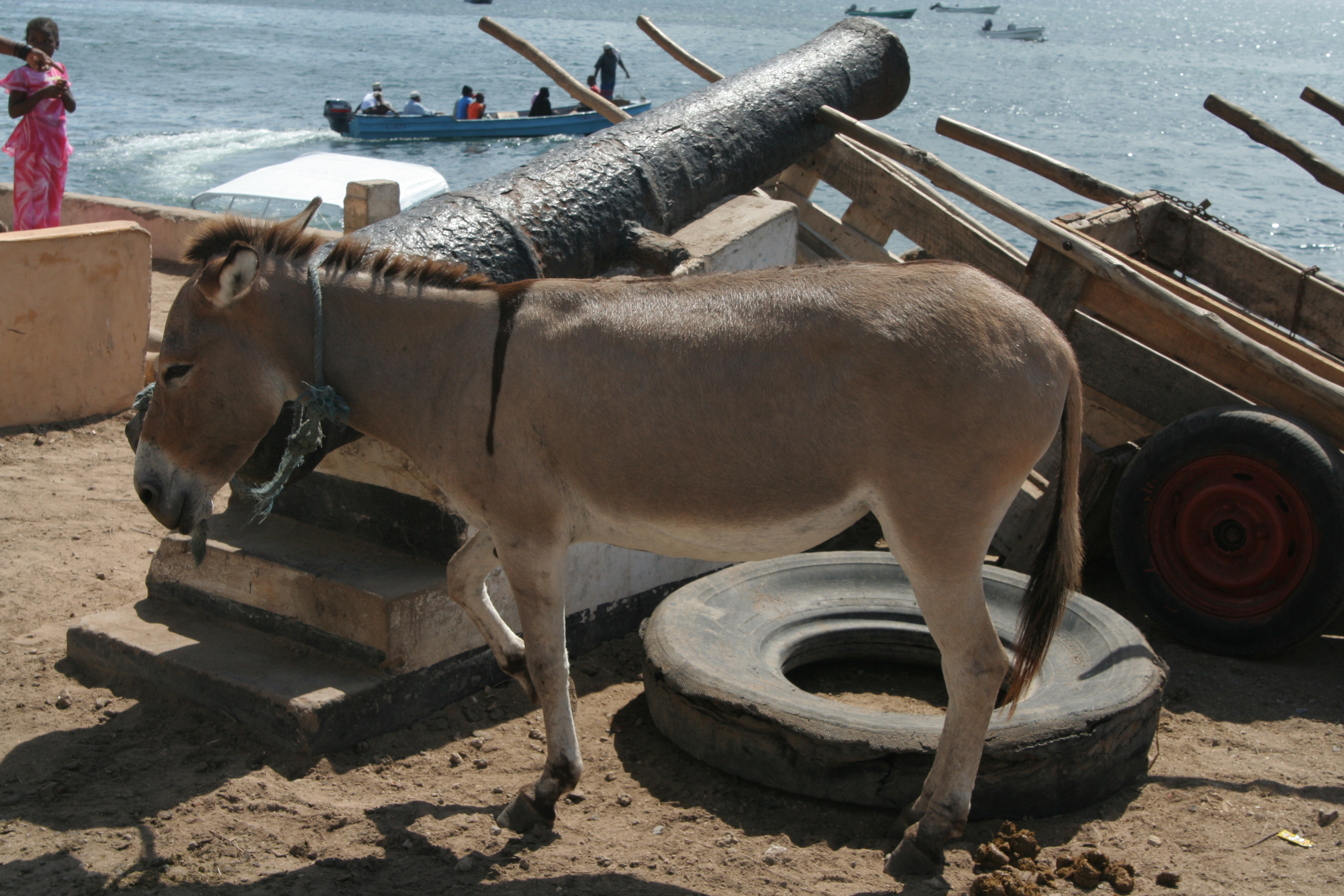
tyres in Lamu

Tyres in Lamu


From Nairobi’s Business Daily of February 26, 2015, “Big names face scrutiny in Goodyear bribes scandal“:

Top Kenya government officials are on the spot once again for pocketing more than Sh138 million ($1.5 million) in bribes from a subsidiary of American tyre firm Goodyear Tire & Rubber Company, US regulators said.

The bribes were paid in exchange for the award of multi-million shilling tenders to supply tyres to some of Kenya’s largest state corporations, government agencies and public listed firms.

The US Securities & Exchange Commission (SEC) said Goodyear paid the bribes to Kenya Ports Authority (KPA), Armed Forces Canteen Organization (Afco), Nzoia Sugar, Kenyan Air Force, Ministry of Roads, Ministry of State for Defence, East African Portland Cement Company (EAPCC) and Telkom Kenya executives to win contracts.

US detectives also established that additional Sh1.3 million ($14,457) was dished out to lure Kenya Police and City Hall officials to award the Ohio-based tyre maker multi-million shilling deals.

The corrupt dealings, committed between 2007 and December 2011, were executed through Treadsetters Tyres Ltd, then a subsidiary of Goodyear.

Goodyear made the illicit payments to Kenyan officials in cash and recorded the spending in its financial books as advertising expenses, according to a forensic audit by the SEC.

“Treadsetters’ general manager and finance director were at the centre of the scheme,” the SEC said in its filings. “They approved payments for phony promotional products, and then directed the finance assistant to write-out the checks to cash.”

The well-orchestrated bribery ring involving Kenyan bureaucrats is captured in a ruling in which Goodyear has agreed to pay a Sh1.48 billion ($16.22 million) fine for engaging in corrupt practices abroad.

The allegations were disclosed by Goodyear in 2012 and hit the Kenyan press in a significant way when the SEC fine was announced almost eight months ago.  Many of the disclosed bribes were paid to Kenyan national security officials.  In the meantime, we see more successful terrorist attacks and insecurity, but no further news on anything being done to suggest that the Government of Kenya has any substantive intention of treating these bribes as unacceptable.

Where is Kenya’s Ethics and Anti-Corruption Commission? Where are Kenya’s journalists and media houses in following the stories they reported? (would be pleased to hear if I’m missing something . . .)

And where is my government?  I’m proud of my country for policing our own companies through the Foreign Corrupt Practices Act, but it has been sad to see our support for a “reform agenda” in our relations with Kenya seem to run off into a ditch.

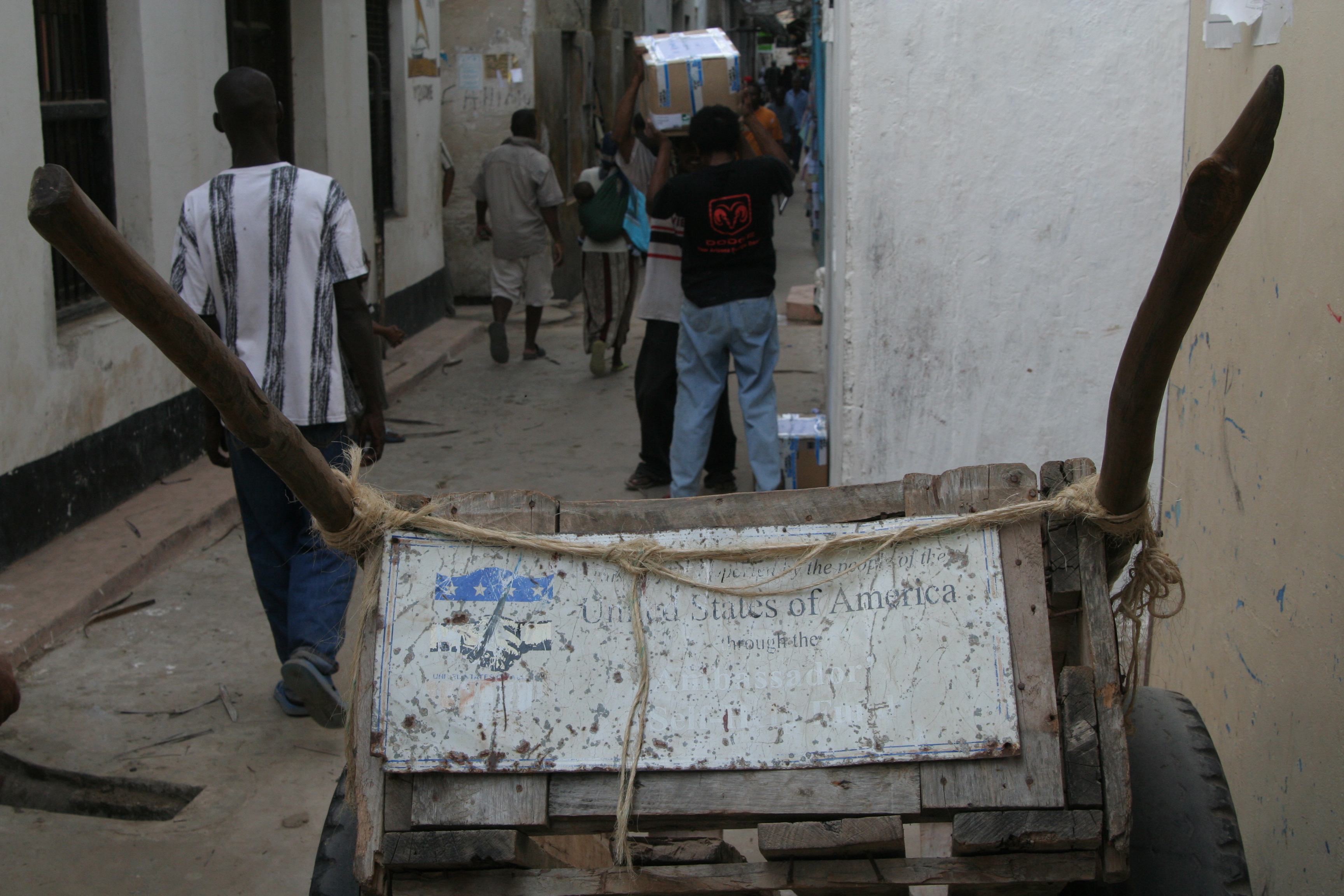
“Faded Aid”