Election Day in Somaliland

Ministry's Murals
MINISTRY OF TOURISM AND CULTURE

[Update: Polls have now closed. Here is a VOA story with interview with Dr. Steve Kibble of Progressio.]

Voters in Somaliland will chose local officials around the country, and the results will determine the three officially recognized political parties for the next ten years under the Somaliland Constitution. Kulmiye, UDUB and UCID have been the three parties, and will face competition from recognized “political associations”. The three parties will then compete in the future parliamentary and presidential elections.

Here is the link to the “From the Ground” blog from Progressio, which is leading the international monitoring.  Also follow the hashtag #SomalilandElection.

From the Somaliland Press:

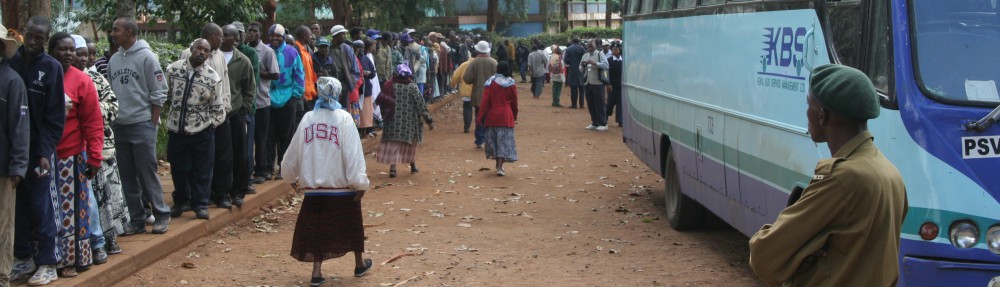
Here in the capital voting started around 7 a.m. in most of the 404 polling stations including Ga’an Libah, where President Ahmed Mohamed Silanyo cast his vote. He was joined by first lady Amina Sheikh Mohamed Jirde and members of his cabinet including minister of presidency, interior, minister of finance and members of the ruling Kulmiye Party.

The president expressed a sense of opportunism and congratulated the people of Somaliland for their commitment to democracy and stability.

He urged everyone to vote peacefully and respect the electoral officials, volunteers, observers and the outcome of the result.

An international observation team of 56 from 15 countries is on the ground monitoring the elections. They see this as a crucial step in the democratization of the whole Horn of Africa region. Two teams from Puntland and Mogadishu are also there to observe and discover their neighbour’s voting system.

The polls close 6 p.m. and results might not be known until the weekend. . . .

Fighting was reported with militias in the town of Hudan in Sool, in the uncertain eastern border region with Puntland.

IFES to webcast Friday workshop on Kenya Diaspora voting

The live event will take place at the International Foundation for Electoral Systems headquarters in Washington from 10:00am to 2:00pm Eastern Daylight Time on Friday, November 2 (5:00pm to 9:00pm Nairobi):
A mandate of the newly appointed Independent Electoral and Boundaries Commission (IEBC) of Kenya is to enable diaspora voting. With this, there is immense pressure from political parties and diaspora groups to fully enable out-of-country voting during the March 2013 elections. The IEBC has enacted a policy that will allow Kenyan voters to register and vote at 47 embassies worldwide.
 
However, this policy may not completely satisfy the demands for out-of-country voting accessibility.
 
To promote better understanding of this issue among officials and leaders of the Kenyan diaspora, IFES will broadcast a workshop via live webcast to describe the complexities surrounding the out-of-country voting process.
 
Invited experts will examine key topics, including:
  • Implementation of out-of-country voting
  • Biometric voter registration and its significance in Kenya’s elections
  • Costs and benefits of Internet voting
  • Registration and voting procedures for members of the Kenyan diaspora
Featured speakers will include:
  • Ahmed Issack Hassan, Chairman, IEBC
  • Peter Erben, Senior Global Electoral Adviser and Chief of Party in Indonesia, IFES
  • J. Alex Halderman, Assistant Professor of Computer Science, University of Michigan
Moderated by Mike Yard, Chief of Party in Kenya, IFES
 
This event will be webcast.
Here is the link for the IFES Multimedia page for the webcast.


Observations from the IFES Kenyan Election Event in Washington

The International Foundation for Electoral Systems (IFES) has the video up from their program last week in Washington with Kenyan IEBC Chairman Ahmed Issack Hassan and IFES Country Director Michael Yard.

I found the program very useful and want to thank IFES for making this available.  With so many things going on right now in the region I have been hearing that people in Washington have not begun an intense focus on the Kenyan election preparation at this point, and I hope that this program will serve as a useful reminder of the huge scope of work to be accomplished in a relatively short period of time if Kenya is to be ready for a credible election process.

Michael Yard did a good job of emphasizing the magnitude of the task.  It has been widely recognized through the report of the Kreigler Commission and otherwise that the voter registration process was wholly inadequate in the last election (as reflected in Undersecretary of State Maria Otero‘s comment that “we recognize that over 2 million dead people voted”).    The IEBC says that they intend to implement a biometric registration system, which will obviously be a major undertaking.

In 2007 the number of polling stations was dramatically expanded to more than 20,000.  The domestic election monitoring program which had proven successful in 2002 was unfortunately not funded to make a commensurate increase and a high percentage of the polling stations were thus left without outside observers.  Nonetheless, with the increased demands placed on the voting system from the addition of voting for the new senate and the devolved local governments under the new constitution, the IEBC feels that they need to further reduce the number of voters at each polling station.  Their plans thus call for more than 40,000 polling stations.  This will place huge demands on both observation efforts and on the parties in deploying agents.

Hassan comes across as a “straight shooting” but soft spoken attorney, in contrast to the sometimes irascible Kivuitu from the 2007 ECK, and everyone is encouraged by the competitive screening and selection process for the new IEBC.  Nonetheless, we know now from hard experience that the pressures placed on the commissioners can be huge and it is crucial that active and transparent oversight by the donors supporting the election process be maintained throughout the effort to design and build a new national voting system.

It should also be noted that Parliament has not yet completed all of the necessary implementing legislation, including campaign finance laws, and most especially that the mechanism to handle the constitutional commitment to minimum representation of women in Parliament has not been resolved.  Of the major factors identified in the post-election settlement after the disaster in 2007, land reform has essentially been set aside and we can expect the new election to take place with IDPs outstanding from 2007-08, as well as from previous elections.  The cost of living, especially for food staples is more of a challenge than last time, and there has been no apparent counter to the reported flow of small arms into the potential Kenyan conflict zones following 2008.

“Incredible Shrinking Kibera”–a lesson that should inspire humility in Western capitals

When we see popular uprisings in Tunisia, Egypt and Libya that no one in the United States or the West more generally seems to have anticipated we ought naturally to be drawn to some soul searching about how much we really know about societies and countries in Africa–and how what we do know gets filtered and reported back to policy makers and the public at home.

My experience in East Africa and what I have learned since certainly suggested caution and humility to me.  One particular glaring example I can highlight is the fiasco of what I will call “Incredible Shrinking Kibera”.  First let’s start with the setting:  right in the heart of Nairobi, one of the most cosmopolitan African capitals in many respects–a city that is a magnet for Western expats, in particular offices of international organizations and NGOs on a regional or Africa-wide basis, as well as a huge regional diplomatic presence.  Lots of tourists from the UK and the US in particular.  Yet, it has turned out that Western conventional wisdom about Nairobi has included numbers for the population of the Kibera informal settlement (“the largest slum in Africa”) that are vastly beyond those cited in Kenya’s new census.  Either the conventional wisdom about 1 million people, or perhaps many more, living in Kibera was vastly inflated, or the new Kenya census finding only a fraction of that population is completely flawed–or both if the real population is, say, double the census figure and less than half the “conventional wisdom”.   If Kenya can’t get anywhere close in a census, even in Nairobi, then how serious can we really be about drawing new boundaries and electoral districts and free and fair elections with equal voting rights for all citizens next year?  If the census is close, then a lot of us in the West have been shown to be either seriously misinformed about something that shouldn’t be so hard to know, or of “spinning” beyond the bounds of a fair representation of the facts.  I myself have referenced the “conventional wisdom” without the skepticism that I should have had.

I was fortunate to have a friend in Kibera and thus an introduction to one family and community in one neighborhood there, as well as being involved in a pre-election survey of the Langata parliamentary constituency in December 2007 and in observing a bit of the voting in one of the more upscale areas on election day with our international delegates.  I started to scratch the surface.  Personally, my family and I had more connection to Kawangware.  Wherever you live in Nairobi, if you are interested, you can pick a nearby informal settlement and start getting acquainted.

Here is a good blog about Kibera:

“Slum Tourism in Kibera: Education or Exploitation?” Brian Ekdale

4) Don’t assume you understand Kibera after spending a couple of hours there. I’ve been there 10 months and still learn new things every day. Kibera is a very complex place. People like to say 1 million residents, but population figures are contested. Not every organization is doing what they say they are doing. Not everyone is impoverished (I know some who have good jobs but would rather financially support their families and neighbors than move to a wealthy area and leave behind those that helped raise them). Now that you’ve been there, go back and read those articles and watch those videos I mentioned in #2.

5) Don’t think Nairobi is a city of contradictions. Sure, you can get a mocha and french toast at Nairobi Java House, go on a Kibera tour in the late morning, and then grab some upscale Indian food at Yaya Centre for lunch without traveling very far. But understand the Java House/Yaya/Westgate life does not exist in spite of Nairobi’s slum population, they exist because of Nairobi’s slum population. Cheap labor built those massive structures. Cheap labor stocked the shelves. And cheap labor keeps them running. That labor walks home at night to sleep in Kibera, or Korogocho, or Mathare, etc.
Maziwa Fresh by AfriCommons
Maziwa Fresh, a photo by AfriCommons on Flickr.

Judge Stands Her Ground and Rules to Annul Parliamentary Election in Kamukunji

Kamukunji MP loses seat in poll petition

The ruling came after two previous judges recused themselves following threats.  Lady Justice Mary Ang’awa also had the unenviable task of hearing early cases against Rift Valley youths from post-election violence.

In the meantime, dysfunction in the coalition government ramps up with President Kibaki moving out to appoint new Chief Justice without ODM agreement as well as the ongoing effort to undermine the ICC without agreement of the Prime Minister.

Sudan Updates

Here is the “Sudan Vote Monitor”

Sudan VoteMonitor is a project led by the Sudan Institute for Research and Policy (SIRP) http://www.sudaninstitute.org and Asmaa Society for Development http://asmaasociety.org, in collaboration with other Sudanese civil society organizations, and supported by eMoksha.org, Ushahidi.com and the Standby Taskforce.

The purpose of this initiative is to utilize information and communication technology (ICT) to support the independent monitoring and reporting of the referendum by Civil Society Organizations, the media and the general public. Sudan Vote Monitor will receive reports via text message, email and through its website. All reports will be mapped by our volunteers and posted to our website in real time. We will also produce a daily summary blog post of the reports we have received.

One report for Tuesday voting says the Nairobi Railway Station polling centre is overwhelmed.

The United States’ Africa Center for Strategic Studies has an extensive listing of press coverage of the Southern Sudan voting.


Looking to Sudan’s Referendum Sunday

The Financial Times covers a new report from Global Witness that concludes that a new oil revenue sharing agreement is needed to prevent Sudan from returning to war:

The Khartoum government has yet to make good on an agreement on sharing oil wealth with southern Sudan, potentially jeopardising the fragile peace as the south’s population votes on whether to split the country in two, according to a report by Global Witness, the UK-based resource lobbyists.

The sharing of oil income, which accounts for half of state revenues in the north of Sudan and 98 per cent in the south, is among the thorniest issues as predominately Christian southerners prepare to vote on independence on Sunday. The south is widely expected to secede and emerge as Africa’s newest country.

. . . .

“Far less data is being published by the Sudanese government now than it was in 2008 and the first half of 2009, which even then was insufficient to be able to verify the oil revenue sharing,” said the report.

Yesterday, the US hailed the latest overtures from the Bashir government to indicate that it was prepared to allow the rerendum, and succession, to proceed peacefully:

The United States has led pressure on the Khartoum government of President Omar Hassan al-Bashir not to impede the secession vote. Carson said Washington was “extraordinarily pleased” by Bashir’s statements on a trip to the south Sudan capital of Juba on Tuesday that Khartoum was ready to let the south go.

“We hope that the north … will live up to those very promising statements,” Carson said.

Bashir’s visit is the latest sign that the referendum, which many analysts earlier said threatened to spark a return to war between the north and the south, may unfold peacefully.

Key issues including borders, citizenship and the fate of the oil-rich region of Abyei remain to be decided, making the six-month transition period following the secession vote a potentially dangerous period.

U.S. officials are already working on a development plan for an independent south Sudan, which accounts for 70 percent of Sudan’s overall oil production.

The United States is ready to recognize the new government quickly and appoint an ambassador to help lead efforts to improve basic infrastructure, healthcare, and education as well as trade and investment, officials said.

“We anticipate ramping this up very quickly after the referendum,” said Larry Garber, the deputy administrator for Africa at the U.S. Agency for International Development.

A senior U.S. official, speaking on background, denied suggestions the United States was motivated primarily by a interest in south Sudan’s oil, which remains a key sticking point in dealings between Khartoum and Juba and which has been largely off limits to western oil companies thanks to U.S. sanctions imposed on Sudan in 1997.

US officials also expressed confidence that political agreement would be reached on oil revenue and other economic issues and that the status of Abeyei is “longer a potential flashpoint for war,” such that they do not expect further “major violence”.

Here is this week’s roundup “As vote nears, Sudan’s south anticipates independence and problems” from Jeffrey Fleishman in the Los Angeles Times. And here is Rebecca Hamilton’s “Sudan Dispatch” in The New Republic.

China to send observers to Sudan Referendum–what will they look for? [Updated Jan. 6]

The link to the Reuters report from Beijing is here.

China will send observers to Sudan when the south holds an independence referendum on January 9, the Chinese Foreign Ministry said on Tuesday.

“At the invitation of both the north and the south, China will send observers to participate in the referendum,” Foreign Ministry spokesman Hong Lei told reporters at a regular news conference.

“China is willing, together with the international community, to continue to play a proactive and constructive role for the sake of Sudan’s peace and stability,” Hong said.

Hmm. Will these be people who have observed an election before, much less participated in one? If China is serious about peace and stability within the parameters of a democratic process then great and welcome to the community, but if they are just protecting their own interests irrespective then what are they adding?

This is surely a clear example of a diplomatic observation rather than an assistance effort–no indication that China has an interest in improving democratic elections abroad.

Radio France International has an interesting take on the Chinese diplomatic strategy:

Beshir’s more reconciliatory tone is however a diplomatic advantage for China, which is a long-time ally of Beshir and a major investor in the country’s oil industry, which is mainly based in the south.

“China is working very hard to in effect play both sides of the border,” says David Shinn, the former deputy chief of mission at the US embassy in Khartoum. “It wants to maintain its very close relationship with the Beshir government and it wants to maintain as close a tie as possible to the southerners if they secede.”

China has a consulate in Juba and has been providing some assistance to southerners over the last year, but Shinn says it will still have to work hard to create a good relationship with the south, should it become independent.

“They certainly will have an uphill climb in that they are well known to have been very strong military backers of the northern government and those feelings will not disappear quickly,” says Shinn. “On the other hand, the Chinese have shown great propensity over the years to be able to make the switch to the new rulers in town”.

Chinese financial resources will give it an advantage, especially as it is almost alone in having a state sector that is willing to make investments. The Chinese government also backs several banks in Africa, which able to provide low interest loans fast.

Shinn says China has enough invested in the north to want to maintain a good relationship with the north even though most of Sudan’s resources come from the south. Beshir’s diplomatic approach has given China a chance to work with the south without upsetting the Khartoum government.

“Who knows, behind the scenes maybe China has even been encouraging that,” says Shinn.


Kenya Referendum Retrospective–some lessons from the voting and election observation

This week will see the formal implementation of Kenya’s new Constitution to much fanfare. Before looking ahead, I wanted to take time to share by permission this excellent report from a grassroots election observation conducted in Western Kenya by Quaker Peace Network teams through a program called the African Great Lakes Initiative of the Friends Peace Teams.

For those of you who may not be familiar, roughly half the world’s Quakers are said to live in Africa’s Great Lakes region and Quaker Meeting Houses are common and important in Western Kenyan communities, including in areas impacted particularly by the 2007 post-election violence.

Yesterday we had the debriefing for the fifty observers. The feeling was that the new Interim Independent Electoral Commission did an excellent job of conducting the election. Yet there were some concerns:

1. It was not completely clear the criteria for the validity of the votes so that different poling stations rejected votes that other stations accepted.

2. In some communities the youth voted well, but in others very few youth voted. There needs to be more outreach to youth.

3. In some places the cell phones of the observers were confiscated for the day by the voting officials. This meant that the observer was out of communication and could not report something if needed. We felt that observers should be allowed to keep their cell phones, perhaps on vibration mode.

4. In at least one station, election officials were showing voters how they should vote.

5. There were no good guidelines on how illiterate voters should be handled when they did not come in with a family member to assist them.

6. In areas where there was violence after the 2007 election, some voters left to go back to their home community because they were afraid of violence after this election. This meant that these voters were disenfranchised.

My particular polling station in the hard hit town of Jua Kali had 80% turnout with 81% voting “No.” But it was in one of the 18 (out of 210) constituencies that had electronic registration of voters. Voters put their left thumb on a device that immediately brought up their picture, registration card, etc. on a computer. This worked extremely well with only about 5 people where it did not work These were sent to the Presiding Officer who checked their name manually on the hard copy–in every case the voter was a valid voter and allowed to cast his/her vote. Another significant innovation for most of the country was the Presiding Officer was give a special cell phone so that he/she could send a text message with the results from his/her station to headquarters in Nairobi. Results were being announced two hours after the polls closed and by 10:00 PM it was clear that the Yes side was winning by a landslide. There was no ability or time for rigging of voting returns at the headquarters as happened in the 2007 election. The cell phone results then had to verified by the official documents signed by the Presiding Officer and agents for the two sides.

In other words, as Andrew commented, although not much happened at the polling stations, our presence was a valuable part of the process. We found that most of the polling stations had no neutral election observers and in one constituency, the QPN observer was the only independent observer.

This type of detailed and candid reporting is what is needed to continue to improve the election process and the presence of a neutral peace-oriented group of grassroots observers living and working in the region seems ideal for the challenges presented by elections in this area.

Kenyans Vote (Updated)

UPDATE: Polls have closed at 5pm in Kenya, 10am Eastern in the US. See new Gettleman story “Kenyans vote on new constitution”.

Follow the voting and results through live updates with this Global Voices page as well as at Uchaguzi.

My sense going into the vote is that the constitution would pass by a good margin and the level of violence would be relatively lower than feared. Things do seem to be going smoothly so far. Violence in the past has either been state-supported or tied to the misconduct in counting the votes. With what seems to be a serious effort by the security services to work against violence this time, reflecting President Kibaki’s apparent commitment, the environment seems quite different for this vote.

See Gettleman in this morning’s NYTimes on the atmosphere in the Rift Valley prior to the voting, and this story from the BBC.